

SAP Business One Module Solve Manufacturing Workflow Delays

Production Teams Use SAP B1 Modules for Better Planning and Inventory Control
Manufacturing companies do not lose profitability because of one major failure. They lose it through daily operational inefficiencies that SAP Business One Module are designed to eliminate. Production delays caused by inventory mismatch, procurement approvals stuck in emails, finance teams working with outdated reports, and sales teams committing delivery timelines without real-time production visibility all create operational disruption.
Over time, these disconnected workflows lead to revenue leakage, customer dissatisfaction, rising operational costs, and scalability challenges.
SAP B1 Modules help manufacturers solve these bottlenecks by connecting finance, inventory, procurement, production, sales, and service operations within one centralized ERP ecosystem.
Manufacturing Workflow Delays Are Increasing Operational Costs
Many manufacturers still operate with disconnected systems across departments.
Warehouse teams update inventory manually. Finance teams depend on spreadsheets. Production planning happens without real-time stock visibility. Service teams struggle to track spare parts availability.
These gaps create operational slowdowns across the business.
Business impact of disconnected operations
- Production downtime increases
- Inventory shortages delay manufacturing
- Excess stock blocks working capital
- Procurement cycles slow down
- Customer delivery timelines fail
- Operational visibility becomes fragmented
- Compliance risks increase
- Leadership loses decision-making accuracy
For CEOs and operations leaders, the biggest challenge is not lack of effort. It is lack of operational synchronization.
Why Traditional ERP Structures Fail Growing Manufacturers
Most legacy ERP environments were not built for modern manufacturing complexity.
As businesses grow, disconnected software tools create data silos between finance, procurement, inventory, sales, and production teams.
This creates three major problems:
1. Delayed decision-making
Leadership teams cannot access real-time operational data.
2. Workflow bottlenecks
Manual approvals and disconnected reporting slow execution.
3. Limited scalability
Operational complexity increases faster than system capability.
Without business process integration, manufacturers struggle to scale efficiently.
SAP B1 Manufacturing Module Improves Production Coordination
The SAP B1 manufacturing module connects production planning with procurement, inventory, and warehouse operations.
Instead of planning production based on assumptions, teams work with real-time operational data.
How SAP B1 Modules solve production inefficiencies
Real-time inventory visibility
Production teams know actual raw material availability before scheduling operations.
Automated procurement coordination
Purchase planning aligns with production demand automatically.
Faster production scheduling
Manufacturers reduce delays caused by manual coordination.
Improved resource efficiency
Machine utilization and workforce planning become more predictable.
Better operational visibility
Leadership teams gain centralized reporting across manufacturing workflows.
This reduces operational friction and improves manufacturing process automation across departments.
SAP B1 Inventory Management Reduces Warehouse and Dispatch Delays
Inventory inaccuracies directly affect manufacturing profitability.
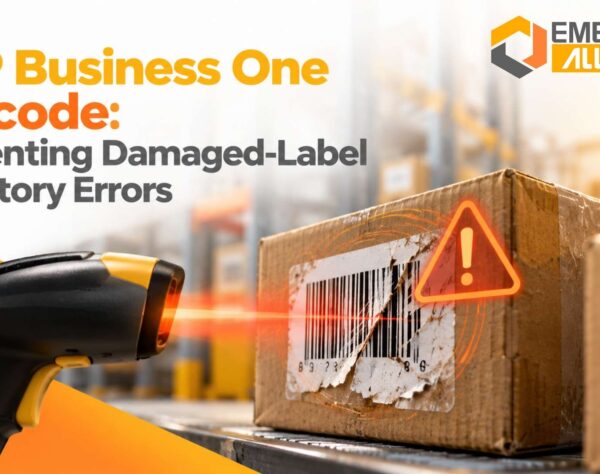
When warehouse data is unreliable, businesses either overstock materials or face production stoppages due to shortages.
SAP B1 inventory management improves inventory and warehouse optimization through centralized stock visibility.
Operational improvements manufacturers achieve
- Real-time stock tracking
- Faster warehouse movement
- Reduced inventory mismatch
- Batch and serial traceability
- Better dispatch planning
- Improved procurement forecasting
For enterprises operating across multiple warehouses, SAP B1 supply chain module capabilities improve coordination and inventory accuracy significantly.
SAP B1 Finance Module Improves Cost Visibility and Compliance
Manufacturers often struggle with delayed financial reporting because operational and finance systems are disconnected.
The SAP B1 finance module centralizes operational and financial data into one environment.
Business benefits for finance leaders
- Faster financial reporting
- Better operational cost visibility
- Automated approval workflows
- Reduced manual reconciliation
- Improved compliance management
- Better ERP modules ROI tracking
Finance leaders gain real-time operational visibility instead of waiting for month-end reports.
SAP Business One Sales Module Aligns Revenue with Operations
Sales teams often create delivery commitments without understanding actual production capacity.
This creates customer dissatisfaction and operational pressure.
The SAP Business One sales module integrates CRM modules, inventory, finance, and manufacturing workflows into one operational system.
Business outcomes
- Improved sales forecasting
- Faster order processing
- Better customer fulfillment accuracy
- Reduced communication gaps
- Stronger operational coordination
This helps manufacturers improve both revenue predictability and customer trust.
SAP Business One Service Management Supports Long-Term Scalability
Manufacturers managing field service operations often struggle with disconnected maintenance workflows and spare parts visibility.
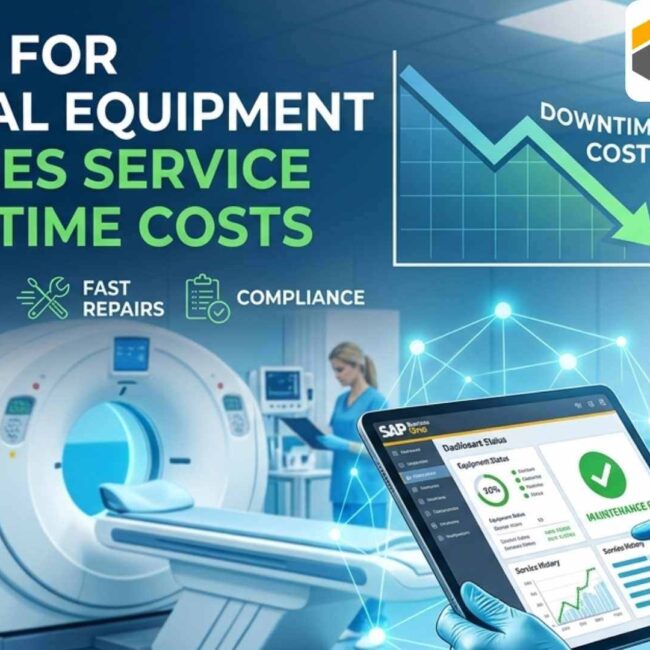
SAP Business One Service Management helps businesses manage after-sales service operations alongside inventory and production management.
Scalability advantages
- Centralized service management
- Faster maintenance coordination
- Spare parts tracking
- Better service response times
- Reduced equipment downtime
As operational complexity increases, SAP B1 ERP modules help businesses scale without operational disruption.
Why Enterprises Partner with Emerging Alliance
ERP implementation alone does not eliminate operational inefficiencies. Enterprises need a strategic partner that aligns SAP B1 Modules with automation, scalability, and process optimization goals.
As a Certified SAP Business One Partner in India, Emerging Alliance helps businesses improve workflows, automate manufacturing operations, integrate business processes, modernize reporting, and build scalable ERP environments.
The focus is not only software deployment, but measurable operational transformation and long-term business efficiency.
Conclusion
SAP B1 Modules help manufacturers eliminate workflow bottlenecks, improve inventory accuracy, automate operational processes, and strengthen enterprise scalability.
For manufacturing leaders, the advantage is not only ERP modernization — it is operational control, faster execution, and better business visibility.
Businesses that modernize workflows today are better positioned to scale profitably tomorrow.
SAP B1 Modules FAQs for Manufacturing Businesses
1. How do SAP B1 Modules reduce manufacturing workflow delays?
SAP B1 Modules connect production, inventory, procurement, finance, and sales operations into one system, helping manufacturers remove manual coordination delays and improve operational visibility.
2. Why do manufacturers face production delays even with ERP systems?
Many businesses use disconnected ERP environments where inventory, procurement, and production data are not synchronized in real time, creating workflow bottlenecks and planning inaccuracies.
3. How does SAP B1 inventory management prevent raw material shortages?
SAP B1 inventory management provides real-time stock visibility, automated inventory updates, and procurement coordination to help production teams avoid unexpected material shortages.
4. Can SAP B1 manufacturing module improve production planning accuracy?
Yes. The SAP B1 manufacturing module aligns production schedules with actual inventory availability, procurement timelines, and warehouse data for more accurate planning.
5. How does SAP B1 finance module help manufacturing companies control operational costs?
The SAP B1 finance module centralizes operational and financial data, helping finance leaders track procurement expenses, production costs, and profitability more efficiently.
6. What business problems does SAP B1 supply chain module solve?
It helps manufacturers reduce inventory mismatch, improve warehouse coordination, optimize procurement planning, and strengthen supply chain visibility across locations.
7. How do SAP Business One sales module and CRM modules improve customer delivery timelines?
The system connects sales orders with production and inventory operations, helping businesses commit realistic delivery timelines and reduce fulfillment delays.
8. Is implementing SAP B1 Modules suitable for multi-location manufacturing companies?
Yes. SAP B1 ERP modules help multi-location manufacturers centralize inventory visibility, operational reporting, procurement coordination, and workflow management.
9. What are the biggest challenges during SAP B1 implementation for manufacturers?
Common challenges include legacy data migration, disconnected workflows, process standardization, user adoption, and integration with existing business applications.
10. Why should enterprises work with a Certified SAP Business One Partner in India?
A certified partner helps businesses align ERP implementation with operational goals, manufacturing automation strategies, scalability planning, and long-term digital transformation initiatives.
Connect with Emerging Alliance to evaluate how SAP Business One modules can improve operational visibility, automate workflows, and support scalable manufacturing growth.