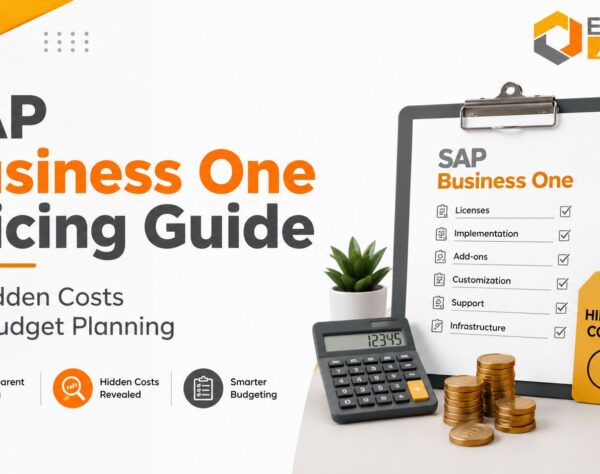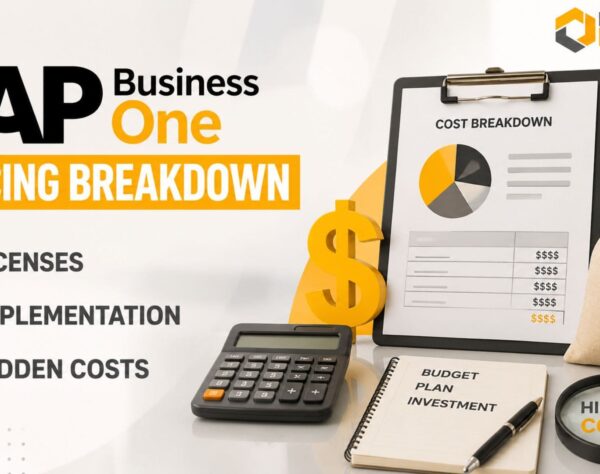

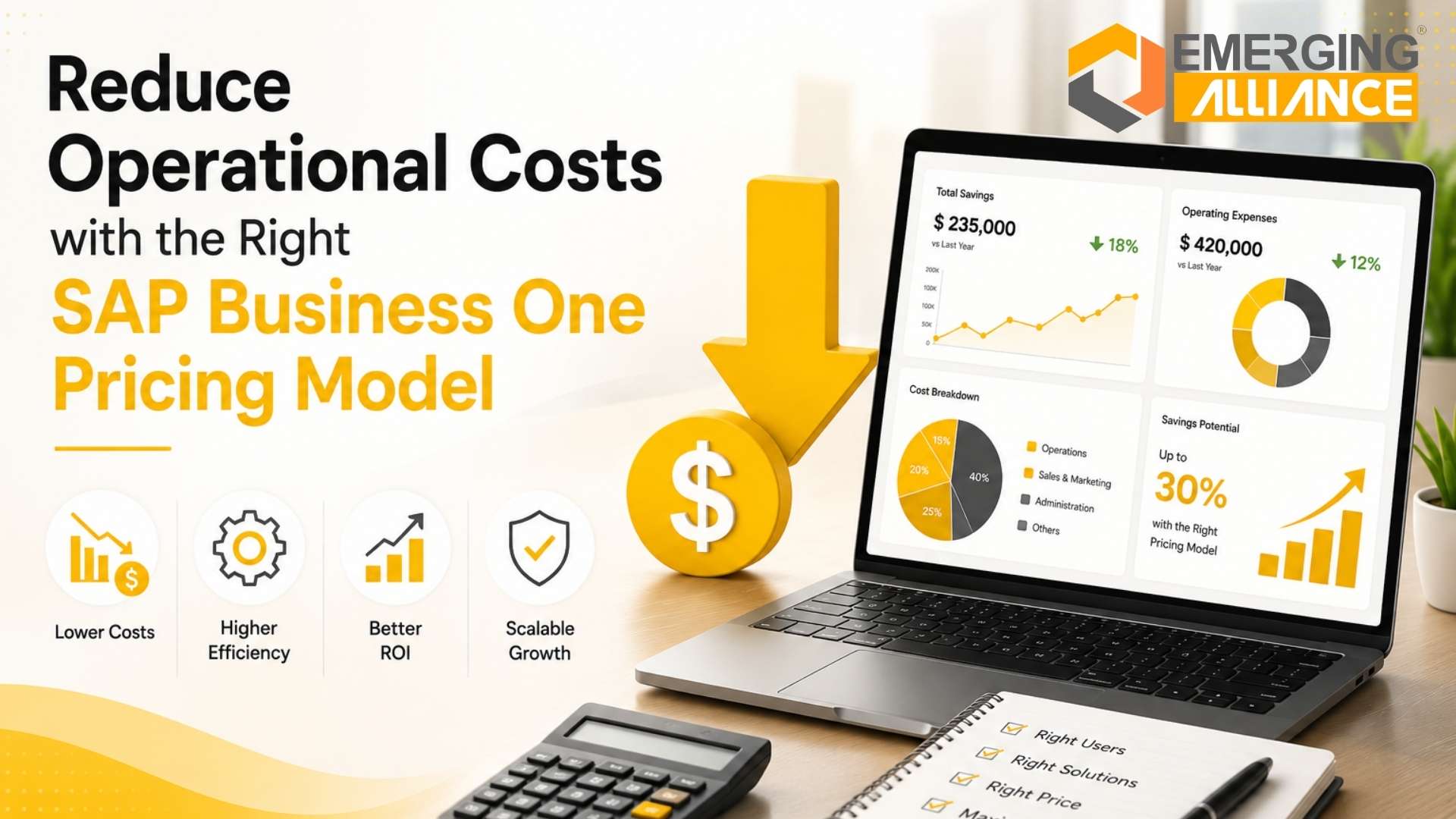
Reduce Operational Costs with the Right SAP Business One Pricing Model
Understand SAP Business One Pricing, licensing, and long-term costs clearly
Disconnected systems, delayed reporting, manual processes, and poor operational visibility often increase costs and slow enterprise growth. Choosing the right SAP Business One Pricing model helps businesses improve automation, compliance, scalability, and reporting efficiency.
Many organizations focus only on licensing costs, overlooking implementation quality, customization, integrations, and long-term support. A well-planned ERP strategy reduces operational bottlenecks, improves visibility, and strengthens ROI.
Emerging Alliance helps enterprises align SAP Business One investments with scalable digital transformation and long-term business goals.
Why SAP Business One Pricing Matters for Enterprise Growth
Many businesses evaluate ERP software purely based on upfront licensing fees. However, the real challenge lies in understanding the complete ERP total cost of ownership.
A low initial ERP investment can eventually lead to:
- expensive customization cycles
- integration bottlenecks
- reporting limitations
- compliance gaps
- productivity loss
- high maintenance dependency
- scalability issues during expansion
An optimized SAP Business One pricing strategy helps organizations:
- reduce manual operational overhead
- improve inventory and finance visibility
- automate procurement and sales workflows
- minimize duplicate data handling
- simplify GST and statutory compliance
- support multi-location operations
- accelerate management decision-making
For businesses focused on SME digital transformation, ERP pricing should be evaluated against operational efficiency gains rather than software costs alone.
Understanding SAP Business One Price in India and Licensing Models
The overall SAP Business One Price in India depends on multiple business variables. There is no single pricing structure because every organization has unique operational complexity, user requirements, and scalability goals.
Key Factors That Influence SAP Business One Licensing Cost
1. User Licensing Structure
SAP Business One generally offers:
- Professional user licenses
- Limited user licenses
- Industry-specific access models
A manufacturing company with finance, procurement, warehouse, sales, and production teams will require a different licensing approach compared to a distribution or services organization.
2. Deployment Model
Businesses typically choose between:
Cloud ERP Pricing India
Best suited for organizations seeking:
- lower infrastructure dependency
- remote accessibility
- faster deployment
- subscription-based ERP pricing
- easier scalability
On-Premise ERP Cost
Suitable for enterprises requiring:
- internal infrastructure control
- custom security frameworks
- advanced integrations
- highly customized environments
The deployment strategy significantly impacts long-term ERP deployment cost and maintenance planning.
3. Business Complexity
The SAP Business One cost for your business also depends on:
- number of users
- branch locations
- inventory complexity
- manufacturing workflows
- CRM integration requirements
- third-party application integrations
- reporting and analytics needs
SAP B1 Cost for Small Business vs Medium-Sized Business vs Large Enterprise
ERP investment priorities vary significantly across business sizes.
| Business Size | Operational Challenges | ERP Priorities | SAP Business One Cost Focus |
| SAP B1 Cost for Small Business | Limited reporting visibility, manual accounting, disconnected sales tracking | Finance and accounting ERP, inventory management ERP, GST-ready ERP software, basic sales and CRM integration | Cloud deployment, phased ERP implementation, scalable licensing, lower ERP implementation cost |
| SAP B1 Cost for Medium-Sized Business | Process fragmentation, warehouse inefficiencies, approval delays, disconnected branch operations | Workflow automation, multi-department integration, advanced reporting, production planning, customer lifecycle visibility | SAP Business One customization, ERP consulting services, integration scope, operational scalability |
| SAP B1 Cost for Large Enterprise | Multi-location coordination, high-volume transactions, compliance governance, complex reporting structures | Enterprise-grade analytics, scalable ERP architecture, centralized operational visibility, advanced automation | Long-term operational resilience, enterprise scalability, strategic ERP deployment, experienced SAP B1 implementation partner selection |
Their investment focus is not just ERP software pricing, but long-term operational resilience and enterprise growth enablement.
This is where choosing the right SAP B1 implementation partner becomes essential.
Hidden Costs Businesses Ignore During SAP Business One Implementation
Many ERP projects exceed expectations because organizations underestimate implementation dependencies.
A successful SAP Business One Implementation strategy should account for both direct and indirect operational impact.
Commonly Overlooked ERP Cost Areas
ERP Customization Cost
Custom workflows, dashboards, approval systems, and industry-specific automation often require additional development.
Poorly planned customization can:
- increase maintenance complexity
- slow future upgrades
- reduce system agility
ERP Migration Services
Migrating from legacy systems involves:
- master data cleansing
- transaction mapping
- compliance validation
- process restructuring
Migration delays often impact go-live timelines and operational continuity.
ERP Support and Maintenance
The ongoing SAP Business One Maintenance Cost in India may include:
- system monitoring
- patch management
- version upgrades
- user support
- reporting enhancements
- integration maintenance
Businesses that fail to plan post-deployment support often face operational disruptions and low ERP adoption rates.
User Training and Change Management
Even advanced ERP systems fail without process adoption.
Operational leaders should prioritize:
- department-level training
- workflow alignment
- KPI-based reporting adoption
- executive dashboards
- user accountability frameworks
How SAP Business One Reduces Operational Costs Across Departments
The real ROI of SAP Business One comes from eliminating inefficiencies that silently impact profitability every day.
Finance and Compliance
Businesses gain:
- centralized financial reporting
- faster month-end closures
- GST compliance visibility
- audit-ready documentation
- automated reconciliation workflows
Inventory and Supply Chain
Operational improvements include:
- stock visibility across warehouses
- reduced inventory carrying costs
- demand planning accuracy
- procurement optimization
- minimized stock-outs and overstocking
Sales and Customer Operations
Integrated CRM and ERP workflows improve:
- quotation turnaround time
- order processing accuracy
- customer follow-up visibility
- revenue forecasting
- sales performance tracking
Leadership Visibility
Executives gain access to:
- real-time dashboards
- centralized KPI reporting
- operational forecasting
- business performance insights
- cross-functional visibility
This directly supports faster strategic decision-making.
Why Emerging Alliance Is More Than an SAP B1 Implementation Partner
ERP success is not determined by software alone. It depends on strategic alignment between business goals, operational workflows, and technology architecture.
Emerging Alliance positions itself as a long-term enterprise transformation partner that helps businesses:
- identify operational inefficiencies
- optimize ERP budget planning
- align ERP deployment with growth goals
- improve process automation maturity
- modernize reporting ecosystems
- enable scalable digital operations
Rather than delivering isolated software implementation services, Emerging Alliance focuses on enterprise-wide transformation outcomes.
This includes:
- SAP Business One consultation
- deployment strategy planning
- ERP customization consulting
- migration and integration advisory
- operational workflow optimization
- ERP upgrade services
- long-term SAP Business One support
For enterprises evaluating ERP software comparison strategies, this consultative approach helps reduce implementation risks while maximizing ROI.
Choosing the Right SAP Business One Deployment Strategy
The ideal ERP deployment model depends on operational maturity, industry complexity, and growth projections.
Cloud Deployment Is Ideal For:
- distributed workforces
- fast-growing SMEs
- remote operations
- subscription-based ERP budgeting
- lower infrastructure dependency
On-Premise Deployment Is Ideal For:
- highly regulated industries
- complex manufacturing environments
- advanced internal security requirements
- legacy system-heavy enterprises
An experienced ERP solution provider India can help businesses determine the right balance between scalability, compliance, and operational cost control.
The Long-Term ROI of SAP Business One for SMEs and Enterprises
Organizations that successfully deploy SAP Business One typically improve operational efficiency through:
- workflow automation
- centralized reporting
- process standardization
- integrated business operations
- reduced manual dependency
- improved customer responsiveness
- scalable operational frameworks
The real advantage is not just cost reduction.
It is the ability to scale operations without proportionally increasing administrative overhead.
For growing businesses, that operational leverage becomes a competitive advantage.
Ready to Evaluate the Right SAP Business One Pricing Model?
Choosing the right ERP strategy requires more than comparing software quotes. Businesses need clarity on licensing, implementation complexity, operational impact, support requirements, and long-term scalability.
Emerging Alliance helps enterprises evaluate the complete business impact of SAP Business One — from ERP architecture planning to deployment optimization and ongoing transformation support.
Whether you need a detailed SAP Business One estimate, deployment consultation, ERP migration strategy, or a live SAP Business One demo request, the right advisory approach can significantly reduce operational risk and improve ROI outcomes.
Frequently Asked Questions
1. What factors influence SAP Business One Pricing in India?
Pricing depends on user licenses, deployment model, customization scope, integrations, industry requirements, and long-term support needs.
2. How do I estimate SAP Business One cost for my business?
Businesses should evaluate licensing, implementation complexity, migration effort, infrastructure, and support requirements to create an accurate ERP budget plan.
3. Is cloud deployment more cost-effective than on-premise ERP?
Cloud ERP pricing India models generally reduce infrastructure costs and simplify scalability, while on-premise deployment offers greater control and customization flexibility.
4. What industries benefit most from SAP Business One for SMEs?
Manufacturing, distribution, retail, pharmaceuticals, engineering, trading, and professional services companies commonly benefit from integrated ERP automation.
5. Does SAP Business One support GST compliance and financial reporting?
Yes. SAP Business One supports GST-ready ERP workflows, centralized finance reporting, audit visibility, and compliance-focused operational tracking.
6. What is included in SAP Business One implementation services?
Implementation usually includes process analysis, configuration, migration, customization, integration, testing, user training, and deployment support.
7. How can SAP B1 support services improve long-term ROI?
Ongoing support helps businesses optimize workflows, maintain system performance, improve user adoption, and reduce operational disruption risks.
8. Can SAP Business One integrate with CRM, eCommerce, and third-party tools?
Yes. SAP Business One supports integrations with CRM platforms, eCommerce systems, warehouse applications, and reporting tools.
9. How long does SAP Business One deployment typically take?
Deployment timelines vary depending on organizational complexity, customization requirements, data migration scope, and operational readiness.
10. Why should businesses work with a SAP B1 implementation partner instead of handling deployment internally?
An experienced implementation and consulting partner helps reduce project risks, improve adoption, align ERP architecture with business goals, and accelerate operational outcomes.
Talk to Emerging Alliance
Connect with our experts who understand enterprise operations, digital transformation, and scalable ERP ecosystems.