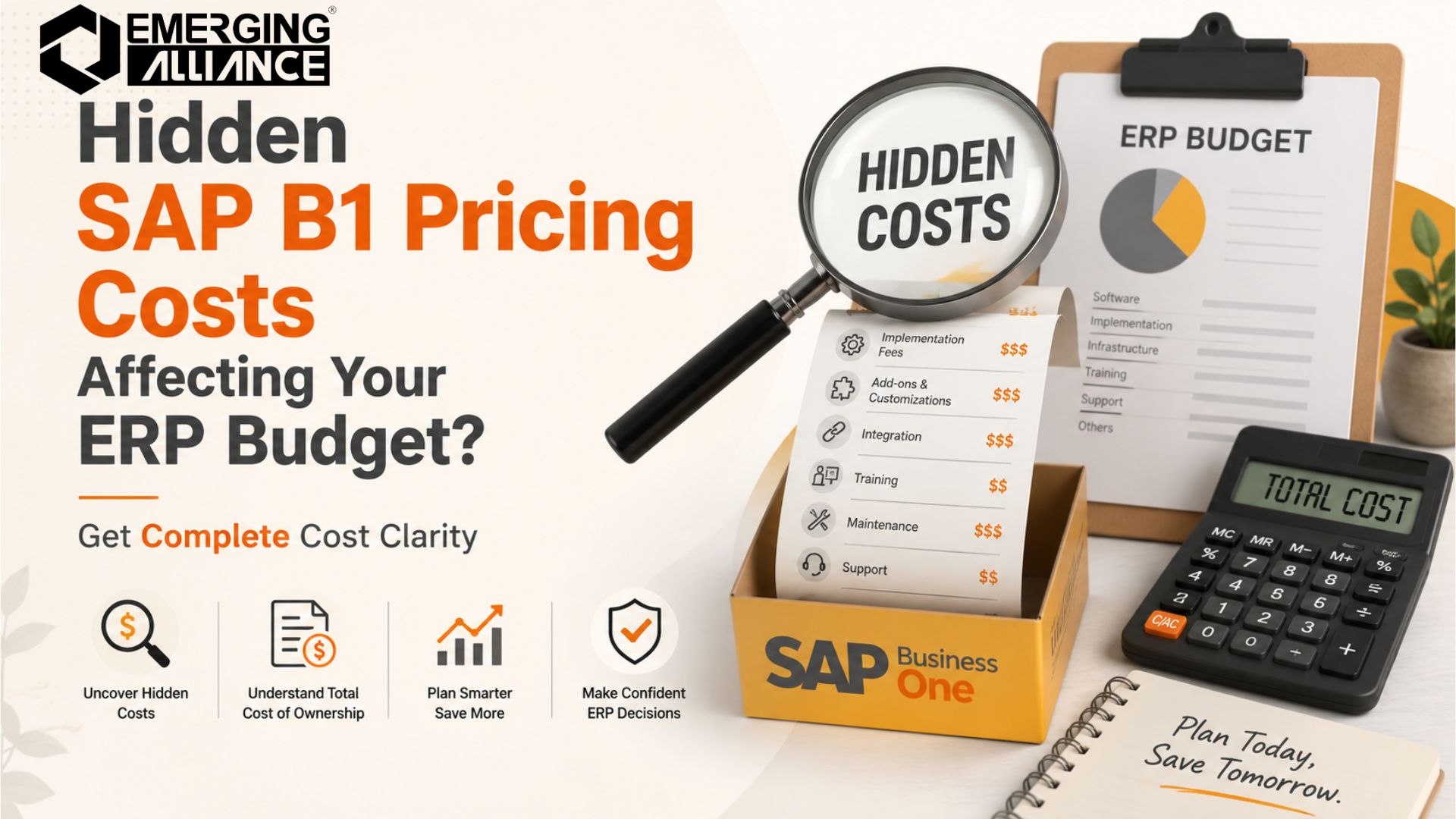
Hidden SAP B1 Pricing Costs Affecting Your ERP Budget? Get Complete Cost Clarity
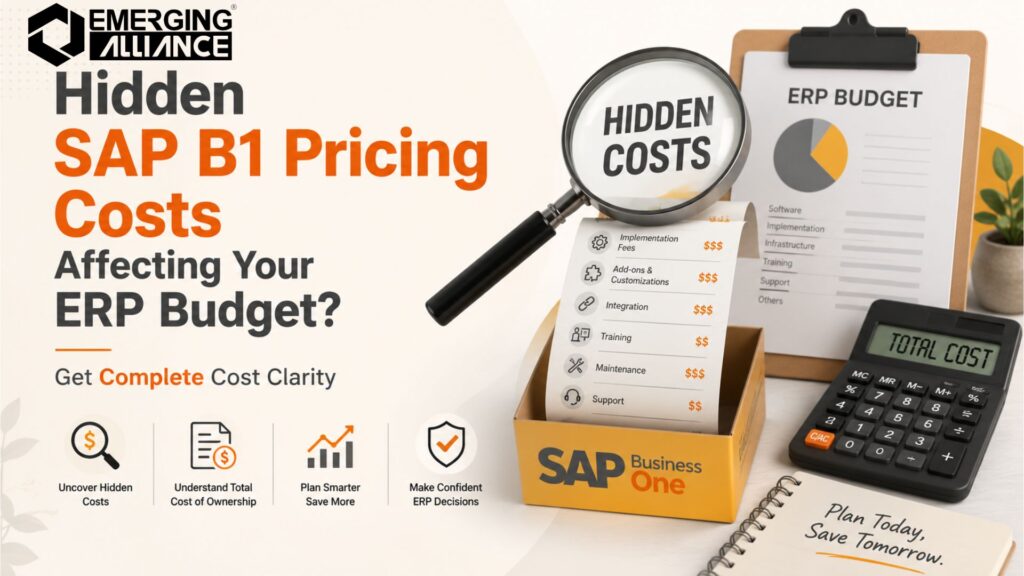
Unexpected ERP Costs Impact Business Planning. SAP B1 Pricing Helps You Budget with Confidence.
Modern ERP investments are expected to improve operational efficiency, support business growth, and provide real-time visibility across finance, inventory, procurement, sales, and production. However, many organizations underestimate the total investment required because they focus only on the initial software quote. Hidden implementation, customization, infrastructure, licensing, and long-term support expenses can significantly affect the overall ERP budget. Understanding SAP B1 Pricing goes beyond comparing software costs. It involves evaluating every component that contributes to the total cost of ownership (TCO) while ensuring the ERP solution aligns with long-term business objectives. For business leaders planning digital transformation initiatives, cost transparency is essential for controlling budgets, reducing implementation risks, and maximizing return on investment.
Organizations that evaluate ERP pricing strategically are better positioned to avoid unexpected expenditures, accelerate deployment, and achieve measurable business outcomes.
SAP B1 Pricing and Total ERP Investment
Many organizations begin ERP evaluation by comparing software prices alone. In reality, the total investment includes multiple business and technical components that directly influence implementation success.
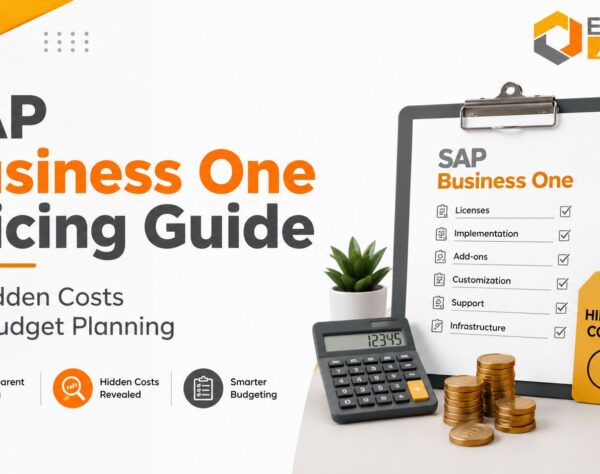
A complete SAP Business One Pricing assessment typically includes:
- Software licenses
- User licensing model
- Deployment option (Cloud or On-Premise)
- Implementation services
- Business process consulting
- Data migration
- Customizations
- Third-party integrations
- User training
- Annual maintenance and support
- Future scalability
When these elements are evaluated together, organizations gain better financial visibility and reduce the likelihood of budget overruns.
SAP B1 Cost Components Affecting Enterprise Budgets
Every organization has unique operational requirements, making ERP pricing different from one business to another.
Major cost drivers include:
SAP B1 License Cost
The licensing model depends on:
- Professional Users
- Limited Users
- Number of concurrent users
- Business modules required
- Industry-specific functionality
Selecting the appropriate user mix helps optimize licensing costs without limiting productivity.
SAP B1 Implementation Cost
Implementation expenses often represent one of the largest portions of ERP investment.
Factors influencing implementation include:
- Business complexity
- Number of company locations
- Process redesign
- Workflow automation
- Master data quality
- Legacy system migration
- Testing and deployment
Well-planned implementations generally reduce operational disruptions and improve user adoption.
SAP Business One Cloud Cost
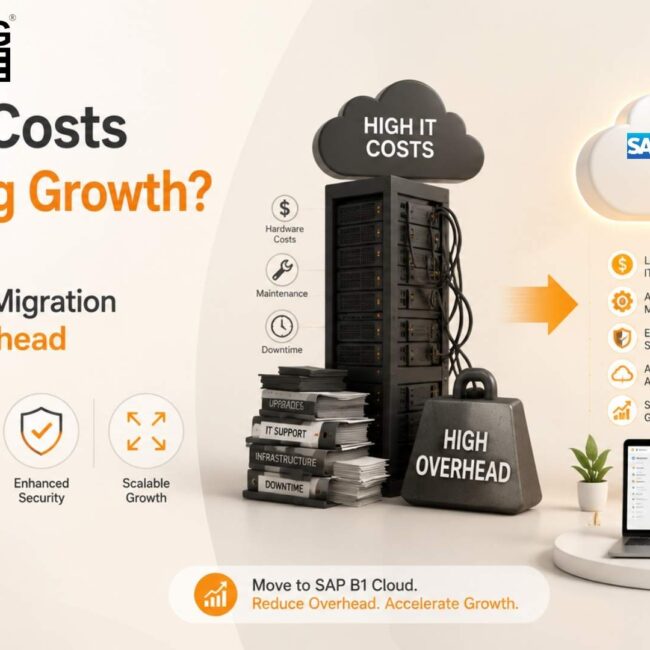
Cloud deployment reduces infrastructure investments while offering:
- Faster deployment
- Lower IT maintenance
- Automatic updates
- Improved accessibility
- Business continuity support
Cloud pricing is generally subscription-based, making budgeting more predictable for growing organizations.
SAP B1 Pricing in India for Growing Enterprises
Organizations evaluating SAP B1 Pricing in India should consider more than software acquisition costs.
Pricing is influenced by several factors:
- Company size
- Industry requirements
- Number of users
- Deployment model
- Required integrations
- Compliance requirements
- Reporting complexity
- Future expansion plans
Rather than choosing the lowest quotation, decision-makers should evaluate long-term operational value and implementation expertise.
A strategic ERP investment delivers greater business value through process automation, improved visibility, and scalable operations.
SAP Software Price vs Total Cost of Ownership
The initial SAP software price represents only a portion of ERP investment.
Business leaders should evaluate the Total Cost of Ownership (TCO), including:
| Cost Area | Business Impact |
| Software Licensing | Initial investment |
| Implementation | Deployment success |
| Customization | Business process alignment |
| Integration | Connected enterprise operations |
| Training | User adoption |
| Support & Maintenance | System reliability |
| Upgrades | Future scalability |
| Infrastructure | Long-term operating costs |
Focusing on TCO enables organizations to make informed investment decisions that support sustainable growth.
SAP B1 Pricing Calculator for Better Budget Planning
A SAP B1 Pricing Calculator helps organizations estimate ERP investment before finalizing implementation plans.
A comprehensive pricing assessment should evaluate:
- Number of users
- License types
- Deployment preference
- Industry requirements
- Business locations
- Integration needs
- Customization scope
- Reporting requirements
- Support expectations
- Growth projections
Using a structured pricing approach improves financial forecasting and minimizes unexpected expenses during implementation.
Hidden SAP Business One Cost Factors Often Overlooked
Several costs are frequently excluded during early ERP discussions, leading to budget revisions later.
Common hidden expenses include:
Data Migration
Moving years of operational data requires planning, validation, cleansing, and testing.
Process Customization
Organizations often need workflows tailored to their operational model.
Third-Party Integrations
Integration with CRM, eCommerce, warehouse management, payroll, manufacturing, or BI platforms may require additional development.
User Training
Well-trained users contribute to faster adoption and improved operational efficiency.
Change Management
Successful ERP projects depend on preparing employees for new business processes and system adoption.
Accounting for these factors early supports smoother project execution.
SAP B1 Cloud Pricing and Business Scalability
Cloud ERP continues to gain momentum because it provides flexibility for organizations planning long-term growth.
Key advantages include:
- Reduced infrastructure investment
- Simplified maintenance
- Enhanced security
- Remote accessibility
- Faster software updates
- Easier business expansion
For organizations with distributed teams or multiple business locations, cloud deployment can improve operational agility while supporting predictable operational expenses.
SAP Business One Pricing Benefits for Enterprise Growth
Organizations that invest strategically in SAP Business One often achieve measurable business improvements, including:
- Improved operational visibility
- Faster financial reporting
- Better inventory accuracy
- Reduced manual processes
- Increased workflow automation
- Enhanced compliance
- Stronger decision-making through real-time data
- Improved customer service
- Greater scalability
According to industry research from IDC and Nucleus Research, organizations implementing ERP solutions effectively often experience productivity improvements, process efficiencies, and measurable returns through automation and better operational visibility. Actual results vary depending on implementation quality, organizational readiness, and business processes.
Emerging Alliance for SAP B1 Pricing Strategy and Digital Transformation
Selecting the right ERP partner is as important as selecting the ERP platform itself.
Emerging Alliance helps organizations move beyond software implementation by aligning ERP investments with long-term business strategy.
Our approach includes:
- ERP consulting and roadmap development
- Business process assessment
- Cost transparency and budgeting
- SAP Business One implementation
- Cloud migration strategy
- Integration consulting
- Workflow automation
- Business intelligence enablement
- Post-implementation optimization
- Continuous digital transformation support
Rather than delivering technology alone, Emerging Alliance enables organizations to build scalable, data-driven, and resilient business operations.
Gain Complete SAP B1 Pricing Clarity with Emerging Alliance
ERP investments should deliver measurable business value—not unexpected costs. A transparent understanding of SAP B1 Pricing enables organizations to budget confidently, reduce implementation risks, and maximize long-term ROI.
At Emerging Alliance, we help enterprises evaluate the complete ERP investment, optimize licensing, streamline implementation, and build scalable digital transformation strategies tailored to their growth objectives.
Schedule a consultation with our ERP experts today to receive a tailored SAP Business One pricing assessment, explore the right deployment model, and discover how a strategic ERP roadmap can accelerate operational excellence and sustainable business growth.
Frequently Asked Questions About SAP B1 Pricing
1. How is SAP B1 Pricing determined for different businesses?
SAP B1 Pricing depends on several factors, including the number and type of users, deployment approach, business requirements, implementation complexity, customization needs, integrations, training, and ongoing support services.
2. How does SAP B1 Pricing in India differ from global pricing?
Pricing in India varies based on business size, licensing requirements, implementation complexity, and local partner services.
3. What is included in SAP Business One Pricing?
It generally includes software licenses, implementation services, deployment, training, support, and maintenance, depending on the engagement.
4. Is SAP B1 Cloud Pricing more cost-effective than on-premise deployment?
Cloud deployment can reduce upfront infrastructure costs and provide predictable subscription-based expenses, though the best option depends on business requirements.
5. How can a SAP B1 Pricing Calculator help during ERP planning?
A pricing calculator provides an initial estimate based on user count, licensing model, deployment preference, and implementation scope, supporting more accurate budgeting.
6. What affects SAP Business One License Cost?
License type, user roles, required functionality, and the total number of users influence licensing costs.
7. Does SAP B1 Implementation Cost include customization?
Implementation costs may or may not include customization. Organizations should confirm the project scope to avoid unexpected expenses.
8. What hidden SAP Business One Cost should businesses consider?
Data migration, third-party integrations, user training, change management, and future upgrades are commonly overlooked during budgeting.
9. How can organizations optimize SAP License Cost in India?
Choosing the appropriate license mix, avoiding unnecessary customizations, and planning for future scalability can help optimize costs.
10. Why should businesses work with a strategic SAP Business One partner?
A strategic partner helps align ERP investments with business goals, improves implementation success, reduces project risks, and supports long-term digital transformation.