
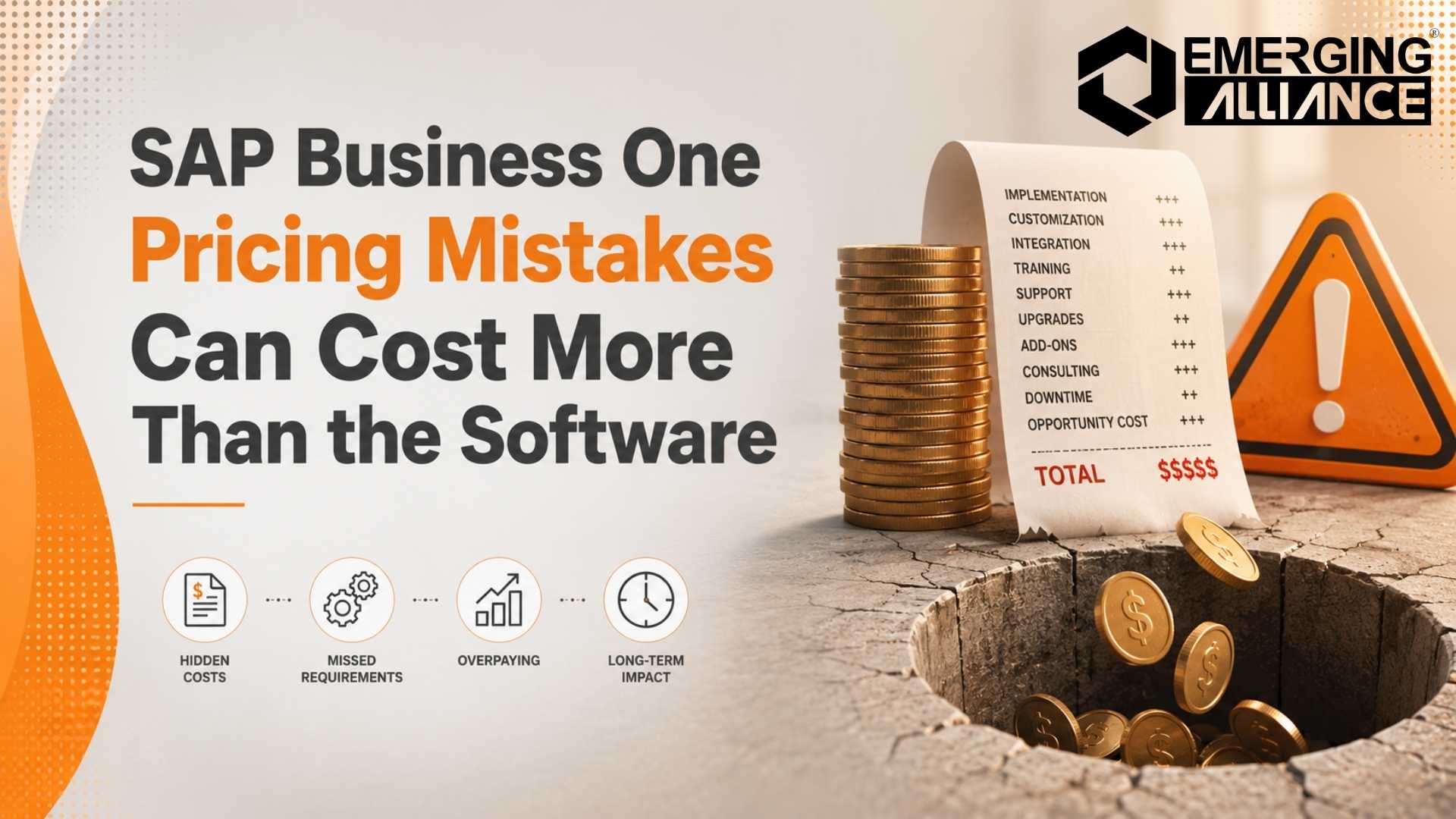
SAP Business One Pricing Mistakes Can Cost More Than the Software
Learn how strategic SAP Business One Pricing protects margins and supports long-term growth
SAP Business One Pricing is often viewed as a software cost decision, but its impact extends far beyond licenses and implementation fees. The pricing choices organizations make can influence operational efficiency, scalability, automation, and long-term ROI. Focusing only on upfront costs may reduce initial investment, but it can also create future challenges that increase operational expenses and limit growth.
For business leaders, the real question is not simply how much SAP Business One costs, but how effectively the investment supports business objectives. A strategic approach to SAP Business One Pricing helps organizations maximize value, improve visibility, reduce inefficiencies, and build a scalable foundation for sustainable growth.
Your structure is stronger for executive audiences because it focuses on business impact rather than ERP features. It aligns better with how CEOs evaluate ERP investments.
Why SAP Business One Pricing Decisions Have a Bigger Business Impact Than Most Leaders Realize
SAP Business One Pricing is often viewed as a software cost discussion, but for growing organizations, it has a direct impact on operational performance, scalability, and profitability. Many decision-makers focus on license fees and implementation budgets without considering how pricing decisions influence long-term business outcomes. The reality is that ERP investments affect process efficiency, reporting visibility, automation capabilities, and future growth potential.
Key discussion points:
- Why SAP Business One Pricing is more than a software purchase
- The connection between pricing decisions, business performance, and ROI
- Common misconceptions decision-makers have when evaluating ERP investments
- Why focusing only on upfront costs can create long-term challenges
The Most Common SAP Business One Pricing Mistakes Businesses Make
Organizations frequently approach ERP pricing with a short-term mindset. While reducing initial investment may seem financially responsible, it can create operational limitations that become significantly more expensive over time. Many businesses unintentionally introduce future costs by selecting solutions that do not fully support their growth objectives.
Common mistakes include:
- Prioritizing lowest cost over business requirements
- Underestimating implementation and scalability needs
- Ignoring future growth and expansion plans
- Overlooking training, support, and optimization requirements
- Evaluating SAP Business One Pricing without considering total business value
How SAP Business One Pricing Mistakes Affect Growth and Profitability
The consequences of poor ERP investment decisions often emerge long after implementation. What initially appears to be a cost-saving decision can eventually create inefficiencies that impact profitability, customer service, and operational agility.
Business impact areas:
- Reduced operational efficiency
- Delayed return on investment
- Increased customization and upgrade costs
- Limited scalability as the business grows
- Hidden expenses that impact margins and competitiveness
For example, a company that purchases only basic functionality to reduce SAP Business One Cost may later require multiple third-party applications, manual workarounds, and additional development efforts, increasing overall ownership costs while reducing process efficiency.
What Strategic SAP Business One Pricing Looks Like
Organizations that achieve the greatest value from ERP investments approach pricing as part of a broader business transformation strategy. Rather than evaluating software costs in isolation, they assess how ERP capabilities support operational objectives, automation initiatives, and future growth.
A strategic pricing approach includes:
- Aligning pricing decisions with business objectives
- Evaluating licensing, implementation, and long-term value together
- Planning for scalability and future operational requirements
- Balancing investment, functionality, and business outcomes
- Building a foundation for sustainable growth
Strategic SAP Business One Pricing ensures that today’s investment continues delivering value as business requirements evolve.
How Business Leaders Can Maximize Value from SAP Business One Pricing
Successful ERP investments require disciplined evaluation and long-term planning. Business leaders should assess not only what the system costs today, but also how effectively it will support operational performance over the next several years.
Key evaluation criteria:
- Business process alignment
- User adoption requirements
- Reporting and visibility needs
- Future scalability considerations
- Integration and automation opportunities
Questions to ask implementation partners:
- How will the solution support future growth?
- What costs should be anticipated beyond implementation?
- How can licensing be optimized over time?
- What measurable business outcomes can be expected?
Organizations that take a strategic approach to SAP Business One Pricing are better positioned to protect margins, accelerate ROI, improve operational visibility, and support long-term digital transformation initiatives.
Conclusion
SAP Business One Pricing should never be evaluated solely through the lens of software cost. The real impact lies in how pricing decisions influence operational efficiency, scalability, automation, and long-term business performance. Organizations that focus only on upfront investment often overlook the hidden costs that emerge later through inefficiencies, limited functionality, and growth constraints.
By aligning ERP investment decisions with business objectives, future expansion plans, and value realization goals, leaders can maximize ROI while creating a scalable platform for sustainable growth. The most successful organizations view SAP Business One Pricing not as a software expense, but as a strategic investment in operational excellence and digital transformation.
Top FAQs About SAP B1 Pricing
1. Why do businesses often underestimate the impact of SAP Business One Pricing decisions?
Many organizations focus on software costs alone and overlook how licensing, implementation scope, and scalability planning affect operational efficiency, future growth, and long-term ROI.
2. How can SAP B1 Pricing influence business profitability?
The right ERP investment can reduce manual work, improve process visibility, accelerate decision-making, and minimize operational inefficiencies that directly affect profitability.
3. What are the biggest risks of choosing ERP based solely on the lowest price?
Low-cost decisions can lead to functionality gaps, higher customization requirements, limited scalability, increased support costs, and slower return on investment.
4. How should leaders evaluate the true value of an ERP investment?
Business leaders should assess how the solution improves productivity, automation, reporting accuracy, compliance, and scalability rather than comparing software costs alone.
5. Why is future business growth important when evaluating SAP B1 Pricing?
Organizations that fail to account for future users, locations, processes, and reporting requirements often face additional costs and operational disruptions later.
6. How does implementation quality affect ERP value realization?
A well-planned implementation improves user adoption, process efficiency, and reporting capabilities, helping organizations achieve faster and more sustainable business outcomes.
7. What role does automation play in maximizing ERP ROI?
Automation reduces manual effort, minimizes errors, improves process consistency, and allows teams to focus on higher-value activities that drive business performance.
8. How can organizations avoid hidden ERP costs after implementation?
By conducting detailed requirements analysis, planning for growth, investing in training, and selecting the right implementation partner from the beginning.
9. What questions should executives ask before investing in SAP Business One?
Leaders should evaluate scalability, operational fit, reporting capabilities, integration requirements, user adoption plans, and expected business outcomes.
10. Why should SAP Business One Pricing be treated as a strategic business decision?
Because ERP investments influence operational performance, visibility, governance, customer service, and growth. Strategic pricing decisions help protect margins while supporting long-term digital transformation goals.
Speak with our SAP Business One experts to identify the right pricing strategy, reduce risk, and build a roadmap for sustainable business growth.