
How SAP Business One Helps Pharmaceutical Companies Meet Regulatory Compliance
Quick Answer
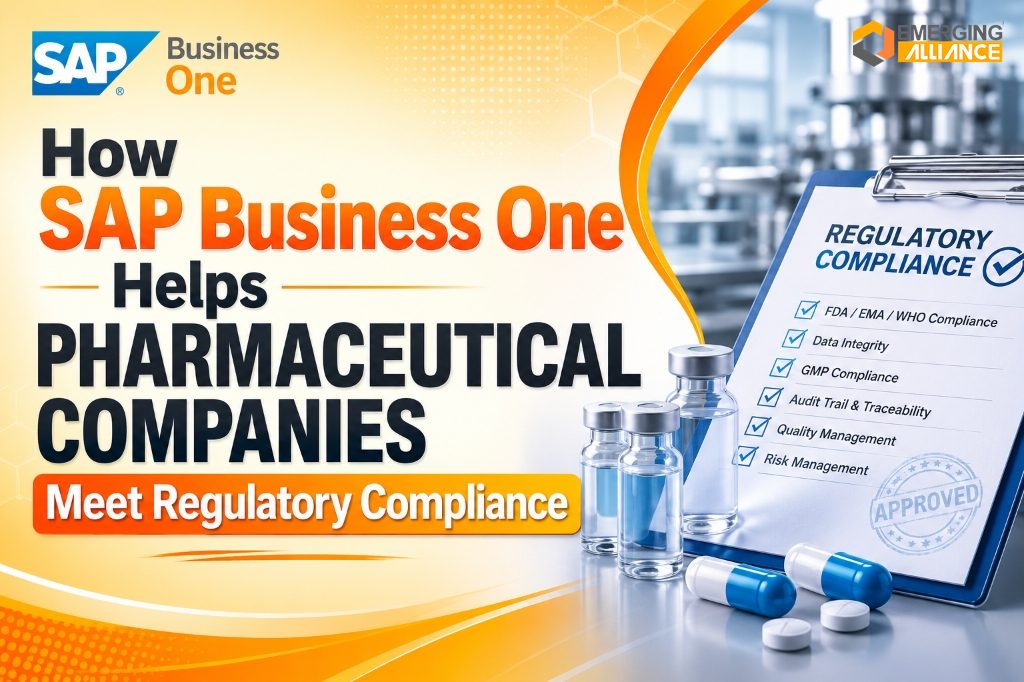
SAP Business One helps pharmaceutical companies meet regulatory compliance requirements by providing batch traceability, audit trails, inventory control, quality management, documentation support, and real-time reporting. The platform centralizes operational data, improves accountability, reduces compliance risks, and helps organizations prepare for audits, inspections, and product recalls more effectively.
Key Compliance Facts
• Critical Priority: Regulatory compliance is one of the most critical priorities in pharmaceutical manufacturing.
• Documentation Risk: Incomplete documentation can lead to audit failures and regulatory penalties.
• Recall Readiness: Batch traceability is essential for product recalls and investigations.
• Lifecycle Tracking: Quality control records must be maintained throughout the product lifecycle.
• Human Error: Manual compliance processes increase the risk of human error.
• Inspection Prep: Audit-ready data improves inspection preparedness.
• Visibility: Real-time reporting enhances regulatory visibility.
• Standardization: ERP systems help standardize compliance-related processes.
• Inventory Control: Inventory control plays a key role in pharmaceutical compliance.
• Centralized Platform: SAP Business One provides a centralized platform for compliance management.
Regulatory Compliance in the Pharmaceutical Industry
Regulatory compliance in the pharmaceutical industry involves adhering to industry standards, government regulations, quality requirements, and documentation practices that ensure product safety, efficacy, and traceability.
Pharmaceutical companies must maintain strict controls over manufacturing, inventory, quality assurance, distribution, and record keeping. Failure to comply can result in financial penalties, product recalls, reputational damage, and regulatory action.
SAP Business One helps pharmaceutical organizations strengthen compliance by integrating operational processes into a single ERP platform that supports traceability, audit readiness, process control, and documentation management.
Why Regulatory Compliance Is Critical in the Pharmaceutical Industry
Regulatory compliance is not simply a legal requirement for pharmaceutical companies—it is a fundamental business necessity.
Organizations must demonstrate that every product is manufactured, stored, distributed, and documented according to strict quality and safety standards. Failure to comply may result in:
• Regulatory fines and financial penalties
• Product recalls and manufacturing shutdowns
• Market restrictions and loss of distribution licenses
• Customer dissatisfaction and loss of trust
• Brand reputation damage
• Revenue loss and business insolvency
As pharmaceutical operations become more complex, companies require systems that support consistent compliance management across all departments.
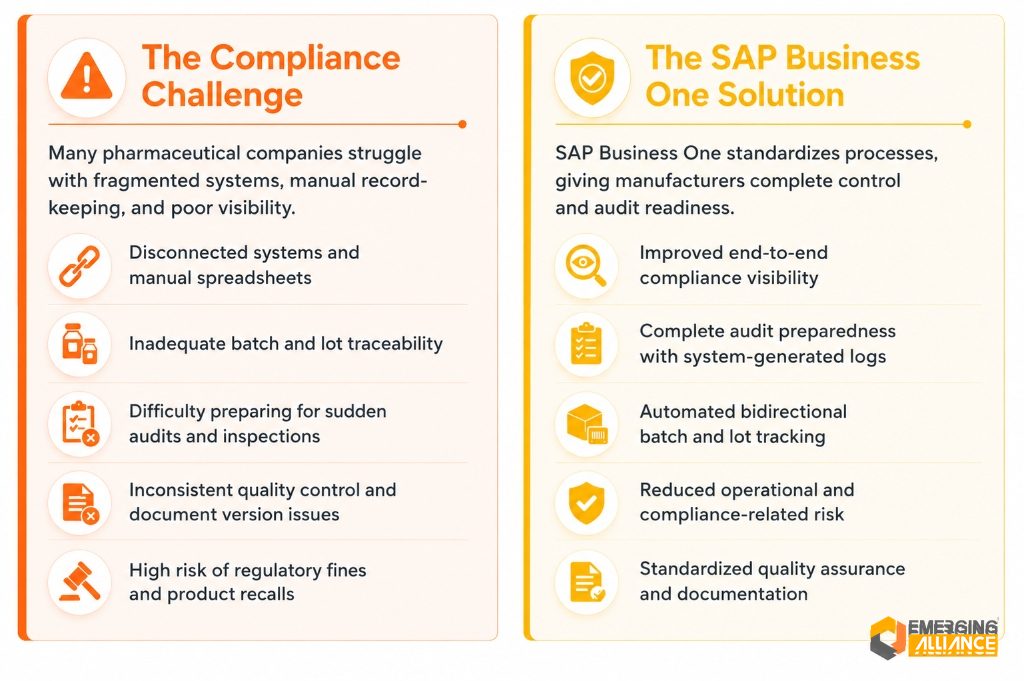
Common Compliance Challenges Facing Pharmaceutical Companies
Manual Documentation Processes
Many organizations still rely on spreadsheets and paper-based systems for managing compliance records. Common issues include:
• Data inconsistencies across different files and departments
• Missing records that fail to prove compliance history
• Version control problems with outdated manuals or SOPs
• Delayed reporting that makes quick decision-making impossible
These challenges increase audit risk and reduce overall operational efficiency.
Lack of End-to-End Traceability
Pharmaceutical manufacturers must track products throughout the entire supply chain. Without complete visibility, organizations struggle to:
• Identify affected batches quickly when quality issues arise
• Investigate root causes of quality issues effectively
• Manage recalls efficiently without recalling unaffected batches
• Demonstrate compliance clearly during unexpected regulatory audits
Audit Preparation Difficulties
Preparing for inspections often requires significant manual effort. Collecting historical records, verifying documentation accuracy, reconciling information from multiple systems, and producing compliance reports are resource-intensive tasks that can lead to delayed audits or inspection failures if records are found to be missing or inaccurate.
Quality Management Complexity
Quality assurance processes involve multiple checkpoints throughout manufacturing and distribution. Without integrated systems, maintaining consistent quality standards, monitoring test status, and managing quarantined materials becomes increasingly difficult and prone to human error.
How SAP Business One Supports Pharmaceutical Compliance
SAP Business One helps pharmaceutical organizations establish stronger compliance controls through integrated business processes and centralized information management. The platform enables organizations to:
• Improve end-to-end traceability
• Standardize documentation processes
• Enhance audit readiness
• Strengthen quality management controls
• Reduce compliance-related operational risks
Batch Traceability and Product Tracking
One of the most important compliance requirements in pharmaceutical manufacturing is batch traceability. SAP Business One enables companies to track products from raw materials through manufacturing, warehousing, and distribution.
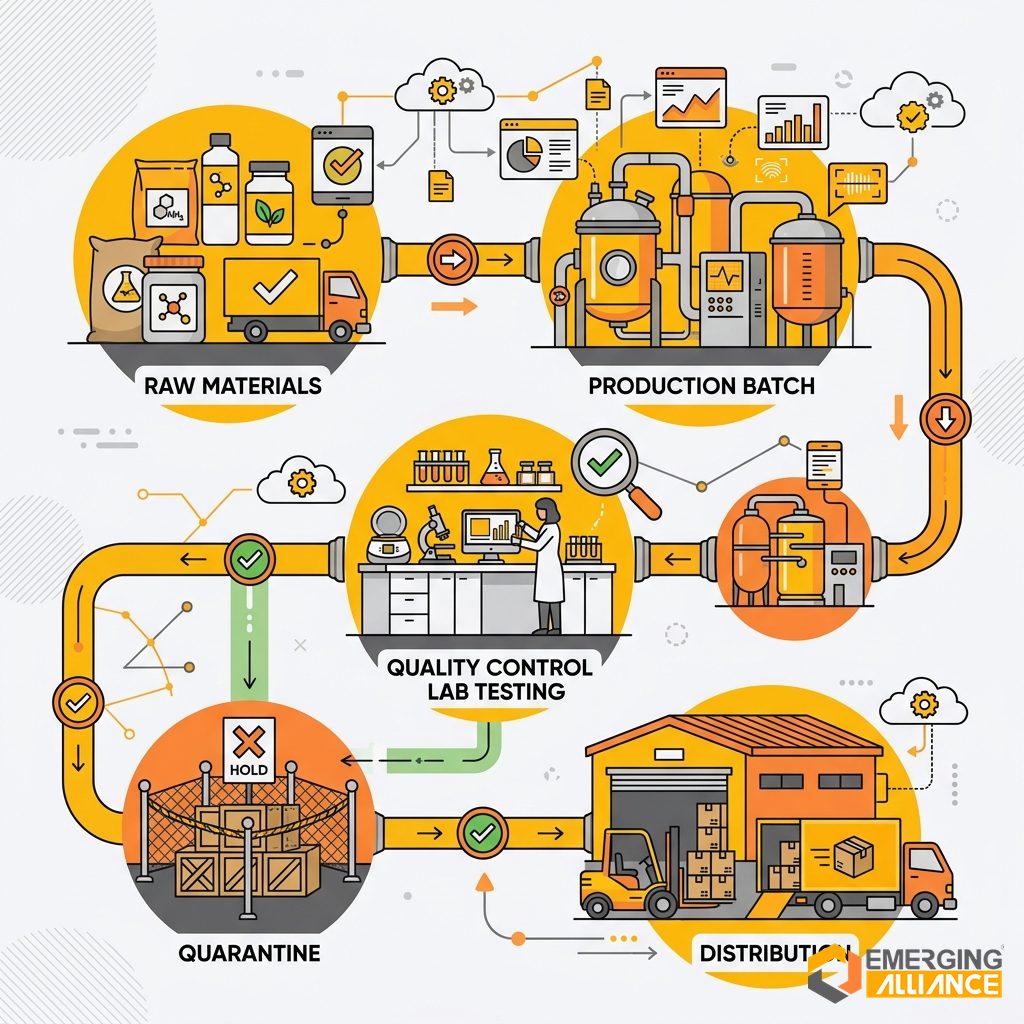
Figure 1: Automated end-to-end batch genealogy tracking in SAP Business One.
Capabilities include:
• Batch Number Assignment: Automatically assign and track batch and lot numbers at receipt and production.
• Lot Tracking: Track raw materials, active ingredients, and finished products across the entire lifecycle.
• Production History: Complete visibility into which batch of raw material went into which finished product.
• Inventory Movements: Monitor every transfer, issue, and receipt of materials.
• Customer Shipment Traceability: Know exactly where each batch was shipped to for precise recall capability.
This level of tracking ensures faster quality investigations, improved recall management, enhanced product accountability, and better regulatory reporting.
Audit Trails and Accountability
Regulatory agencies expect organizations to maintain accurate records of business activities. SAP Business One automatically records operational transactions and changes within the system. This creates comprehensive audit trails that support:
• Regulatory inspections and FDA audits
• Internal quality and financial audits
• Process reviews and continuous improvement
• Compliance and security investigations
With system-generated records and automatic time stamps, companies gain improved transparency, greater accountability, faster audit preparation, and significantly reduced manual documentation effort.
Quality Management and Compliance Control
Quality management is a critical component of pharmaceutical compliance. SAP Business One supports quality-focused processes through integrated operational controls. Organizations can improve:
• Material Inspection: Automatically trigger quality inspections upon receiving raw materials.
• Production Quality: Monitor and document quality checkpoints throughout the manufacturing process.
• Quarantine & Hold: Automatically isolate materials that fail inspections or await lab approval.
• Supplier Quality: Track vendor performance metrics to ensure incoming material quality.
By enforcing consistent quality standards, SAP Business One reduces product defects, improves overall compliance performance, and ensures customer satisfaction.
Documentation Management and Record Accuracy
Compliance depends heavily on accurate documentation. SAP Business One centralizes operational information, helping organizations maintain consistent records across departments. Documentation benefits include:
• Improved data accuracy by removing duplicate entry
• Better version control for critical recipes and SOPs
• Reduced manual documentation and reporting effort
• Faster access to compliance records during audits
These features support strict regulatory requirements and simplify routine compliance reporting.
Inventory Control and Compliance
Inventory management directly impacts pharmaceutical compliance. Organizations must monitor product quantities, storage locations, batch information, expiry dates, and inventory movements. SAP Business One provides real-time inventory visibility that helps organizations maintain compliance while reducing waste and inventory-related risks.