
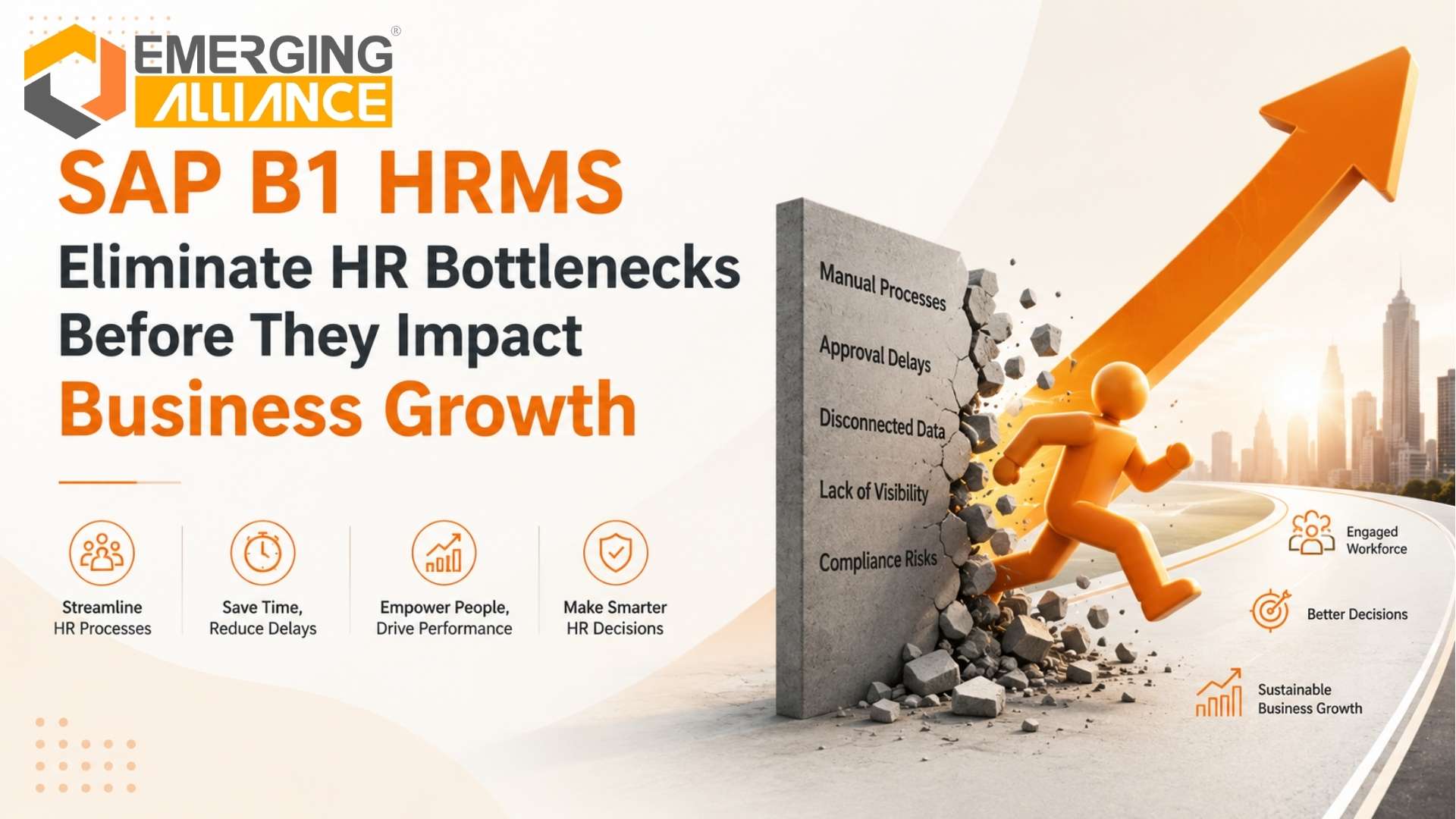
SAP B1 HRMS Eliminate HR Bottlenecks Before They Impact Business Growth
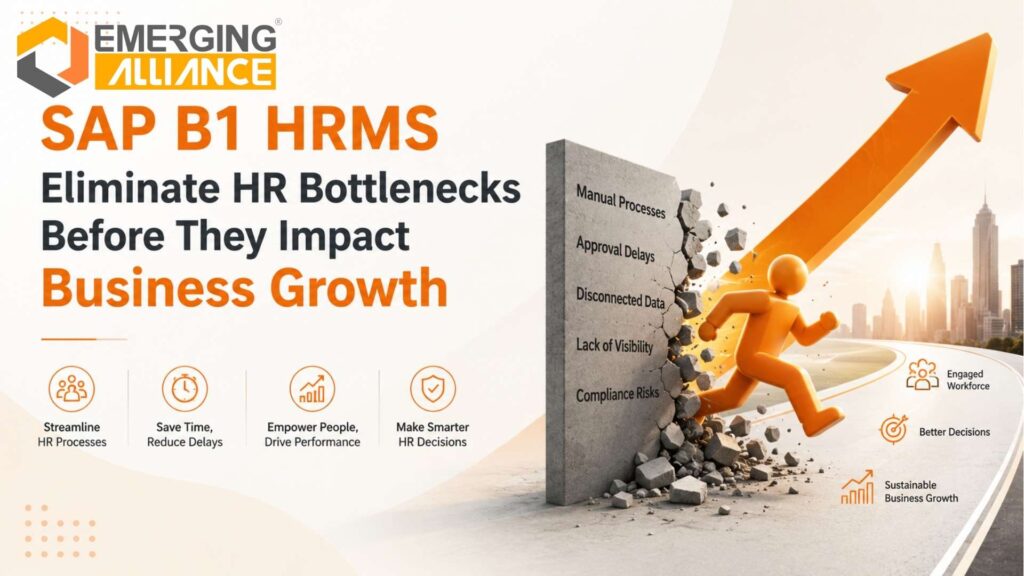
SAP B1 HRMS Reduces Delays, Errors, and Operational Risks
Workforce growth should strengthen business performance. However, for many organizations, expanding employee numbers often create new operational challenges. Manual payroll processing, fragmented employee records, attendance tracking issues, disconnected HR systems, and compliance requirements can quickly become bottlenecks that reduce productivity and increase administrative costs. As organizations scale, HR teams are expected to manage growing workforce complexity while maintaining accuracy, compliance, and employee satisfaction. Traditional HR processes often struggle to support these demands, creating delays, visibility gaps, and operational inefficiencies that impact broader business performance. SAP B1 HRMS helps organizations modernize workforce management by automating HR and payroll processes, centralizing employee information, improving workforce visibility, and strengthening compliance controls. By eliminating manual bottlenecks, businesses can improve efficiency, reduce risk, and create a scalable foundation for sustainable growth.
Why Workforce Efficiency Has Become a Boardroom-Level Priority
Business leaders increasingly recognize that workforce management directly influences productivity, operational agility, compliance readiness, and overall business performance. HR is no longer viewed solely as an administrative function. It has become a strategic contributor to organizational growth and operational excellence.
As workforce sizes increase, manual HR processes often struggle to keep pace with evolving business requirements. Employee onboarding, attendance management, leave administration, payroll processing, and workforce reporting become increasingly complex, creating delays and reducing management visibility.
Organizations that prioritize workforce efficiency are better positioned to:
- Improve employee experiences and engagement
- Strengthen compliance and governance
- Enhance workforce productivity
- Reduce administrative overhead
- Support long-term business growth initiatives
Modern organizations understand that operational excellence begins with efficient workforce management.
The Hidden Business Cost of HR Bottlenecks
Many organizations underestimate the impact of inefficient HR operations until issues begin affecting broader business outcomes.
Common HR bottlenecks include:
- Delayed payroll processing and employee administration
- Manual errors in workforce records and salary calculations
- Compliance risks resulting from fragmented HR data
- Productivity losses caused by disconnected HR workflows
- Limited visibility into workforce performance and utilization
- Increased employee dissatisfaction due to delayed HR services
While these challenges may initially appear operational, their impact extends across the organization.
Delayed Payroll Processing Impacts Employee Trust
Payroll inaccuracies and processing delays can negatively affect employee confidence and satisfaction. Over time, these issues can influence retention and workplace morale.
Manual Errors Increase Administrative Costs
Organizations relying on spreadsheets and disconnected systems often spend significant time correcting errors, validating records, and resolving payroll discrepancies.
Compliance Risks Continue to Grow
Labor regulations, statutory requirements, and audit expectations are becoming increasingly complex. Fragmented workforce data can expose organizations to compliance violations and financial penalties.
Limited Visibility Restricts Decision-Making
Without real-time workforce information, leadership teams often struggle to make informed decisions related to resource planning, workforce allocation, and organizational performance.
How Leading Organizations Are Modernizing HR and Payroll Management
Forward-thinking organizations are transforming workforce management by replacing manual processes with integrated HR and payroll solutions.
Their modernization initiatives typically focus on four key areas.
Moving Beyond Spreadsheets and Disconnected Systems
Organizations are centralizing employee records, attendance data, payroll information, and workforce documentation within a unified platform. This improves data consistency while reducing duplication and administrative effort.
Automating Routine HR Processes
Tasks such as attendance tracking, leave approvals, employee onboarding, payroll processing, reimbursement management, and employee self-service functions are increasingly automated to improve efficiency and accuracy.
Strengthening Compliance and Governance
Integrated HR platforms improve audit readiness, data integrity, policy enforcement, and regulatory compliance while reducing operational risk.
Building a Scalable Workforce Management Foundation
As organizations grow, standardized HR processes become critical. Modern HRMS platforms provide the scalability required to support workforce expansion without increasing operational complexity.
How SAP B1 HRMS Helps Eliminate HR Bottlenecks
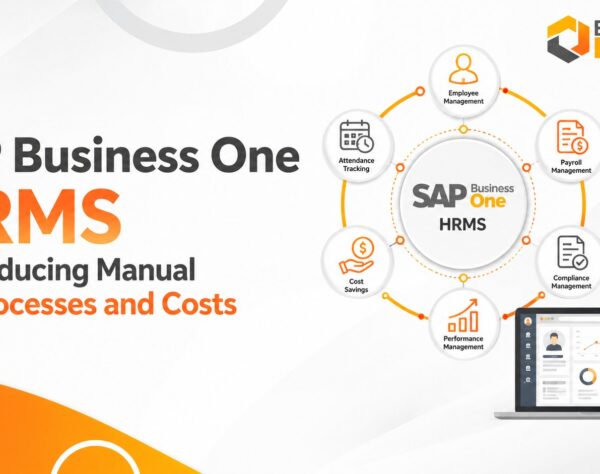
SAP B1 HRMS provides a centralized workforce management platform that integrates employee administration, payroll processing, attendance management, leave management, compliance monitoring, and reporting within the SAP Business One environment.
Unlike standalone HR applications, HRMS for SAP Business One connects workforce operations with broader business processes, creating a single source of truth for employee and organizational data.
Centralized Employee Management
Maintain accurate employee records, organizational structures, employee histories, and workforce documentation within a unified platform.
Automated Attendance, Leave, and Payroll Management
SAP B1 Payroll automates attendance tracking, leave calculations, salary processing, statutory deductions, and payroll workflows, reducing manual effort and improving processing accuracy.
Improved Accuracy and Reduced Administrative Burden
By eliminating duplicate data entry and disconnected systems, organizations can significantly reduce payroll errors, administrative workload, and repetitive HR activities.
Real-Time Workforce Reporting
Access workforce dashboards, attendance analytics, payroll reports, employee trends, and management insights that support better planning and decision-making.
Native SAP Business One Integration
One of the biggest advantages of SAP Business One HRMS is its ability to integrate seamlessly with SAP Business One operations, finance, payroll accounting, and reporting processes.
This integration helps organizations improve data consistency while enabling better workforce cost visibility and financial control.
Enhanced Compliance and Operational Control
Standardized HR processes, approval workflows, audit trails, and compliance monitoring capabilities help strengthen governance and reduce operational risk.
Business Outcomes Organizations Typically Achieve with SAP B1 HRMS
Organizations implementing SAP Business One HR Management solutions often experience measurable operational improvements.
Common business outcomes include:
- Faster payroll processing cycles
- Reduced HR administration effort
- Improved workforce productivity
- Enhanced employee satisfaction
- Better workforce planning and forecasting
- Stronger compliance management
- Greater management visibility
- Reduced operational risk
- Improved payroll accuracy
- Lower administrative costs
These benefits help transform HR operations from an administrative function into a strategic business enabler.
What Business Leaders Should Evaluate Before Investing in an HRMS
Selecting an HRMS should be viewed as a strategic business decision rather than simply a software purchase.
Before investing, organizations should evaluate the following areas.
Integration with Existing SAP Business One Operations
The HRMS should seamlessly integrate with ERP, finance, payroll accounting, reporting, and workforce management processes.
Automation Capabilities
Evaluate how effectively the solution eliminates manual workflows, repetitive tasks, approvals, and payroll processing activities.
Workforce Visibility and Reporting
Leadership teams should have access to meaningful workforce analytics, operational metrics, and employee performance insights.
Compliance and Data Management Features
Assess how the platform supports statutory compliance, audit readiness, policy enforcement, and workforce governance requirements.
Scalability for Future Growth
The solution should support organizational expansion without introducing additional administrative complexity.
Organizations that select the right HRMS platform often gain stronger operational control, improved workforce management, and greater business agility.
Transform HR Operations into a Strategic Growth Advantage
Organizations that continue relying on manual HR processes often face rising administrative costs, growing compliance exposure, and limited workforce visibility. As workforce complexity increases, traditional HR systems become increasingly difficult to manage and scale.
SAP B1 HRMS provides a scalable framework for workforce management that supports operational efficiency, compliance, governance, and long-term business growth. By centralizing employee information, automating payroll and HR processes, and providing real-time workforce visibility, organizations can eliminate operational bottlenecks and improve overall business performance.
Frequently Asked Questions
1. How does SAP B1 HRMS improve workforce visibility?
SAP B1 HRMS centralizes employee information, attendance records, leave data, payroll details, and workforce reporting within a single platform, providing management with real-time visibility and actionable insights.
2. How does SAP B1 Payroll integrate with SAP Business One financial management?
SAP B1 Payroll integrates payroll transactions with finance, budgeting, cost center allocation, and accounting processes, improving financial accuracy and reporting visibility.
3. What business challenges does HRMS for SAP Business One solve?
HRMS for SAP Business One helps address payroll inefficiencies, fragmented employee data, compliance risks, manual approvals, administrative bottlenecks, and workforce visibility challenges.
4. Is SAP Business One Payroll suitable for multi-location organizations?
Yes. SAP Business One Payroll supports centralized workforce management across multiple branches, departments, business units, and operational locations.
5. How does Payroll Accounting in SAP B1 support financial reporting?
Payroll Accounting in SAP B1 accurately captures employee expenses, deductions, benefits, and labor costs, improving budgeting, financial planning, and reporting accuracy.
6. What are the key modules available in SAP Business One HRMS?
Typical modules include employee management, attendance tracking, leave management, payroll processing, claims management, performance monitoring, recruitment support, and workforce reporting.
7. Can Payroll Software for SAP Business One reduce payroll processing time?
Yes. Payroll Software for SAP Business One automates calculations, approvals, statutory deductions, and payroll workflows, enabling faster and more accurate payroll processing.
8. How does HR and Payroll Integration with SAP B1 improve operational efficiency?
HR and Payroll Integration with SAP B1 eliminates duplicate data entry, reduces reconciliation efforts, improves reporting accuracy, and creates a unified workforce management process.
9. What should organizations consider before SAP B1 HRMS implementation?
Organizations should evaluate workforce complexity, process standardization requirements, compliance obligations, integration needs, reporting requirements, and future scalability goals.
10. Why is Payroll Software for SAP Business One important for growing enterprises?
As workforce size increases, payroll complexity grows. Payroll Software for SAP Business One helps maintain accuracy, compliance, visibility, and operational control while supporting business expansion.
At Emerging Alliance, we help organizations align HR transformation initiatives with broader business objectives through strategic consulting, process optimization, and SAP Business One expertise. Our approach focuses on delivering measurable business outcomes while helping organizations build a more efficient and scalable workforce management environment.