

SAP Business One for Electrical Manufacturing: Overcoming Financial Visibility Gaps in Business Operations
Quick Answer
SAP Business One for Electrical Manufacturing helps companies improve financial visibility by connecting accounting, purchasing, sales, inventory, and production transactions within one ERP environment. With reliable master data, suitable costing methods, and disciplined transaction posting, manufacturers can monitor material expenditure, investigate production costs, review inventory value, and prepare more consistent financial reports. The objective is not simply faster reporting: it is better evidence for pricing, budgeting, working-capital decisions, and profitable growth.
Financial Visibility Challenges That Put Electrical Manufacturing Margins at Risk
An electrical panel board manufacturer may have a healthy order book and still struggle to explain its margins. Copper and component prices may change between quotation and procurement. Materials may be issued to production without timely recording. Unbilled customer orders, outstanding supplier invoices, and stock commitments may sit in separate reports.
For CEOs and CFOs, the problem is not a shortage of data. It is the absence of a dependable link between operational activity and financial performance. If teams use different spreadsheets or applications, the same question—What did this order actually cost us?—can produce different answers.
Three common blind spots deserve particular attention:
- Material spending: Purchasing records may not be reconciled promptly with goods receipts, supplier invoices, and inventory movements.
- Manufacturing cost: Planned Bill of Materials (BOM) quantities may differ from components actually consumed, affecting cost and margin analysis.
- Financial timing: Reports prepared from disconnected records may reflect outdated transactions, delaying management action.
The financial consequences extend beyond reporting delays. Inconsistent records can lead to avoidable reconciliation work, purchasing decisions based on incomplete stock information, and pricing decisions made without a sufficiently reliable view of cost.
Why Disconnected Purchasing, Inventory, and Accounting Records Cause Financial Gaps
Consider an electrical manufacturer buying copper conductors, enclosures, connectors, and insulation materials. Procurement raises purchase orders; the warehouse records receipts; production consumes components; and finance processes supplier invoices. When these records are maintained independently, finance may need to reconstruct the transaction trail manually.
An integrated process should make it possible to follow a transaction from purchasing through inventory and, where relevant, into accounting. SAP Business One supports linked purchasing, inventory, and financial processes, reducing the need to repeatedly enter the same information.
However, an integrated ERP does not correct late or inaccurate entries by itself. A purchase order does not necessarily represent an accounting expense, and the timing of inventory and financial postings depends on the document type and configuration. Controls around goods receipts, supplier invoices, material issues, and approvals remain essential.
For leadership teams, the objective is a consistent record of what was ordered, received, consumed, invoiced, and paid—not merely a consolidated dashboard.
Production Cost Control Through BOMs, Material Issues, and Manufacturing Transactions
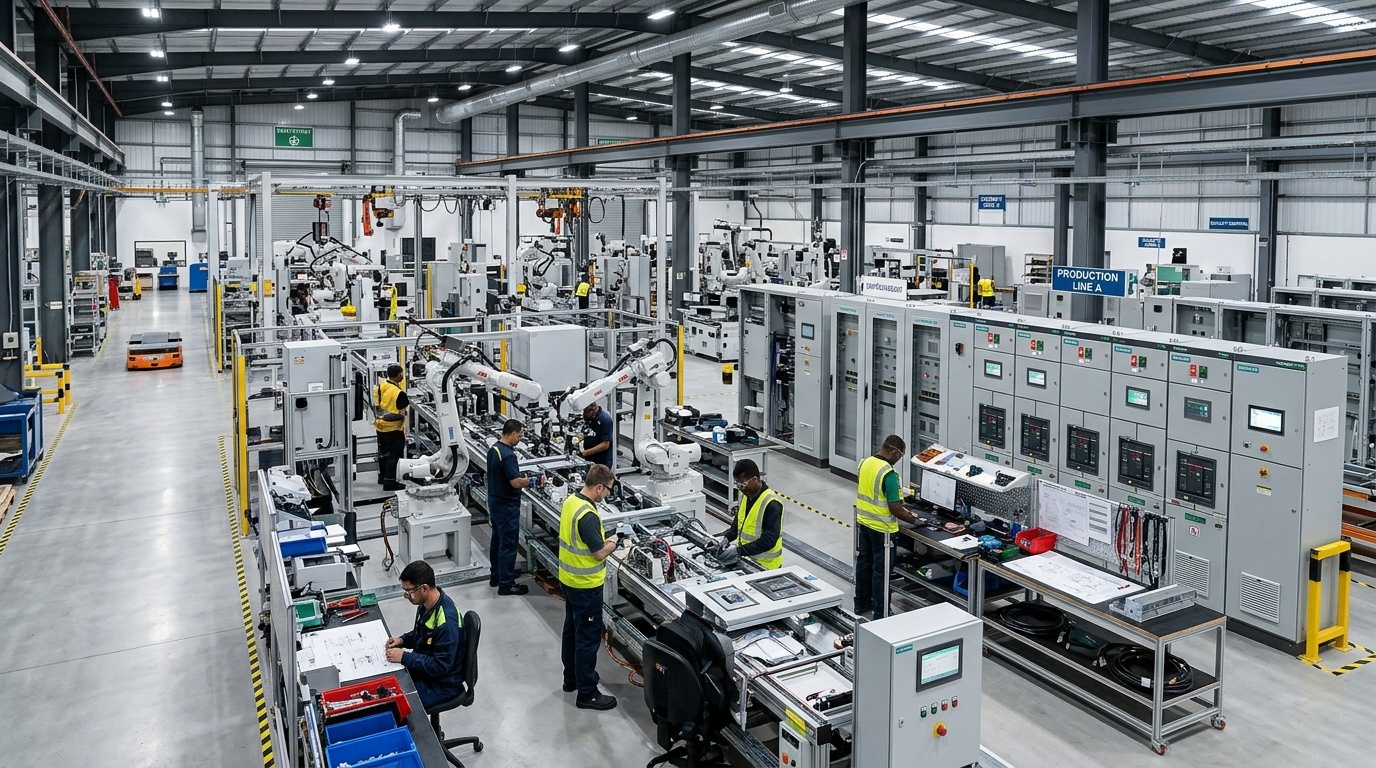
Production cost control in electrical manufacturing: Tracking BOM accuracy, raw material consumption, and production transactions in SAP Business One.
Material consumption is a critical cost driver in electrical manufacturing. Products may include numerous purchased components, with supplier prices and actual usage changing from one production order to the next. Reliable cost analysis therefore starts with the production data.
BOM Accuracy and Raw Material Consumption
A Bill of Materials (BOM) defines the components and quantities planned for a finished item. When quantities, component selections, or item master records are outdated, planned material requirements may not reflect the actual job.
SAP Business One supports BOMs and production orders. Recording material issues against production activity provides evidence of consumption that finance and operations teams can investigate. For example, a panel-board order that consumes more conductors or connectors than planned warrants a review of scrap, design changes, inaccurate BOM quantities, or transaction errors.
Production Orders and Work-in-Progress Visibility
Production orders help record the items being manufactured and related goods issues and receipts. These transactions can support the assessment of incomplete production and its inventory-related financial impact.
Work-in-progress visibility must be interpreted in light of the selected inventory valuation method, posting practices, and production setup. Complex routing, detailed labour capture, or sophisticated overhead allocation may require additional configuration, reporting, or manufacturing extensions.
Planned Versus Actual Manufacturing Costs
Production cost variations can arise from supplier price movements, higher-than-planned material usage, waste, rework, and overhead allocation. Managers should investigate the causes rather than assume that a BOM estimate is the final cost.
A practical monthly review can compare planned quantities with issued quantities, purchasing price changes, relevant production transactions, and the accounting treatment of manufacturing costs. SAP Business One provides an operational and financial record for this analysis, but the accuracy of the comparison depends on master data, valuation methods, and costing design.
Executive takeaway: A reliable BOM and disciplined production postings are prerequisites for useful manufacturing cost visibility. Software alone cannot guarantee accurate product profitability.
Connecting SAP Business One Financial Management with Operational Decisions
Financial visibility becomes valuable when leaders can trace a reported number to the underlying business activity. SAP Business One links core financial processes with purchasing, sales, and inventory transactions according to the configured workflow.
Accounts Payable, Receivable, and Working Capital
Outstanding supplier balances, customer receivables, and payment schedules affect liquidity. Finance teams need to understand what is owed, when it is due, and whether collections are keeping pace with purchases.
Integrated accounts payable and receivable records support reviews of obligations and collections. They can also help managers investigate why a period of strong sales has not translated into a stronger cash position. Reliable cash-flow forecasts still require assumptions about future receipts, payments, and commitments.
Inventory Valuation and Financial Exposure
Inventory ties up cash. Excess stock can increase carrying costs, while shortages can delay production and customer deliveries. Reliable item records and stock movements help management understand how much capital is held in materials and finished goods.
SAP Business One supports inventory valuation through configured methods and related accounting transactions. The figures must be interpreted alongside physical-stock accuracy, receipts, issues, returns, and any applicable valuation adjustments.
Management Reporting and Budget Control
Finance teams often lose time consolidating reports from separate spreadsheets and applications. Standardized transaction data can reduce manual reconciliation and support more timely management reviews.
Depending on configuration and reporting requirements, SAP Business One can support reviews of financial statements, outstanding balances, purchasing activity, stock information, and budget-to-actual performance.
A useful management report should answer specific questions:
- Which material or spending categories explain an increase in manufacturing expenditure?
- Where do actual expenses differ from approved budgets?
- Which overdue receivables or supplier obligations require attention?
- Which operational records need correction before the figures can be trusted?
Budget comparisons also require appropriate structures, defined responsibility, and consistent posting. A dashboard is only as dependable as the data and financial controls behind it.
Turning Financial Visibility into Clearer Manufacturing Decisions
Greater visibility should lead to specific management actions, not more reports. For electrical manufacturers, this means aligning finance, procurement, and production around a small set of comparable measures.
| Business decision | Information to review | Management action |
|---|---|---|
| Review product or order margins | Material usage, purchasing prices, relevant production costs | Investigate variances before revising prices or estimates |
| Control procurement spending | Purchase orders, goods receipts, supplier invoices, approved budgets | Review commitments and exceptions |
| Manage working capital | Stock valuation, receivables, payables, cash forecasts | Prioritize collections, purchases, and payments |
| Improve month-end reporting | Posting completeness, reconciliations, agreed report definitions | Resolve exceptions before reporting |
These decisions become more dependable when every department follows consistent transaction and reporting procedures. ERP visibility is therefore both a technology and a process-control issue.
Formoplastic Success Story – Strengthening Financial and Operational Control with SAP Business One
Formoplastic, an electrical panel board manufacturer based in Chennai, India, implemented SAP Business One with support from Emerging Alliance to standardize business processes, improve financial visibility, and strengthen operational control. The company has 25 SAP Business One users, with Ganesh, CEO, sharing its success story.
How Emerging Alliance Helped Formoplastic Overcome Business Challenges
Formoplastic needed a centralized ERP solution to manage financial transactions, production planning, supply chain activities, and departmental reporting.
Emerging Alliance supported the company through its SAP Business One implementation, helping integrate key business functions into a more connected and standardized operating environment.
Key business improvements included:
- Financial Visibility: Centralized accounting, budgeting, and financial reporting.
- Cost Savings: Reduced operational costs through standardized business processes.
- Production Control: Improved production planning and supply chain coordination.
- Integrated Reporting: Better information sharing and reporting across departments.
- Business Growth: Greater visibility into customer requirements and stronger operational control to support expansion.
Customer Testimonial
“With SAP Business One, we saved money and standardized our business processes.”
— Ganesh, CEO, Formoplastic
Business Outcome: With SAP Business One and Emerging Alliance’s implementation support, Formoplastic established more integrated business operations, improved financial transparency, and strengthened its ability to manage growth while maintaining business control.
SAP Business One Implementation Safeguards for Electrical Manufacturers

SAP Business One implementation safeguards: Aligning financial structure, manufacturing master data, costing design, and inventory controls.
The reliability of financial reporting after an ERP rollout depends on decisions made before go-live. A focused assessment should confirm the following controls.
Financial Structure and Reporting Requirements
Define the chart of accounts, account determination, reporting periods, financial dimensions where applicable, budget structures, and management reports. Agree on who owns each report and how exceptions will be reviewed.
Manufacturing Master Data and Costing Design
Validate item masters, BOM quantities, production order procedures, material issue methods, and inventory valuation policies. Identify whether labour, routing, or overhead requirements can be met through the planned SAP Business One configuration or require additional functionality.
Purchasing, Inventory, and Authorization Controls
Review supplier and warehouse records, goods receipt procedures, stock adjustments, purchasing approvals, and the separation of duties. Document how purchase commitments and inventory movements will be monitored.
Data Migration, Integration, and User Training
Reconcile opening balances and stock quantities before migration. Remove duplicate or obsolete records. Test integrations with retained applications, validate representative production and financial transactions, and train users on posting responsibilities.
An implementation partner should demonstrate the proposed workflows using real electrical-manufacturing scenarios rather than relying solely on a generic ERP demonstration. Emerging Alliance provides SAP Business One implementation, customization, integration, migration, and ongoing support services; the fit of any proposed design should be established through a requirements assessment.
Building Stronger Financial Control for Sustainable Electrical Manufacturing Growth
Financial visibility is essential for electrical manufacturers seeking to control production costs, protect profitability, and support business expansion. When financial information remains disconnected across accounting, procurement, inventory, and production, management may struggle to identify cost variations, assess operational performance, and make timely decisions.
SAP Business One for Electrical Manufacturing provides an integrated foundation for connecting financial and manufacturing operations. By improving production cost visibility, inventory valuation, budget monitoring, and financial reporting, businesses can gain greater control over expenditure and make more informed decisions.
However, achieving long-term financial transparency requires more than implementing ERP software. Accurate business data, well-defined processes, appropriate financial controls, and consistent reporting practices are equally important.
For CEOs, CFOs, and Operations Heads, the priority is to establish a reliable financial management environment that supports cost control, operational efficiency, profitability, and sustainable business growth.
Frequently Asked Questions
Turn Financial Visibility Gaps into Better Business Control
See how SAP Business One can help your electrical manufacturing business improve cost visibility, financial reporting, and operational control.
Book Your SAP Business One Demo with Emerging Alliance.