

10 Proven Ways SAP B1 Fuels Growth in Healthcare Industry
10 Ways SAP B1 Helps the Healthcare Industry Grow
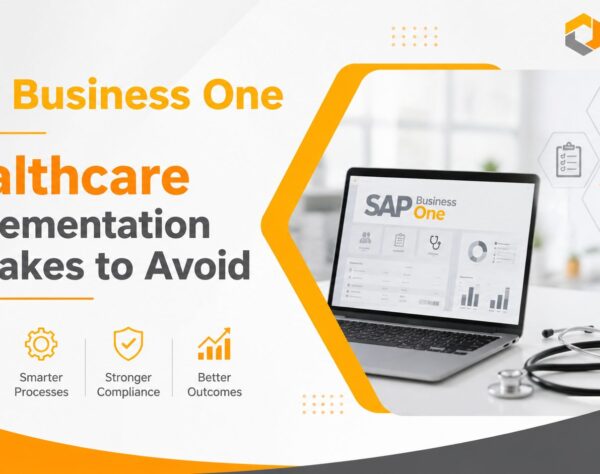
In the healthcare industry, the ability to streamline operations, manage resources effectively, and ensure the highest level of service quality can make all the difference. Enter SAP Business One (SAP B1)—a next-level solution that supports growth by providing the tools necessary for healthcare organizations to stay ahead of the curve. From improving data management to enhancing financial processes, SAP B1 helps the healthcare industry transform how providers and organizations operate.
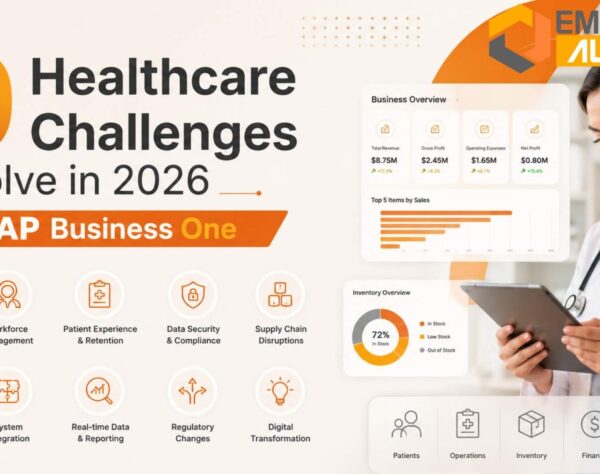
Here are 10 ways SAP B1 is driving growth and innovation in healthcare:
1. Mastering Inventory Management for Maximum Efficiency
Healthcare facilities often face the challenge of managing an extensive range of medical supplies, pharmaceuticals, and equipment. SAP B1 simplifies inventory management by providing real-time tracking and data-driven insights. This ensures that hospitals, clinics, and pharmacies maintain adequate stock levels without the risk of overstocking or running out of essential supplies, reducing waste, and improving patient care.
2. Boost Financial Control and Visibility with SAP B1
Managing finances is a crucial aspect of any healthcare operation. SAP B1 integrates financial management into a unified system that helps track expenses, monitor revenue, and ensure compliance with regulations. With automated financial reporting and budgeting tools, healthcare providers can achieve greater transparency, control, and insight into their financial health, enabling them to allocate resources more effectively.
3. Revolutionizing Patient Data Management for Seamless Care
In healthcare, accurate and up-to-date patient data is essential. SAP B1 helps healthcare providers organize and manage patient information efficiently. By centralizing patient records, medical histories, and treatment plans in one system, healthcare professionals can access critical data quickly and make informed decisions. This improves patient outcomes and enhances overall care delivery.
4. Simplifying Procurement and Strengthening Supplier Partnerships
From medical supplies to pharmaceuticals, healthcare organizations rely heavily on suppliers to keep operations running smoothly. SAP B1 automates procurement processes, making it easier to track orders, manage supplier relationships, and ensure timely deliveries. This eliminates manual tasks, reduces errors, and enhances supplier collaboration, ultimately contributing to better service delivery.
5. Improving Operational Efficiency for Better Outcomes
The complexity of day-to-day operations in healthcare can lead to inefficiencies. SAP B1 streamlines workflows across departments, from administrative to clinical, by automating routine tasks such as billing, appointment scheduling, and staff management. This leads to reduced administrative overhead and more time for healthcare professionals to focus on patient care.
6. Achieving Seamless Regulatory Compliance with SAP B1
Healthcare organizations must adhere to strict industry regulations and standards, including those related to patient privacy and data security. SAP B1 helps organizations stay compliant by providing robust tools for managing sensitive data, ensuring that all processes meet regulatory requirements. The system also generates detailed audit trails and reporting capabilities to facilitate inspections and audits.
7. Fueling Scalability and Growth for Your Healthcare Business
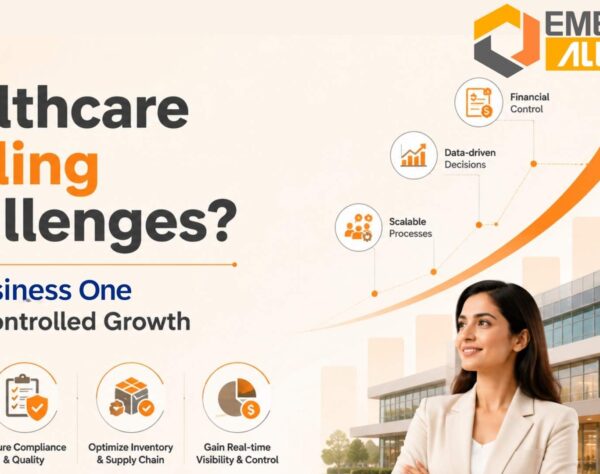
As healthcare organizations expand, so do their needs. SAP B1 is designed to scale with the growth of the organization, offering customizable modules that adapt to changing requirements. Whether opening new clinics, increasing patient intake, or adding services, SAP B1 grows with the business, helping healthcare providers efficiently manage increasing complexities.
8. Empowering Smarter Decisions with Real-Time Analytics
Data is at the heart of decision-making in healthcare. SAP B1 provides powerful business intelligence and real-time analytics, giving healthcare managers access to actionable insights. Whether it’s monitoring patient trends, analyzing financial performance, or forecasting demand for specific services, SAP B1 ensures that decisions are based on accurate, up-to-date information, empowering leaders to make informed choices.
9. Enhancing Patient Experience for Better Care
At the core of healthcare is the patient experience. SAP B1 can improve this experience by automating appointment scheduling, sending reminders, and enabling easy access to patient records. Additionally, SAP B1 enhances communication across departments, reducing wait times and improving patient flow. By making processes more efficient and customer-centric, SAP B1 helps organizations offer better experiences for patients.
10. Boosting Collaboration Across Teams
Collaboration between various teams, including doctors, nurses, administrators, and other support staff, is crucial for providing optimal patient care. SAP B1 ERP solution enhances team collaboration by providing a unified platform for sharing information and coordinating efforts. Whether it’s sharing patient information, updating schedules, or coordinating care plans, SAP B1 ensures seamless communication, improving both efficiency and patient outcomes.
A Healthier Future with SAP B1
SAP Business One is more than just an enterprise resource planning (ERP) system; it’s a transformative tool that helps healthcare organizations tackle the industry’s most pressing challenges. By optimizing inventory, streamlining workflows, and improving financial management, SAP B1 not only enhances operational efficiency but also contributes to better patient care. As the healthcare sector continues to evolve, solutions like SAP B1 will play an essential role in shaping a future of growth, efficiency, and improved healthcare delivery.
By leveraging SAP B1, healthcare organizations can streamline their operations and foster a culture of innovation and efficiency—leading to improved outcomes and sustainable growth.
Ready to Take Your Healthcare Business to the Next Level?
Ready to elevate your healthcare organization? Discover the 10 key ways SAP Business One can revolutionize your operations, reduce costs and enhance patient care. Reach out to us at www.emerging-alliance.com for the perfect solution designed for your needs.
FAQs About SAP B1 for Healthcare
1. How does SAP Business One handle batch tracking and expiry management for pharmaceuticals?
SAP B1 supports batch and serial number tracking, allowing healthcare providers to monitor drug expiry dates, trace inventory movement, and quickly isolate affected batches during recalls—critical for regulatory compliance and patient safety.
2. Can SAP B1 integrate with existing hospital systems like EHR or LIS?
Yes, but not natively in all cases. Integration typically requires middleware or APIs to connect with Electronic Health Records (EHR) or Laboratory Information Systems (LIS). The complexity depends on the legacy system architecture and data standardization.
3. How does SAP B1 ensure data privacy compliance for patient information?
SAP B1 provides role-based access control, audit logs, and data encryption mechanisms. However, compliance with standards like HIPAA or local regulations depends on how the system is configured and governed—not the software alone.
4. What kind of real-time reporting is available for hospital administrators?
Administrators can access dashboards for financial KPIs, inventory turnover, procurement cycles, and operational bottlenecks. With SAP B1 analytics, reports can be customized to track metrics like cost per patient or department-wise profitability.
5. Is SAP B1 suitable for multi-location healthcare chains or hospital networks?
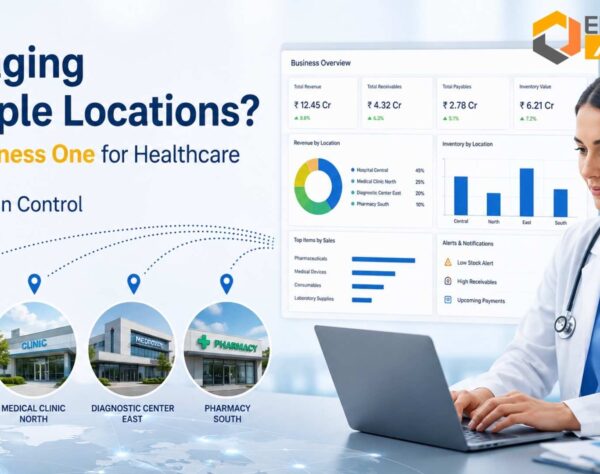
Yes, SAP B1 supports multi-branch operations with centralized data control. It allows consolidation of financials and operational visibility across locations, though performance depends on deployment architecture (cloud vs on-premise).
6. How does SAP B1 improve procurement efficiency in healthcare specifically?
It automates purchase requests, approval workflows, and vendor comparisons. More importantly, it enables demand forecasting based on historical consumption patterns—reducing emergency purchases and supplier dependency risks.
7. What are the typical implementation challenges for healthcare organizations adopting SAP B1?
Common issues include data migration from legacy systems, resistance from staff, lack of process standardization, and integration with clinical systems. Poor requirement mapping at the start often leads to cost overruns.
8. Can SAP B1 support insurance billing and claims management?
Not as a core feature. SAP B1 can manage billing workflows, but insurance claims processing usually requires customization or third-party add-ons tailored to healthcare reimbursement models.
9. How does SAP B1 contribute to reducing operational costs in hospitals?
Cost reduction comes from minimizing inventory wastage, automating manual processes, improving procurement efficiency, and providing financial transparency. However, ROI depends heavily on how well the system is implemented and adopted.
10. What level of customization is required for healthcare-specific workflows in SAP B1?
Significant customization is often required, especially for patient-centric workflows, clinical integrations, and regulatory reporting. SAP B1 is flexible, but it is not a healthcare-native system out of the box.
Need personalized guidance? Fill out the form below and let’s connect soon!