
SAP Business One for Pharma Distribution and Manufacturing: Complete Guide to Supply Chain Visibility, Compliance, and Operational Efficiency
SAP Business One for Pharma Distribution and Manufacturing: Complete Guide to Supply Chain Visibility, Compliance, and Operational Efficiency
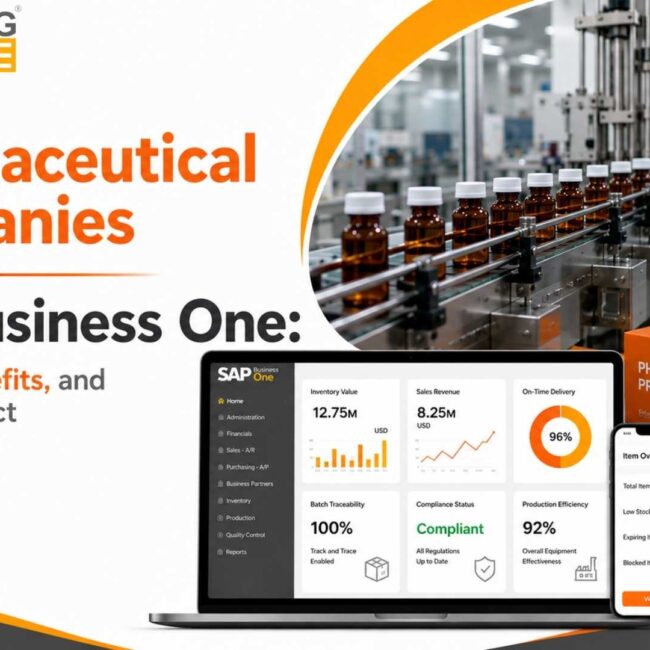
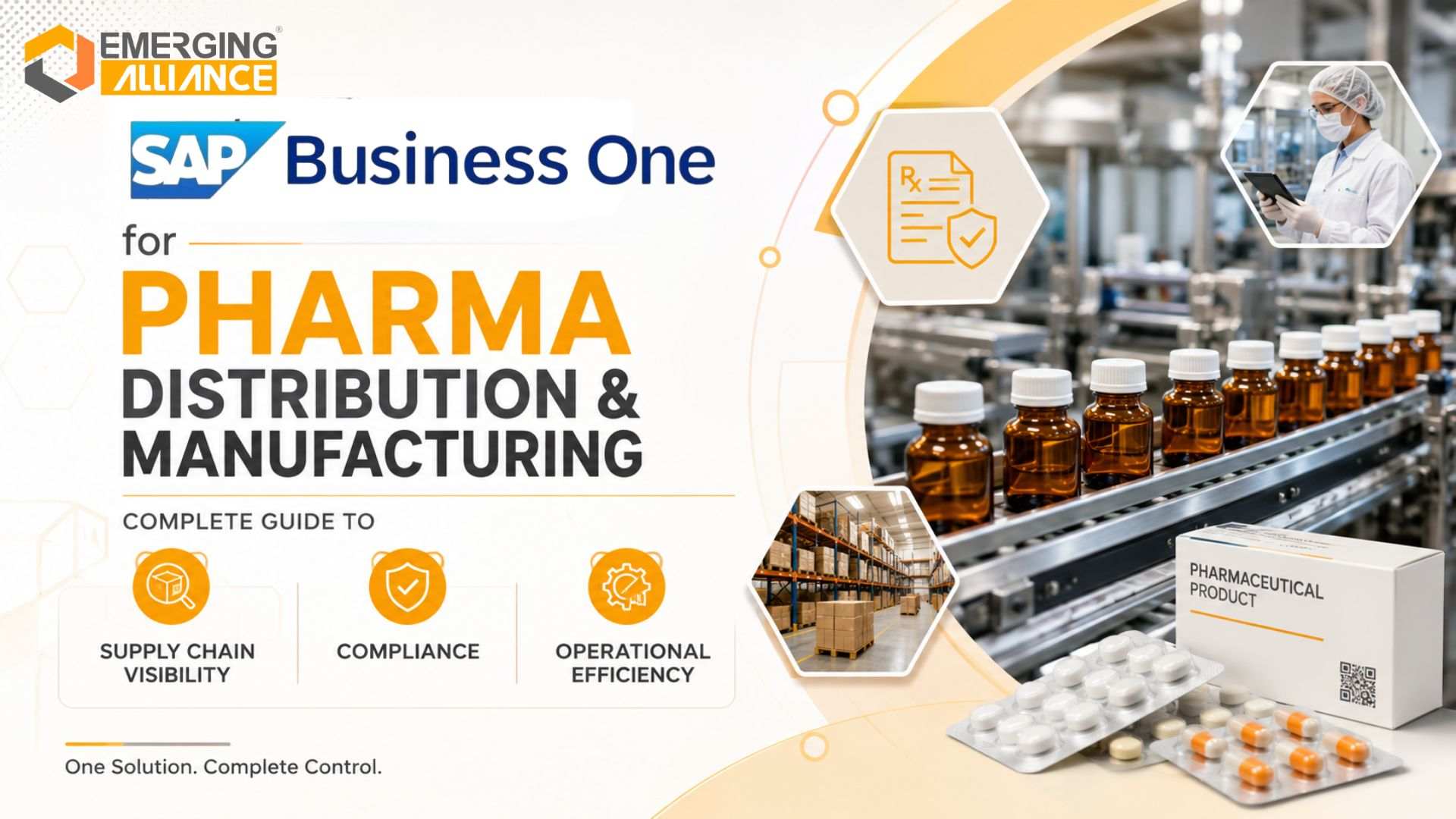
SAP Business One for Pharma Distribution and Manufacturing helps pharmaceutical companies manage production, inventory, warehousing, logistics, compliance, and distribution from a single ERP platform. It provides real-time visibility across the supply chain, improves batch traceability, reduces inventory waste, enhances regulatory compliance, and supports efficient product delivery from manufacturing facilities to end customers.
Pharmaceutical companies operate within complex supply chains that require seamless coordination between manufacturing, inventory management, warehousing, logistics, quality assurance, and distribution.
Managing these operations through disconnected systems often leads to inefficiencies, compliance risks, inventory inaccuracies, and delayed deliveries.
SAP Business One provides an integrated ERP platform that connects manufacturing and distribution activities, allowing pharmaceutical organizations to gain complete visibility across their operations while improving compliance, inventory control, and customer service.
- Disconnected operational systems
- Manual inventory management
- Limited supply chain visibility
- Inefficient warehouse processes
- Inadequate batch tracking
- Poor demand forecasting
- Managing inventory across multiple locations
- Maintaining batch traceability
- Meeting customer delivery expectations
- Regulatory compliance
- Demand fluctuations
- Warehouse optimization
- Distribution planning
- Delayed deliveries
- Product shortages
- Excess inventory
- Compliance risks
- Higher operational costs
- Reduced customer satisfaction
- Lost revenue opportunities
- Improved operational visibility
- Better inventory accuracy
- Enhanced compliance management
- Faster order fulfillment
- Reduced inventory waste
- Greater customer satisfaction
- Integrated manufacturing and distribution management.
- Real-time inventory visibility across warehouses.
- Enhanced batch tracking and traceability.
- Improved demand planning and forecasting.
- Better compliance and recall readiness.
- Optimized warehouse and logistics operations.
Why Pharmaceutical Companies Need Integrated Manufacturing and Distribution Management
In the pharmaceutical industry, manufacturing and distribution are closely connected. Products must move efficiently from production facilities through warehouses and distribution channels while maintaining quality, compliance, and traceability.
When manufacturing and distribution systems operate independently, organizations often face:
- Inventory discrepancies
- Order fulfillment delays
- Limited supply chain visibility
- Compliance challenges
- Increased operating costs
An integrated ERP platform helps pharmaceutical companies streamline operations while improving customer service and regulatory compliance.
Understanding the Pharmaceutical Supply Chain
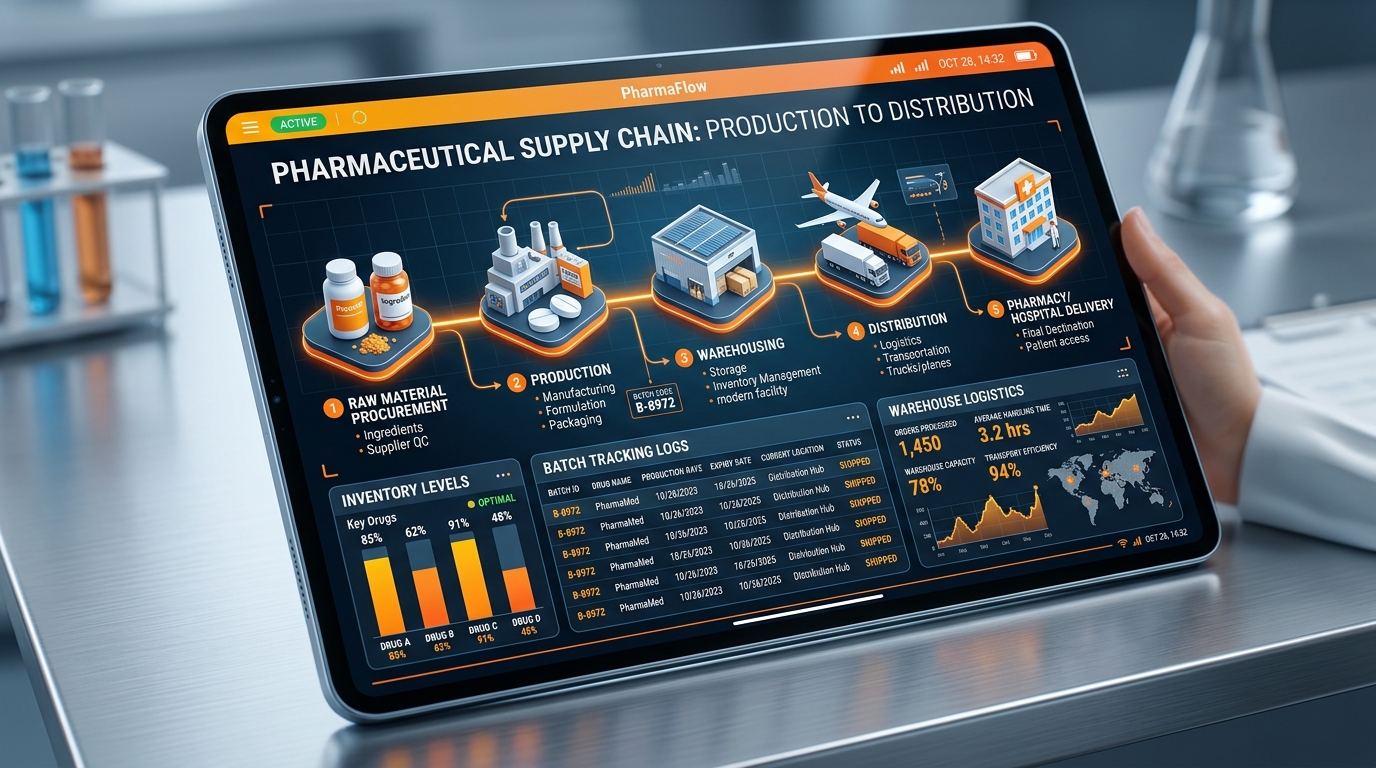
The pharmaceutical supply chain consists of multiple interconnected processes.
These include:
- Raw material procurement
- Production planning
- Manufacturing execution
- Quality inspections
- Inventory management
- Warehouse operations
- Distribution planning
- Customer delivery
Each stage generates critical operational data that must be tracked and managed effectively.
Without integration, organizations may struggle to maintain visibility and control across the supply chain.
Key Challenges in Pharmaceutical Manufacturing and Distribution
Limited Supply Chain Visibility
Many companies lack real-time insight into inventory levels, production status, and product movement.
This often results in:
- Inventory shortages
- Excess stock
- Delayed decision-making
- Reduced responsiveness
Inventory Management Complexity
Pharmaceutical inventory requires careful monitoring due to:
- Expiry dates
- Batch requirements
- Regulatory obligations
- Product demand fluctuations
Poor inventory management can significantly impact profitability and compliance.
Warehouse Inefficiencies
Warehouse operations directly affect order fulfillment performance.
Common issues include:
- Picking errors
- Inventory inaccuracies
- Poor space utilization
- Delayed shipments
Regulatory Compliance Requirements
Products must remain traceable throughout manufacturing and distribution.
Organizations must maintain:
- Batch records
- Shipment histories
- Inventory movement logs
- Quality documentation
How SAP Business One Connects Manufacturing and Distribution
SAP Business One provides a centralized platform that connects operational functions across the pharmaceutical supply chain.
Integrated processes include:
- Procurement
- Production
- Inventory
- Warehousing
- Logistics
- Sales
- Financial management
This integration improves collaboration between departments while providing real-time visibility into business operations.
Production Planning and Manufacturing Management
Effective manufacturing operations require accurate planning and resource allocation.
SAP Business One supports:
- Production order management
- Bill of Materials (BOM) management
- Material Requirements Planning (MRP)
- Resource planning
- Production tracking
Benefits include:
- Improved production efficiency
- Better resource utilization
- Reduced downtime
- Faster response to demand changes
Inventory Management Across the Supply Chain
Inventory is one of the most critical assets in pharmaceutical operations.
SAP Business One provides real-time inventory visibility across locations.
Capabilities include:
- Inventory tracking
- Multi-warehouse management
- Stock transfers
- Inventory valuation
- Expiry monitoring
Benefits include:
- Improved stock accuracy
- Reduced waste
- Better forecasting
- Lower carrying costs
Batch Traceability and Product Tracking
Traceability is essential for both compliance and operational efficiency.
SAP Business One enables pharmaceutical organizations to track products throughout the supply chain.
Key capabilities include:
- Batch management
- Lot tracking
- Inventory movement tracking
- Production history visibility
- Shipment traceability
Benefits include:
- Improved recall management
- Faster investigations
- Enhanced compliance
- Greater product accountability
Warehouse Management Optimization
Warehouse operations play a significant role in pharmaceutical distribution performance.
SAP Business One helps organizations improve:
- Inventory accuracy
- Warehouse visibility
- Order picking efficiency
- Stock movement control
Benefits include:
- Faster order fulfillment
- Reduced operational costs
- Improved customer service
- Better inventory utilization

Demand Forecasting and Supply Chain Planning
Accurate forecasting enables pharmaceutical companies to align production with market demand.
SAP Business One supports:
- Sales analysis
- Inventory planning
- Demand forecasting
- Procurement planning
Benefits include:
- Reduced stock shortages
- Improved service levels
- Better production scheduling
- Optimized purchasing decisions
Procurement and Supplier Management
Reliable supplier relationships are essential for maintaining production continuity.
SAP Business One helps manage:
- Supplier information
- Purchase orders
- Procurement workflows
- Vendor performance
Benefits include:
- Improved supplier collaboration
- Better purchasing control
- Reduced procurement delays
- Enhanced supply chain reliability
Compliance and Distribution Readiness
Regulatory compliance extends beyond manufacturing.
Pharmaceutical distributors must maintain accurate records of:
- Product movement
- Inventory locations
- Shipment histories
- Batch information
SAP Business One provides centralized data management that supports compliance reporting and audit readiness.
Real-Time Reporting and Decision Making
Modern pharmaceutical operations require access to accurate business data.
SAP Business One provides real-time reporting capabilities that help managers monitor:
- Inventory levels
- Production performance
- Warehouse activity
- Distribution efficiency
- Financial performance
This visibility supports faster and more informed decision-making.
Process / Implementation Steps
A structured approach to implementing SAP Business One ensures seamless transition across manufacturing and distribution operations:
Benefits of SAP Business One in Pharma Distribution & Manufacturing
Real-World Use Cases
USE CASE 1: Pharmaceutical Manufacturer
USE CASE 2: Pharmaceutical Distributor
USE CASE 3: Pharmaceutical Manufacturer and Distributor
Case Study Example
Company Background: A mid-sized pharmaceutical company operated manufacturing facilities and multiple regional distribution centers.
Business Problem: The organization experienced inventory inconsistencies, delayed shipments, and limited supply chain visibility.
Challenges
- Disconnected systems
- Manual inventory tracking
- Poor forecasting
- Compliance concerns
Solution & Implementation Approach
The company chose SAP Business One with integrated manufacturing, inventory, warehouse, and distribution management. Their approach focused on:
- Centralizing operational data
- Standardizing inventory processes
- Improving warehouse workflows
- Enabling batch tracking
Lessons Learned:
- Data visibility improves supply chain performance.
- Integrated systems support better decision-making.
- Traceability strengthens compliance and customer confidence.
Industry Applications
SAP Business One provides specialized features for specific functional areas in the pharmaceutical sector:
ROI / Business Impact
Below is a breakdown of the business value and return on investment generated by SAP Business One:
| Impact Category | Measurable Value & Business Impact |
|---|---|
| Cost Savings | Reduced inventory carrying costs. Lower warehouse operating expenses. |
| Productivity Improvements | Faster order processing. Improved warehouse efficiency. |
| Time Savings | Reduced manual reporting. Faster inventory reconciliation. |
| Revenue Growth Opportunities | Better product availability. Improved customer retention. |
| Error Reduction | Improved inventory accuracy. Reduced fulfillment mistakes. |
| Compliance Improvements | Better traceability. Stronger audit readiness. |
| Customer Experience Improvements | Faster deliveries. Greater order accuracy. |
| Scalability Benefits | Supports growth without operational complexity. |
Strategic Management: Best Practices vs Mistakes
- Standardize inventory processes.
- Maintain accurate master data.
- Monitor inventory KPIs regularly.
- Train warehouse personnel thoroughly.
- Implement batch tracking consistently.
- Review forecasting models frequently.
- Using disconnected systems.
- Neglecting inventory accuracy.
- Ignoring forecasting requirements.
- Failing to maintain traceability records.
- Overlooking warehouse process improvements.
- Delaying employee training.
Key Takeaways
- Manufacturing and distribution must operate as a connected ecosystem.
- Real-time visibility improves operational decision-making.
- Inventory accuracy directly impacts profitability and customer service.
- Batch traceability strengthens compliance and recall readiness.
- Integrated ERP systems improve supply chain performance.
- SAP Business One helps pharmaceutical organizations scale efficiently.
Frequently Asked Questions
Why do pharmaceutical companies need integrated manufacturing and distribution management? +
How does SAP Business One improve pharmaceutical inventory management? +
Can SAP Business One support pharmaceutical distribution operations? +
How does SAP Business One help with batch traceability? +
Does SAP Business One support regulatory compliance? +
Can SAP Business One improve warehouse operations? +
How does SAP Business One support supply chain planning? +
Is SAP Business One suitable for growing pharmaceutical businesses? +
Conclusion
Pharmaceutical manufacturers and distributors face increasing pressure to improve efficiency, maintain compliance, and deliver products quickly while controlling costs. Managing these complex operations through disconnected systems creates unnecessary risk and inefficiency.
SAP Business One provides an integrated platform that connects manufacturing, inventory, warehousing, logistics, and financial management, enabling pharmaceutical organizations to achieve greater visibility, control, and operational excellence across the entire supply chain.
Ready to Streamline Your Pharma Operations?
Submit your details to discover how SAP Business One supports traceability, inventory management, compliance, and supply chain performance.