
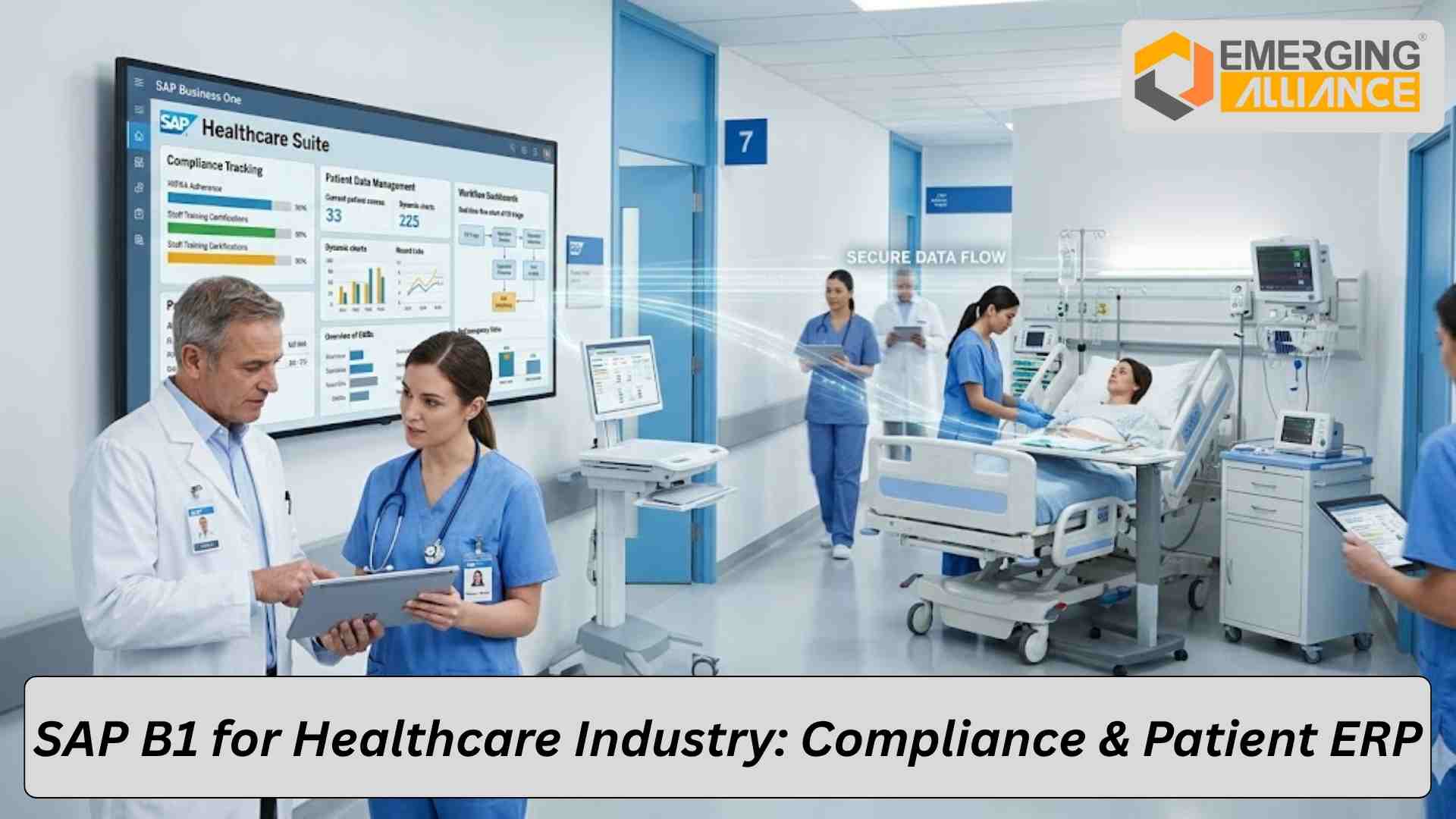
SAP B1 for Healthcare Industry: Compliance & Patient ERP
SAP B1 for Healthcare Industry: Compliance & Patient ERP Solution
SAP B1 for Healthcare Industry – Why ERP is Essential
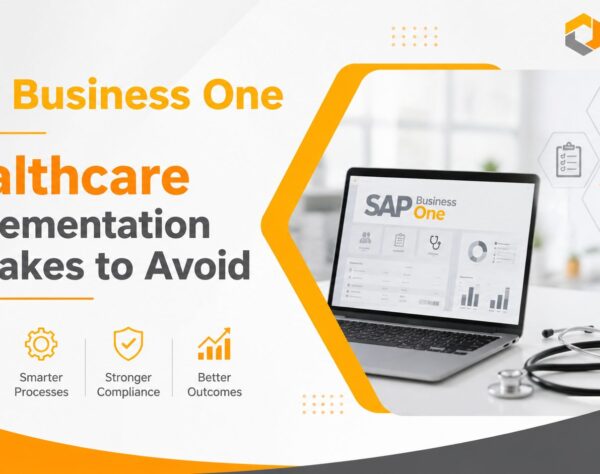
Healthcare operations are highly complex, as hospitals and clinics must manage patient records, billing, inventory, and staff across multiple departments simultaneously. In addition to this complexity, healthcare providers must comply with strict regulatory requirements and data privacy laws, making accurate record-keeping and reporting essential. Real-time access to patient data is critical for effective decision-making, yet many organizations still rely on outdated systems that limit visibility. Manual processes often lead to delays, errors, and inefficiencies, ultimately affecting patient care and operational performance. SAP Business One integrates all these functions into a single platform, improving efficiency, accuracy, and overall control.
Key Features
SAP Business One offers a wide range of features designed specifically for healthcare operations. It enables centralized patient data management, allowing organizations to maintain detailed records, medical history, and treatment information in one secure system. The solution also simplifies billing and financial processes by automating invoicing, insurance handling, and financial reporting. In addition, it provides efficient inventory and pharmacy management by tracking medicines, medical equipment, and stock levels in real time. Compliance management features ensure adherence to healthcare regulations and standards, while real-time reporting and analytics allow organizations to generate instant insights into patient care, financial performance, and operational efficiency.
Benefits
Implementing SAP Business One in healthcare organizations leads to significant improvements in patient care and operational efficiency. With accurate and accessible data, healthcare professionals can make better diagnoses and treatment decisions. Automation reduces manual workload and minimizes errors, leading to faster and more reliable processes. The system also supports regulatory compliance through built-in tools that ensure adherence to healthcare standards. Additionally, it helps organizations control costs and maintain transparency by providing clear insights into expenses and resource utilization. As healthcare providers grow, SAP B1 offers scalability, enabling them to expand operations without compromising efficiency.
Patient Management Process
SAP Business One streamlines the entire patient management process, starting from registration, where patient details are captured digitally for easy access and retrieval. Appointment scheduling becomes more efficient with automated systems that reduce waiting times and improve coordination. The system also enables comprehensive treatment tracking by maintaining records of diagnoses, treatment plans, and patient progress. Billing and payment processes are automated, ensuring accuracy and timely transactions. Finally, discharge and follow-up management ensure a smooth patient experience, helping healthcare providers maintain long-term relationships and continuity of care.
Compliance Management
Compliance is a critical aspect of healthcare, and SAP Business One provides robust tools to manage it effectively. The system ensures data security and privacy by protecting sensitive patient information through advanced security measures. It also supports regulatory reporting by generating accurate reports required by healthcare authorities. Audit trails maintain a complete record of all transactions, ensuring transparency and accountability. Furthermore, the system helps organizations adhere to quality standards by maintaining consistency in medical and operational processes.
Financial Management
Financial management in healthcare becomes more efficient with SAP Business One, as it automates accounting processes and ensures accurate financial transactions. The system manages accounts receivable and payable, enabling organizations to track patient payments and operational expenses effectively. It also supports budgeting and forecasting, allowing healthcare providers to plan their financial strategies based on real-time data. Cash flow management is enhanced through continuous monitoring of financial health, helping organizations maintain stability and make informed financial decisions.
Challenges Solved
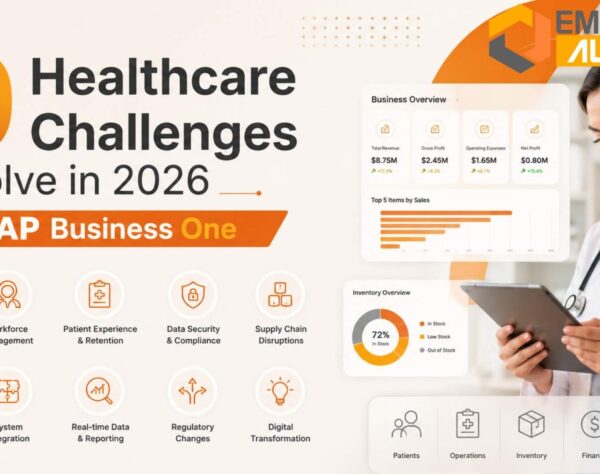
SAP Business One addresses several key challenges faced by healthcare organizations. It eliminates data silos by integrating all departments into a unified system, ensuring seamless communication and data consistency. Automation significantly reduces manual errors, improving accuracy and efficiency. Real-time dashboards provide complete visibility into operations, enabling better decision-making. Additionally, built-in compliance features help reduce regulatory risks, ensuring that organizations meet industry standards and avoid penalties.
SAP B1 for Healthcare Industry – Implementation Tips
Successful implementation of SAP Business One requires careful planning and execution. Organizations should begin by assessing their business needs and identifying specific requirements. Choosing the right deployment option, whether cloud or on-premise, depends on budget and infrastructure. Proper training for staff is essential to ensure effective system usage and maximize benefits. Customizing workflows allows the ERP system to align with existing healthcare processes. Continuous monitoring and optimization further ensure that the system delivers consistent performance and value over time.
SAP B1 for Healthcare Industry – Cloud vs On-Premise
When choosing between cloud and on-premise deployment, organizations must consider their specific needs. Cloud deployment offers advantages such as lower upfront costs, remote accessibility, and easy scalability, making it ideal for growing healthcare providers. On the other hand, on-premise deployment provides full control over data, greater customization options, and enhanced security. Both approaches have their own benefits, and the right choice depends on the organization’s operational goals and IT capabilities.
SAP B1 for Healthcare Industry – Real-Time Insights
SAP Business One provides powerful real-time insights that help healthcare organizations improve performance. Patient analytics enable providers to analyze trends and treatment outcomes, leading to better care strategies. Financial dashboards offer a clear view of revenue, expenses, and profitability. Resource utilization insights help optimize the use of staff and equipment, ensuring maximum efficiency. Additionally, KPI monitoring allows organizations to track performance indicators and achieve their operational goals effectively.
SAP B1 for Healthcare Industry – Future Trends
The future of healthcare is being shaped by digital transformation, and ERP systems like SAP Business One play a crucial role in this evolution. Mobile healthcare solutions enable doctors and staff to access data anytime and anywhere, improving responsiveness and patient care. AI and predictive analytics are enhancing diagnosis and operational planning by providing advanced insights. Integration with medical devices is also becoming more common, allowing seamless data exchange and improved treatment accuracy. These trends highlight the growing importance of ERP systems in modern healthcare.
ERP systems connect with modern healthcare equipment.
Conclusion: Why SAP Business One is the Right Choice for Healthcare
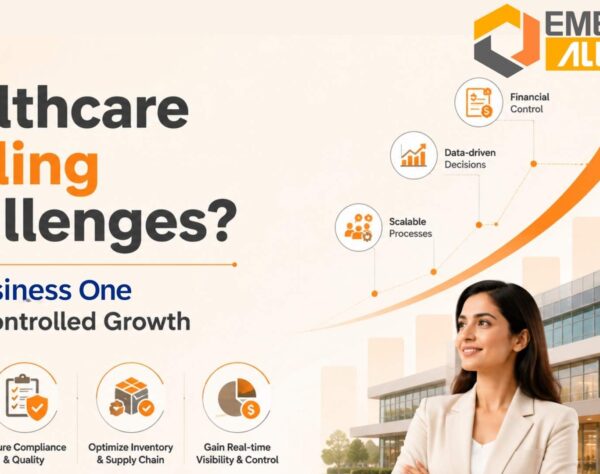
In today’s rapidly evolving healthcare landscape, efficient patient data management, strict regulatory compliance, and seamless operations are critical for success. SAP Business One offers a powerful, all-in-one ERP solution designed to simplify complex healthcare workflows, improve data accuracy, and enhance overall organizational performance.
By streamlining patient management, automating financial processes, and ensuring compliance with healthcare regulations, SAP Business One enables providers to focus more on delivering quality patient care while optimizing operational resources. Its real-time insights and integrated approach help eliminate inefficiencies and support informed decision-making.
Additionally, SAP Business One is highly scalable, making it an ideal solution for both small clinics and large hospitals looking to grow and adapt in a competitive healthcare environment.
Choosing the right ERP partner is just as important as selecting the right solution—and that’s where Emerging Alliance stands out. With deep industry expertise and a customer-centric approach, Emerging Alliance delivers tailored SAP Business One solutions designed specifically for the healthcare sector. From seamless implementation to ongoing support, the company ensures that healthcare providers achieve maximum efficiency, compliance, and growth. By partnering with Emerging Alliance, organizations gain not just a technology provider, but a trusted ally committed to transforming healthcare operations and driving long-term success.
Frequently Asked Questions About SAP Business One for Healthcare Industry
1. How does SAP B1 support end-to-end healthcare operations?
SAP Business One enables end-to-end healthcare management by integrating patient administration, clinical workflows, inventory, procurement, and financial operations into a unified system. It ensures seamless coordination between departments such as OPD, IPD, pharmacy, laboratory, and billing, improving overall operational efficiency.
2. How does SAP B1 enhance patient lifecycle management?
SAP B1 manages the complete patient lifecycle—from registration and appointment scheduling to diagnosis, treatment, billing, and discharge. It centralizes electronic health records (EHR), enabling faster access to patient history, improving care quality, and reducing administrative delays.
3. How does SAP B1 ensure regulatory compliance in healthcare organizations?
SAP B1 supports compliance through detailed audit trails, automated reporting, and secure data handling aligned with healthcare regulations. It helps organizations comply with standards such as HIPAA (where applicable), NABH, and local health authority requirements by maintaining accurate and traceable records.
4. How does SAP B1 optimize hospital inventory and pharmacy management?
SAP B1 provides real-time inventory tracking for medicines, surgical supplies, and medical equipment. It supports batch tracking, expiry management, and automated replenishment, ensuring availability of critical items while minimizing wastage and stockouts.
5. How scalable is SAP B1 for multi-specialty hospitals and clinics?
SAP B1 is highly scalable, supporting small clinics, diagnostic centers, and large multi-specialty hospitals. It allows organizations to start with core modules and expand into advanced functionalities such as laboratory management, pharmacy automation, and analytics as they grow.
6. How does SAP B1 support multi-location healthcare operations?
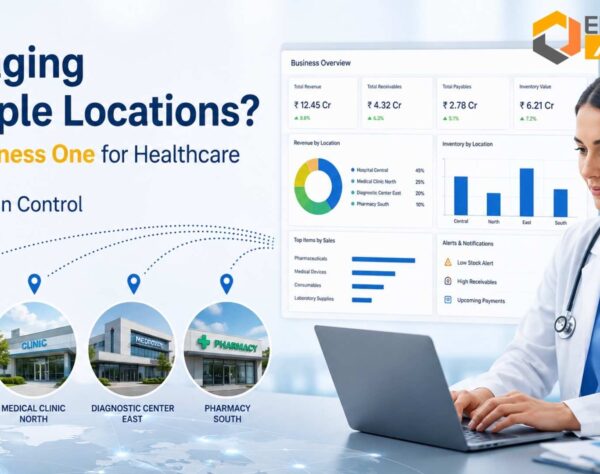
SAP B1 enables centralized control over multiple hospitals, clinics, and diagnostic centers. It provides real-time data visibility across locations, standardized processes, inter-branch inventory transfers, and consolidated financial reporting.
7. What factors influence SAP B1 implementation cost in healthcare?
Implementation cost depends on the number of users, level of customization (clinical workflows, patient management, compliance), integration with medical systems (LIS, RIS, EMR), deployment model, and data migration complexity. Training and post-implementation support also contribute to total cost.
8. Why is cloud deployment beneficial for healthcare providers?
Cloud deployment offers secure remote access to patient and operational data, reduces IT infrastructure costs, and enables scalability. It is especially beneficial for multi-location healthcare providers and telemedicine environments requiring real-time accessibility.
9. What is the typical implementation timeline for SAP B1 in healthcare?
Implementation timelines typically range from 2 to 6 months for clinics and small hospitals, and up to 6–12 months for large healthcare organizations with complex integrations and multi-location operations.
10. How does SAP B1 integrate with healthcare systems and medical devices?
SAP B1 integrates with healthcare systems such as Laboratory Information Systems (LIS), Radiology Information Systems (RIS), Electronic Medical Records (EMR), and billing platforms. It can also connect with medical devices through middleware, enabling real-time data exchange and improved clinical decision-making.