
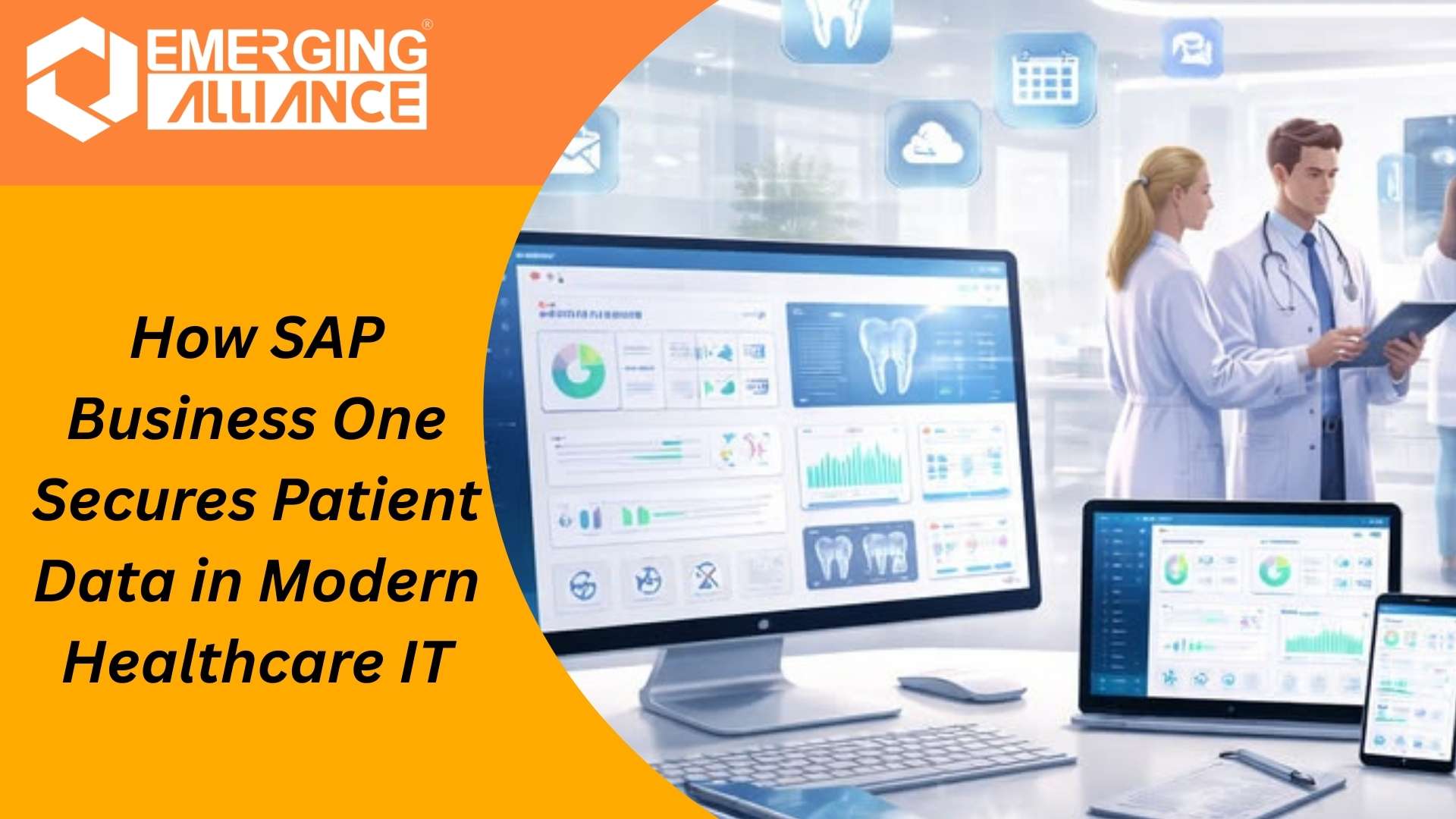
How SAP Business One Secures Patient Data in Modern Healthcare IT
A CTO guide to reducing risk and strengthening compliance with SAP B1 healthcare modules
Healthcare providers operate in an environment where data security, regulatory compliance, and operational efficiency are critical. Cyber threats, compliance mandates, and fragmented IT systems create risks that healthcare CIOs and CTOs must actively manage. This is where intelligent enterprise systems play a crucial role. Solutions such as SAP business one ERP for Healthcare Industry provide a unified digital foundation that enables organizations to protect patient information, streamline operations, and gain real-time visibility into clinical and financial processes.
At Emerging Alliance SAP Business One Healthcare, we help small and medium-sized healthcare organizations deploy secure and scalable Healthcare Enterprise Resource Planning (ERP) environments that support regulatory compliance while enabling operational growth.
Securing Healthcare Data Management with SAP Business One
Protecting patient information requires a system that can manage access control, encryption, and auditability while supporting operational efficiency.
SAP Business One healthcare software solutions provide a centralized platform where healthcare providers can securely store, manage, and access patient records and operational data.
Key security capabilities include:
Role-Based Access Controls
Healthcare systems must ensure that only authorized personnel can access patient data. ERP platforms allow administrators to configure permissions for clinicians, pharmacists, finance teams, and operations staff.
Secure Data Storage and Encryption
Sensitive data such as medical histories, billing records, and treatment plans are protected with enterprise-grade encryption protocols.
Audit Trails for Compliance
Every data access and modification is logged, enabling healthcare administrators ERP solutions to maintain compliance with industry regulations and internal governance standards.
These controls help healthcare organizations significantly reduce the risk of data breaches and compliance violations.
Strengthening Regulatory Compliance in Healthcare IT Systems
Compliance is one of the most complex challenges in modern healthcare IT.
Hospitals and clinics must maintain strict governance across patient records, billing, procurement, and reporting processes. Healthcare Enterprise Resource Planning (ERP) platforms simplify this challenge by standardizing workflows and ensuring traceability.
When Implementing SAP Business One, organizations benefit from:
- Automated compliance workflows
- Structured data governance policies
- Centralized reporting capabilities
- Secure document management
With guidance from experienced SAP B1 consultants for healthcare industry, organizations can configure ERP systems to meet regional healthcare regulations while maintaining operational agility.
This ensures that healthcare providers maintain transparency across clinical operations and financial management in healthcare.
Enhancing Patient Outcomes with Intelligent Healthcare Platforms
Beyond compliance, ERP solutions also help Improve patient care with SAP B1 by connecting operational and clinical systems.
Healthcare providers often struggle with disconnected systems that slow decision-making. A unified ERP platform enables better coordination across departments.
Benefits include:
Real-Time Patient Care Coordination
Integrated Patient care management systems ensure clinicians can access up-to-date information instantly.
Faster Administrative Processes
ERP-driven systems help Automate healthcare workflows, reducing delays in scheduling, billing, and documentation.
Optimized Medical Practice Management
Centralized Medical practice management tools allow administrators to manage appointments, treatment histories, and operational tasks efficiently.
These capabilities help healthcare providers deliver better care while maintaining operational efficiency.
Optimizing Hospital Operations with Integrated ERP Modules
Healthcare organizations rely heavily on efficient resource management to deliver quality care.
Modern Healthcare-specific SAP Business One modules support critical operational areas including procurement, inventory, finance, and analytics.
Key modules include:
Financial and Healthcare Accounting
Solutions like SAP B1 for healthcare accounting streamline billing, insurance processing, and expense tracking, improving Healthcare Financial Management.
Inventory and Medical Supply Chain
Hospitals must maintain accurate inventory for pharmaceuticals, equipment, and medical supplies.
ERP-driven Inventory and supply chain for hospitals capabilities function as Medical supply chain management software, helping healthcare organizations track inventory levels, reduce waste, and ensure supply availability.
Integrated Operational Management
With SAP Business One with Add-ons for the Healthcare Industry, organizations can extend ERP capabilities to match specialized healthcare workflows.
These modules help organizations operate more efficiently while maintaining strong governance.
Using Cloud and Real-Time Analytics for Better Healthcare Decisions
Data-driven healthcare organizations require instant visibility into operational and clinical metrics.
With SAP Business One cloud for healthcare, hospitals gain scalable infrastructure that supports secure data storage and system accessibility.
Cloud-enabled ERP platforms allow healthcare providers to:
- Access data securely from multiple locations
- Scale IT infrastructure without large capital investment
- Maintain consistent security policies
Equally important is Data analytics in healthcare ERP, which empowers leadership teams with actionable insights.
Modern Healthcare reporting tools and Real-time analytics for hospitals allow decision-makers to monitor:
- Operational performance
- Financial metrics
- Patient care outcomes
- Resource utilization
These insights help organizations plan strategically while improving overall healthcare delivery.
Transform Your Healthcare IT Strategy with Emerging Alliance
For CIOs and CTOs, the challenge is not just managing healthcare data—it’s protecting it while enabling innovation.
Emerging Alliance specializes in SAP B1 implementation and digital transformation strategies for healthcare organizations.
Our team delivers:
Industry-specific SAP Business One Healthcare Modules
Secure and scalable Cloud-based healthcare ERP environments
Customized Healthcare administrators ERP solutions
Advanced analytics and reporting capabilities
We help Healthcare providers reduce operational risks, strengthen compliance, and accelerate digital transformation.
FAQs About SAP Business One Healthcare
1. How does SAP ERP for healthcare providers protect patient data?
ERP platforms provide encryption, access controls, and audit trails to secure sensitive patient information.
2. Can small healthcare organizations benefit from SAP-based healthcare management platforms?
Yes. Many small and medium-sized healthcare organizations use ERP platforms to improve operations and regulatory compliance.
3. What modules are included in healthcare-focused SAP Business One systems?
Typical Healthcare-specific SAP Business One modules include finance, patient management, inventory tracking, procurement, and analytics.
4. How does ERP improve medical practice administration?
Integrated Medical practice management tools automate scheduling, billing, and patient records management.
5. What role does ERP play in healthcare financial management?
ERP platforms streamline billing, insurance processing, budgeting, and financial management in healthcare.
6. Can hospitals manage inventory using SAP-based healthcare ERP?
Yes. Medical supply chain management software helps hospitals track equipment, medications, and medical supplies.
7. Is cloud deployment available for healthcare ERP platforms?
Yes. Solutions like SAP Business One cloud for healthcare provide secure and scalable infrastructure.
8. How does analytics improve hospital performance?
Data analytics in healthcare ERP provides insights into patient outcomes, operational efficiency, and financial performance.
9. How long does it take to deploy SAP ERP in healthcare organizations?
Timelines vary, but structured SAP B1 implementation for medical institutions typically takes a few months depending on complexity.
10. Why should healthcare organizations work with specialized SAP consultants?
Experienced SAP B1 consultants for healthcare industry ensure ERP solutions are customized to regulatory and operational requirements.
Fill out the form below and our team will contact you shortly.