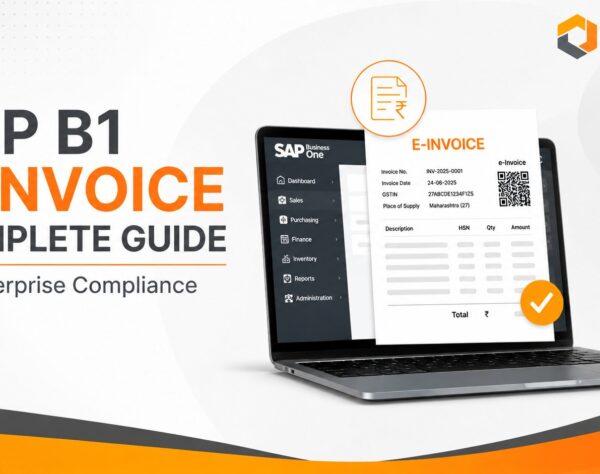

SAP B1 E-Invoice for 2026 Unlock Radical Financial Clarity and Seamless Compliance Intelligence
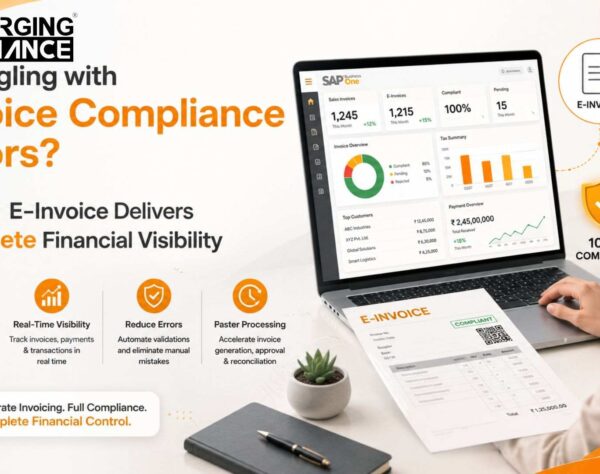
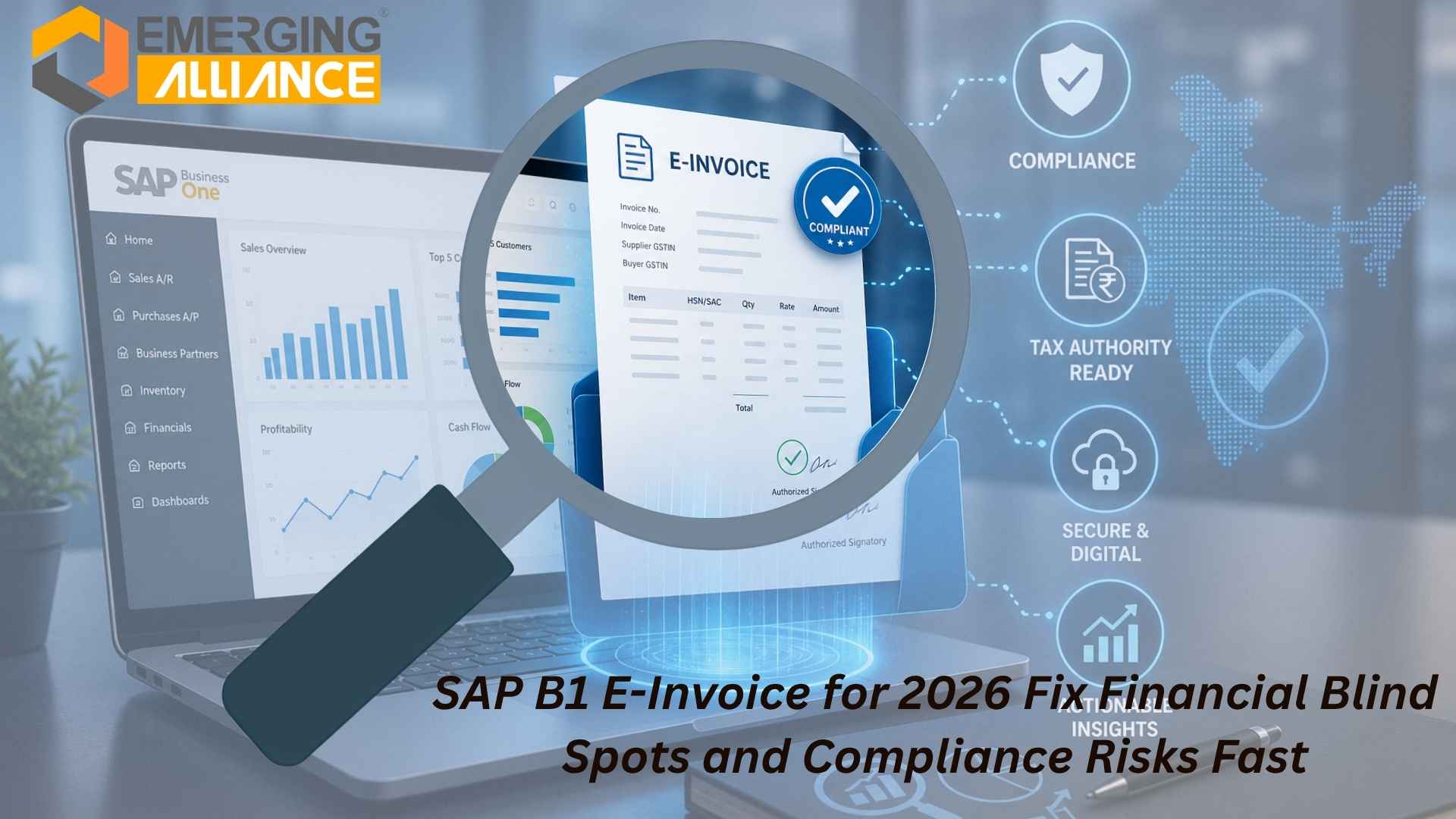
SAP B1 E-Invoice enables real-time GST compliance, IRP automation, and financial visibility without manual reconciliation delays
SAP B1 E-Invoice Growing businesses with SAP Business One often assume invoicing is “under control.” But in reality, invoicing is where financial visibility breaks down the fastest.
Delayed GST reporting, invoice mismatches, IRP failures, and manual reconciliation are not just operational issues—they directly impact:
Cash flow predictability
Working capital cycles
Compliance exposure
Audit readiness
By the time finance teams detect the issue, the damage is already done.
This is exactly why SAP B1 E-Invoice is no longer a feature—it’s a financial control layer. System.
Why Traditional Invoicing Models Fail at Scale
As invoice volumes grow, complexity multiplies—not linearly, but exponentially.
Most enterprises still operate with:
- Disconnected GST tools and ERP workflows
- Manual IRP submission dependencies
- Delayed invoice validation cycles
- No real-time visibility into invoice status
The result?
👉 Invoices get rejected after dispatch
👉 Revenue recognition gets delayed
👉 Finance teams operate reactively, not proactively
This is where organizations lose control—not in accounting, but in execution timing.
SAP B1 E-Invoice as a Real-Time Financial Control Layer
The shift is simple but powerful:
From: Invoice creation
To: Invoice validation, approval, and compliance in real time
With SAP Business One, invoicing becomes a governance workflow, not just a transaction.
Key capabilities include:
- Real-time B2B e-invoice generation
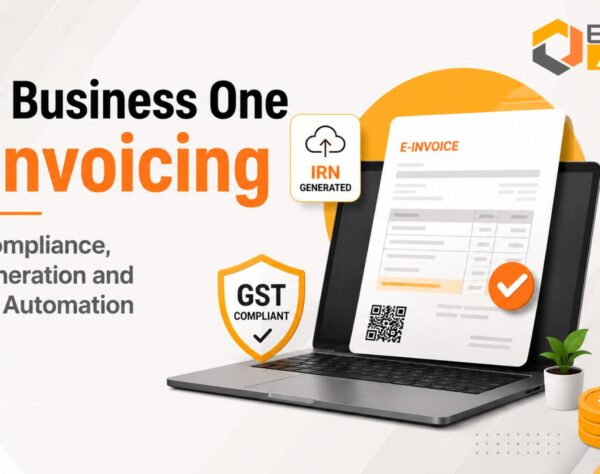
- Direct integration with Invoice Registration Portal (IRP)
- Instant Invoice Reference Number (IRN) generation
- Structured audit trails across invoice lifecycle
This ensures every invoice is:
✔ Valid
✔ Compliant
✔ Approved before financial impact
IRP Integration: Eliminating the Biggest Compliance Risk
The Invoice Registration Portal (IRP) is now the control authority in GST invoicing.
Without automation:
- Manual uploads increase rejection risk
- Delays create dispatch bottlenecks
- Errors trigger compliance penalties
With SAP B1 E-Invoice:
- IRP submission is fully automated
- Validation happens in real time
- IRN is generated instantly
- Errors are caught before submission
This removes the biggest operational risk:
👉 “Invoice created but not legally valid.”
GST E-Invoicing in India: From Compliance Burden to Strategic Advantage
India’s GST framework demands precision, consistency, and speed.
SAP Business One enables:
- Automated GST invoice validation
- One-time IRP reporting for B2B transactions
- Real-time GST compliance tracking
- Elimination of duplicate filings
Instead of managing compliance manually, enterprises gain:
👉 Structured tax intelligence embedded into transactions
This transforms GST from a regulatory burden into a decision-support layer.
Financial Impact: Where SAP B1 E-Invoice Delivers ROI
This is where most ERP conversations fall short—they don’t quantify impact.
With SAP B1 E-Invoice, enterprises typically achieve:
- Faster invoice processing cycles → improved cash flow
- Reduced rejection rates → lower revenue delays
- Elimination of manual reconciliation → reduced finance overhead
- Real-time visibility → stronger working capital control
For a growing enterprise, even a 2–3 day delay in invoicing can impact liquidity significantly. This is not automation—it’s financial acceleration.
Beyond India: Building a Global E-Invoicing Framework
For enterprises operating across regions, compliance fragmentation becomes a major risk.
SAP Business One supports:
- Multi-country e-invoicing configurations
- Local tax rule adaptability
- Centralized invoice governance
- Scalable compliance architecture
This allows organizations to:
👉 Standardize globally
👉 Adapt locally
👉 Control centrally
Emerging Alliance: From Implementation to Financial Transformation
Most vendors implement features.
Emerging Alliance designs financial control systems.
Our approach focuses on:
- Eliminating invoice-level blind spots
- Aligning ERP workflows with compliance frameworks
- Designing real-time financial visibility layers
- Continuous optimization post-deployment
We don’t just deploy SAP B1 E-Invoice.
We ensure it becomes a decision-making backbone for your finance team.
This Is Not an Upgrade It’s a Risk Elimination Move
If your business still depends on:
- Manual GST reconciliation
- Delayed IRP submissions
- Fragmented invoicing workflows
You are operating with hidden financial risk.
👉 With Emerging Alliance, you can:
- Eliminate invoice-level compliance gaps
- Achieve real-time financial visibility
- Reduce working capital delays
- Build a scalable compliance infrastructure
FAQs: SAP B1 E-Invoice
1. How does SAP B1 E-Invoice reduce invoice rejection rates?
It validates invoices in real time through IRP integration before submission, eliminating post-generation errors.
2. What happens if an invoice is generated without IRP validation?
It is not legally valid under GST, which can block dispatch and delay revenue recognition.
3. How does IRN automation impact finance operations?
It ensures instant invoice authentication, reducing delays and improving transaction reliability.
4. Can SAP B1 E-Invoice handle high invoice volumes?
Yes, it is designed for scalable automation with real-time processing and validation.
5. How does this improve working capital efficiency?
Faster invoice approval and validation accelerate billing cycles and cash inflows.
6. Does SAP B1 E-Invoice eliminate manual GST filing?
Yes, it automates GST reporting and removes dependency on external tools.
7. How does it support audit readiness?
Every invoice is traceable with structured logs, ensuring compliance transparency.
8. Is this relevant for multi-location businesses?
Yes, it centralizes invoicing control across multiple branches and entities.
9. How does E-Way Bill integration improve operations?
It synchronizes logistics and tax documentation, preventing shipment delays.
10. Why is SAP B1 E-Invoice critical for 2026 and beyond?
Because compliance is shifting toward real-time validation, making delayed invoicing systems obsolete.
👉 Talk to our experts and assess your E-Invoice readiness today.