
SAP Business One HRMS: Faster, Error-Free Payroll for Growing Enterprises
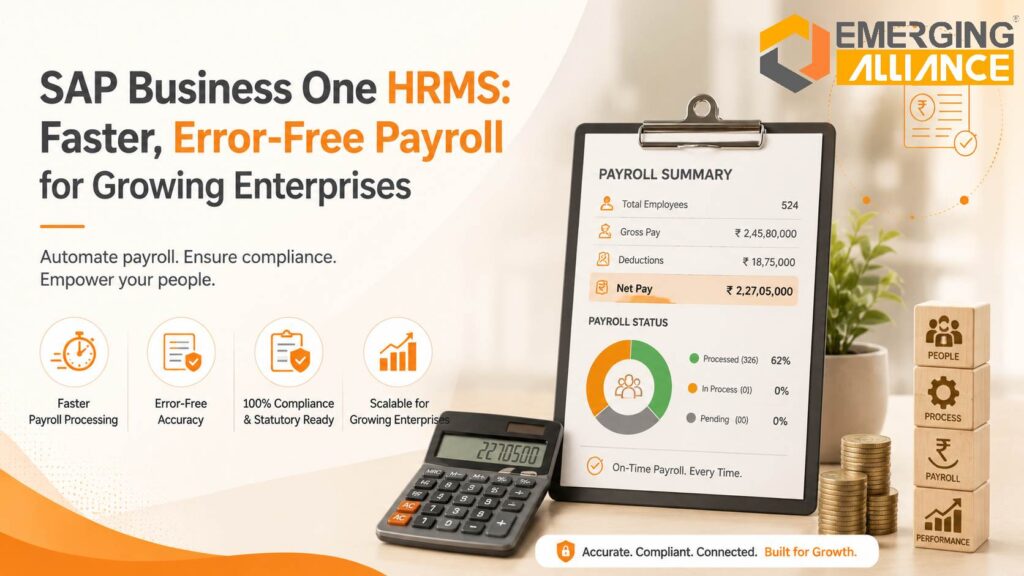
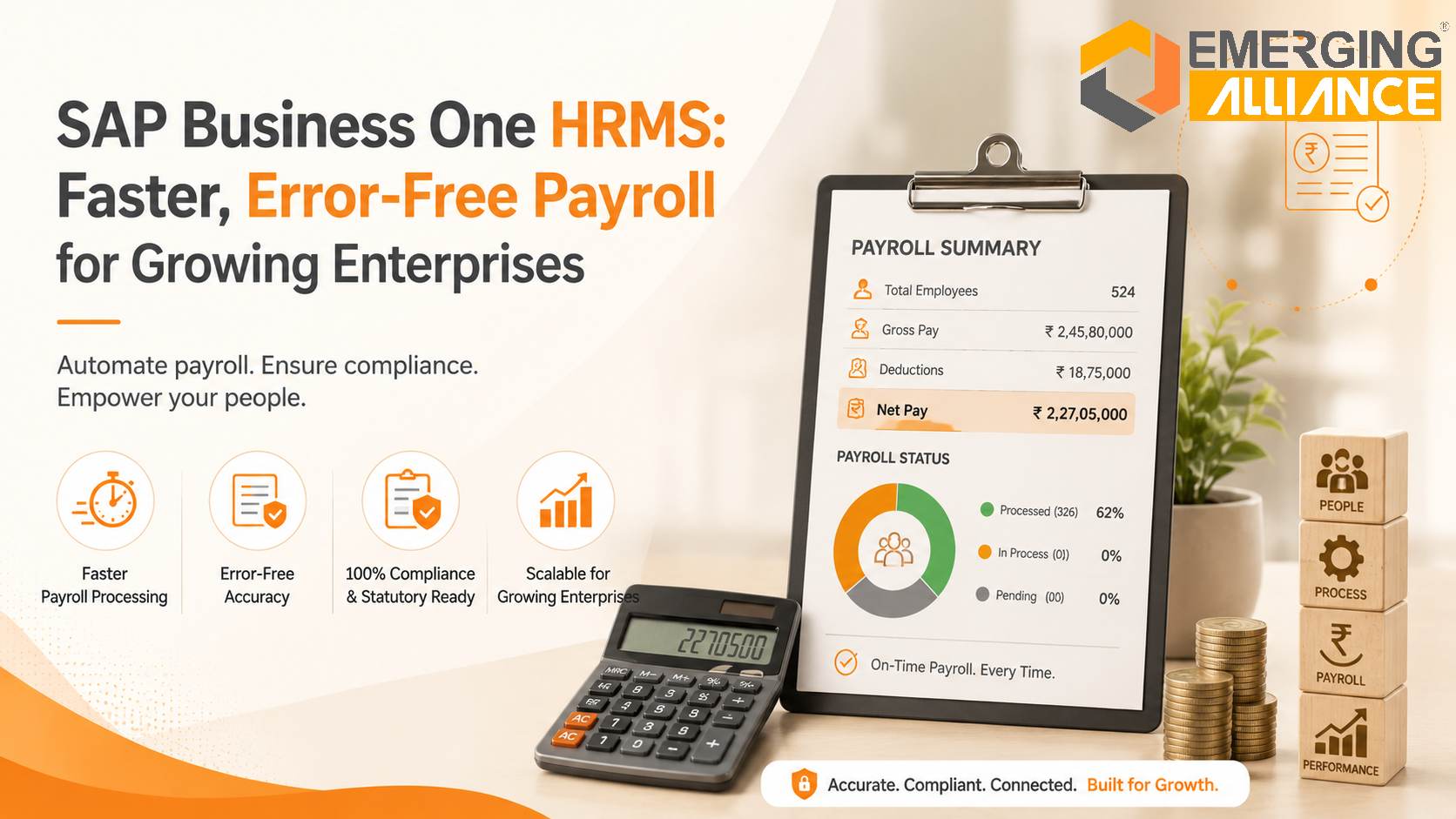
SAP Business One HRMS for On-Time, Accurate Salary Processing
Payroll is one of the few business processes where even a small mistake can immediately impact employee trust, statutory compliance, and operational efficiency. As organizations grow, managing salaries through disconnected spreadsheets and standalone payroll software becomes increasingly difficult. SAP Business One HRMS helps businesses unify HR and payroll processes within their ERP environment. Instead of managing employee records, attendance, payroll, leave, reimbursements, and financial postings across multiple systems, organizations gain a centralized platform that improves accuracy, visibility, and operational control.
Whether you’re expanding your workforce, operating across multiple locations, or preparing for future growth, the right HRMS can transform payroll from an administrative burden into a streamlined business process.
Why Payroll Complexity Increases as Businesses Scale
Growing organizations naturally experience higher payroll complexity. More employees, departments, salary structures, compliance rules, and approval workflows increase the risk of manual errors.
Without integrated HR systems, companies often struggle with:
- Duplicate employee records
- Manual payroll calculations
- Leave and attendance mismatches
- Delayed salary processing
- Compliance reporting challenges
- Reconciliation issues between HR and Finance
These inefficiencies consume valuable administrative time while increasing operational risk.
Organizations implementing SAP Business One HRMS eliminate many of these challenges by connecting HR activities directly with finance and ERP operations.
The Hidden Business Cost of Manual Payroll Processes
Payroll delays rarely remain isolated within HR. They create ripple effects across finance, compliance, employee satisfaction, and executive reporting.
Common business impacts include:
Payroll Errors That Damage Employee Confidence
Incorrect salary calculations, overtime mistakes, reimbursement delays, or tax errors reduce employee confidence and increase HR support requests.
Multiple Systems Creating Duplicate Work
When HR, payroll, attendance, and accounting operate independently, teams repeatedly enter the same information across several applications.
Limited Visibility for Management
Leadership often lacks real-time workforce insights because employee information is spread across spreadsheets and disconnected software.
Compliance Risks
Manual payroll processing increases the likelihood of statutory filing errors, delayed deductions, and audit challenges.
For organizations planning workforce expansion, these issues become increasingly expensive over time.
If payroll reconciliation consumes significant time every month, it is often worth conducting a process assessment before adding more headcount or expanding operations.
How SAP Business One HRMS Simplifies Payroll and Workforce Management
SAP Business One HRMS centralizes employee information, payroll processing, attendance, leave management, and financial integration into a single business platform.
Instead of transferring data between systems, organizations manage HR operations from one source of truth.
Key capabilities include:
Centralized Employee Master Data
Employee profiles, departments, designations, salary structures, banking details, and employment history remain synchronized across the organization.
This reduces duplicate records while improving reporting accuracy.
Automated Payroll Processing
The SAP Business One Payroll engine automates salary calculations using predefined payroll rules.
Organizations can process:
- Basic salary
- Allowances
- Incentives
- Overtime
- Shift differentials
- Bonuses
- Statutory deductions
- Reimbursements
Automation significantly reduces manual intervention during monthly payroll cycles.
Attendance and Leave Integration
Attendance directly influences payroll calculations without requiring manual reconciliation.
This enables effective HR and payroll integration with SAP B1, ensuring salary calculations accurately reflect attendance, leave balances, overtime, and holidays.
Finance Integration
Payroll journals automatically post into financial accounts, improving reconciliation between HR and Finance while reducing month-end closing effort.
SAP B1 Payroll Management Improves Operational Efficiency
Effective SAP B1 payroll management extends beyond salary calculations. It improves how organizations manage workforce operations across the entire employee lifecycle.
Benefits include:
Faster Payroll Cycles
Automated workflows reduce payroll preparation time and minimize month-end pressure.
Higher Accuracy
Automated calculations eliminate spreadsheet errors while ensuring consistent payroll processing.
Better Executive Visibility
Management gains dashboards covering:
- Workforce costs
- Payroll expenses
- Department-wise salary analysis
- Headcount trends
- Attendance insights
- Leave utilization
Improved Decision-Making
Executives can evaluate workforce costs alongside operational performance using the same ERP environment.
This integrated visibility makes SAP B1 payroll management processes significantly more valuable than standalone payroll software.
Choosing the Best HRMS for SAP B1 Without Compromising Business Growth
Choosing the Best HRMS for SAP B1 requires more than comparing payroll features. Enterprise leaders should evaluate how well the solution supports long-term operational growth.
Important evaluation criteria include:
Native SAP Business One Integration
Avoid solutions that rely heavily on manual imports or third-party synchronization.
Payroll Flexibility
The system should accommodate multiple salary structures, allowances, deductions, shifts, and business-specific payroll policies.
Compliance Readiness
HRMS should simplify statutory reporting while supporting evolving compliance requirements.
Scalability
The platform should support future workforce expansion without requiring system replacement.
Reporting Capabilities
Executives need workforce analytics alongside financial reporting for informed business decisions.
Organizations evaluating HR modernization often benefit from a structured workshop that maps existing payroll workflows against future growth requirements before selecting a solution.
Building a Successful SAP B1 HRMS Implementation Strategy
A successful SAP B1 HRMS implementation focuses equally on technology, process design, and organizational adoption.
Leading implementations typically follow these phases:
Business Process Assessment
Review current payroll, attendance, leave, approvals, and HR workflows.
Data Preparation
Validate employee records before migration to reduce future payroll issues.
Payroll Configuration
Configure salary structures, earnings, deductions, taxes, attendance policies, and approval workflows.
Integration Testing
Verify finance postings, payroll calculations, attendance synchronization, and reporting.
User Training
Train HR, Finance, and department managers to maximize adoption and reduce operational dependency.
A structured implementation significantly reduces deployment risk while accelerating user acceptance.
SAP Business One HRMS Delivers Measurable Business Outcomes
For executive teams, the value of SAP Business One HRMS is measured by operational outcomes rather than software features.
Organizations typically achieve improvements across four strategic priorities:
Lower Administrative Costs
Automation reduces manual payroll effort while allowing HR teams to focus on higher-value initiatives.
Reduced Compliance Risk
Standardized payroll workflows improve consistency and simplify audits.
Faster Financial Close
Integrated payroll postings eliminate reconciliation delays between HR and Finance.
Better Workforce Visibility
Leadership gains reliable workforce intelligence that supports budgeting, hiring, productivity planning, and business expansion.
When HR, payroll, and finance operate within one ERP environment, decision-making becomes faster, more accurate, and more scalable.
Conclusion
Payroll should enable business growth—not slow it down. As organizations expand, disconnected HR systems create unnecessary complexity, increase compliance risk, and consume valuable administrative resources.
SAP Business One HRMS provides an integrated approach to workforce management by combining HR, payroll, attendance, and financial processes into a unified platform. The result is faster payroll processing, improved accuracy, stronger governance, and better visibility for executive decision-making.
Frequently Asked Questions
1. How does SAP Business One HRMS reduce payroll processing time?
By automating salary calculations, attendance integration, statutory deductions, and finance postings, SAP Business One HRMS significantly reduces manual payroll activities. HR teams spend less time reconciling data and more time managing strategic workforce initiatives.
2. Is SAP Business One Payroll suitable for companies with multiple branches?
Yes. SAP Business One Payroll can support organizations operating across multiple locations with varying payroll policies, attendance rules, and departmental structures while maintaining centralized reporting.
3. What makes SAP B1 payroll management different from standalone payroll software?
SAP B1 payroll management integrates directly with ERP processes, eliminating duplicate data entry and improving synchronization between HR, finance, and operations. Standalone payroll systems often require manual imports and reconciliations.
4. Can SAP Business One HRMS integrate attendance and leave management?
Yes. The platform supports HR and payroll integration with SAP B1, allowing attendance, leave, overtime, and holidays to automatically influence payroll calculations while improving overall accuracy.
5. What should businesses prepare before SAP B1 HRMS implementation?
Organizations should review employee master data, payroll policies, approval workflows, attendance rules, statutory requirements, and existing HR processes. Clean data and clearly defined workflows contribute significantly to implementation success.
6. Does SAP Business One HRMS improve compliance management?
Yes. Automated payroll rules, standardized calculations, and centralized employee records help reduce compliance risks while making statutory reporting and audits easier to manage.
7. Can SAP Business One HRMS support customized salary structures?
Yes. During SAP B1 HRMS implementation, payroll configurations can accommodate different salary grades, allowances, deductions, bonuses, overtime policies, and organization-specific payroll rules.
8. Why is integrated HR and payroll important for growing businesses?
Separate HR and payroll systems often create duplicate work and inconsistent employee records. An integrated solution ensures workforce data flows seamlessly across attendance, payroll, finance, and reporting, improving both efficiency and accuracy.
9. How do executives benefit from SAP Business One HRMS dashboards?
Executives gain real-time visibility into workforce costs, payroll expenses, department-wise salary distribution, attendance trends, and headcount analytics. These insights support better budgeting, hiring, and operational planning.
10. How do organizations choose the Best HRMS for SAP B1?
The Best HRMS for SAP B1 should provide native SAP Business One integration, flexible payroll configuration, scalable architecture, compliance support, comprehensive reporting, and implementation expertise aligned with business growth objectives.
Schedule a SAP Business One HRMS consultation with our experts to assess your current payroll process and identify opportunities to improve accuracy, efficiency, and operational visibility.