
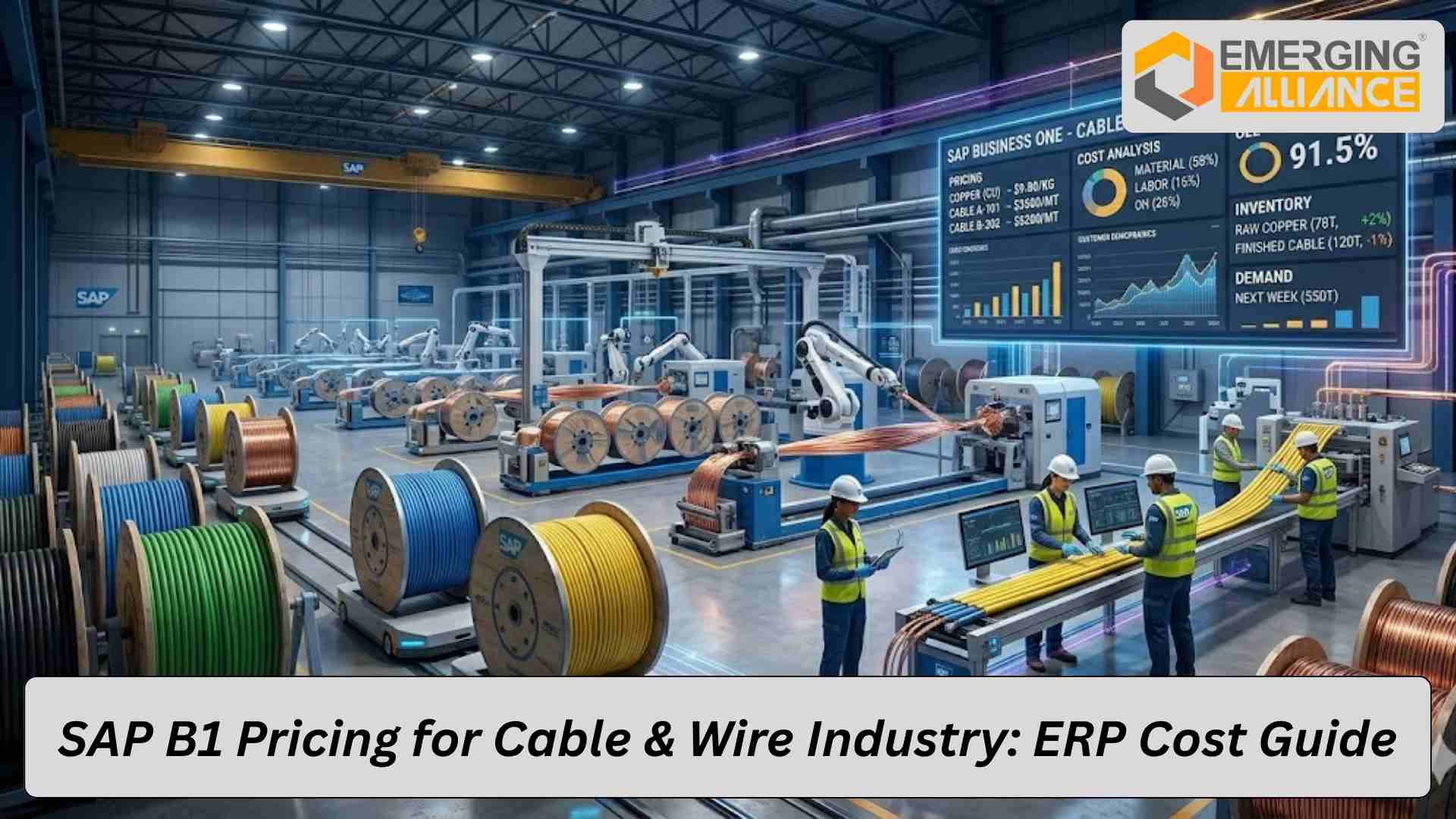
SAP B1 Pricing for Cable & Wire Industry: ERP Cost Guide
SAP B1 Pricing for Cable & Wire Industry: ERP Cost Guide
The cable and wire industry operates in a highly competitive manufacturing environment where cost control, inventory accuracy, and production efficiency are critical. Businesses in this sector often struggle with fluctuating raw material prices, complex supply chains, and compliance requirements. Understanding SAP B1 Pricing for Cable & Wire Industry is essential for companies planning to implement an ERP system that streamlines operations while staying within budget.
Why ERP Investment Matters
complex manufacturing processes
Cable and wire production involves multiple stages, including drawing, stranding, insulation, and packaging.
raw material cost fluctuations
Copper, aluminum, and other materials constantly change in price, impacting margins.
inventory management challenges
Maintaining optimal stock levels is critical to avoid production delays.
quality and compliance requirements
Strict industry standards require accurate tracking and reporting.
SAP Business One provides an integrated ERP solution that helps manage these challenges efficiently.
Cost Overview
small business cost range
For small manufacturers, SAP B1 implementation typically ranges between ₹8 lakh to ₹12 lakh.
medium business cost range
Mid-sized cable manufacturers may invest between ₹14 lakh to ₹75 lakh depending on complexity.
large enterprise cost range
Larger operations can exceed ₹25 lakh to ₹1 crore with advanced customization.
monthly subscription option
Cloud-based pricing can start from a few thousand per user per month depending on modules.
These costs vary based on business size, users, and required features.
Key Cost Components
license cost
- Professional license: approx ₹99,000 per user (one-time)
- Limited license: approx ₹50,000 per user
implementation cost
- Typically ₹2 lakh to ₹20 lakh depending on project scope
annual maintenance cost
- Around 15%–22% of license cost annually
customization and add-ons
- Additional cost for industry-specific features like production planning and batch tracking
training and support
- Costs vary based on team size and complexity
Industry-Specific Cost Drivers
production complexity
More complex manufacturing processes require advanced modules and customization.
bill of materials management
Cable manufacturing requires detailed BOM structures, increasing system configuration cost.
quality control systems
Integration of testing and compliance systems adds to ERP expenses.
multi-location operations
Factories and warehouses across locations increase licensing and implementation costs.
Cloud vs On-Premise Cost
cloud deployment cost benefits
- Lower upfront investment
- Subscription-based pricing
- Reduced IT infrastructure cost
on-premise deployment cost benefits
- One-time license investment
- Greater control over data
- Customization flexibility
Choosing between these depends on long-term budget and operational needs.
SAP B1 Pricing for Cable & Wire Industry – Hidden Costs to Consider
data migration cost
Migrating legacy data may cost additional fees depending on volume.
consultancy charges
ERP consultants may charge one-time or monthly fees.
integration costs
Connecting ERP with third-party tools increases total investment.
upgrade and scalability cost
Future upgrades and expansion require additional budgeting.
Ignoring these hidden costs can lead to budget overruns.
SAP B1 Pricing for Cable & Wire Industry – ROI Factors
improved production efficiency
Automated processes reduce delays and improve output.
better inventory control
Real-time tracking reduces wastage and stock shortages.
enhanced financial visibility
Accurate reporting helps in better financial planning.
reduced operational costs
Automation minimizes manual errors and labor costs.
Investing in SAP B1 delivers long-term value despite initial costs.
SAP B1 Pricing for Cable & Wire Industry – Cost Optimization Tips
choose the right license type
Use limited licenses for non-core users to reduce cost.
start with essential modules
Avoid unnecessary features in the initial phase.
opt for phased implementation
Spread costs over time instead of a full rollout.
negotiate with SAP partners
Compare quotes from multiple vendors.
leverage cloud deployment
Reduce infrastructure and maintenance costs.
SAP B1 Pricing for Cable & Wire Industry – Real-World Example
small cable manufacturer
- Users: 5
- Cost: ₹8–12 lakh
- Features: basic finance, inventory, and production
mid-sized manufacturer
- Users: 20+
- Cost: ₹20–50 lakh
- Features: advanced production planning and reporting
large enterprise
- Users: 50+
- Cost: ₹75 lakh+
- Features: full ERP integration with multiple plants
SAP B1 Pricing for Cable & Wire Industry – Future Cost Trends
increasing cloud adoption
More companies are shifting to subscription-based ERP models.
ai-driven automation
Advanced analytics tools may increase initial costs but improve ROI.
industry-specific solutions
Pre-configured ERP packages may reduce implementation time and cost.
Conclusion: Making the Right Investment in SAP B1 Pricing
Understanding SAP Business One (SAP B1) pricing is essential for cable and wire manufacturers planning to implement a reliable and scalable ERP system. Although the overall cost depends on factors such as company size, level of customization, number of users, and deployment model (cloud or on-premise), the long-term value it delivers far exceeds the initial investment.
With the right strategy, businesses can optimize ERP costs while unlocking significant benefits like improved operational efficiency, real-time data visibility, streamlined production processes, and enhanced decision-making. By carefully evaluating requirements and choosing the right implementation approach, cable and wire companies can ensure a cost-effective ERP adoption that supports sustainable growth and competitiveness.
Understanding SAP Business One pricing is essential for cable and wire manufacturers looking to invest in a reliable and scalable ERP solution. While the overall cost depends on factors like business size, customization, and deployment model, the long-term value it delivers far exceeds the initial investment. By partnering with Emerging Alliance, businesses can ensure a cost-effective, well-planned ERP implementation tailored to their industry needs. With expert guidance, seamless deployment, and ongoing support, Emerging Alliance empowers companies to optimize operations, enhance productivity, and achieve sustainable growth in a competitive market.
Frequently Asked Questions About SAP B1 Pricing for Cable & Wire Industry
1. What are the key cost components in SAP B1 pricing for the cable & wire industry?
SAP Business One pricing for cable and wire manufacturers includes multiple cost layers such as user-based licensing (Professional vs Limited), deployment infrastructure (cloud or on-premise), implementation services (configuration, data migration, testing), and industry-specific customizations like length-based inventory management, drum tracking, and quality compliance. Total Cost of Ownership (TCO) also includes annual maintenance, upgrades, and support services.
2. How does SAP B1 pricing vary for small vs mid-sized cable manufacturers?
For small manufacturers, SAP B1 implementation typically starts from ₹8–12 lakh with essential modules and limited users. Mid-sized and large enterprises require advanced features such as multi-plant operations, production planning, and analytics, increasing costs significantly based on scale and complexity.
3. What factors significantly influence SAP B1 pricing in cable manufacturing?
Pricing is influenced by user count, level of customization (e.g., cable sizing, drum management), production complexity, integration with third-party systems, deployment model, and the need for advanced modules like MRP, quality control, and analytics.
4. How does SAP B1 support complex production processes in the cable & wire industry?
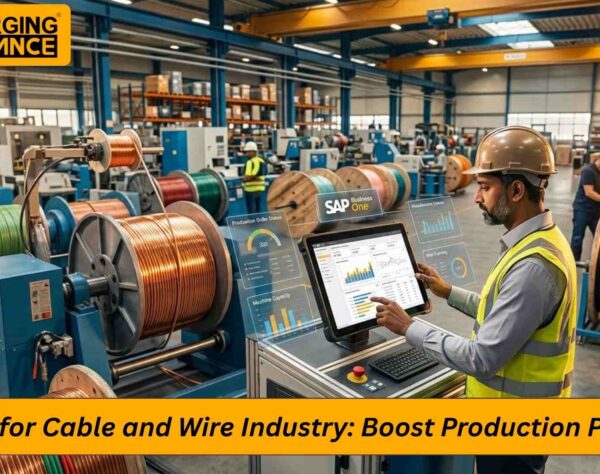
SAP B1 manages multi-stage production processes such as drawing, stranding, insulation, and sheathing. It supports multi-level BOMs, routing, and real-time production tracking, ensuring efficient manufacturing and minimal material wastage.
5. What is the pricing difference between Professional and Limited licenses?
Professional licenses provide full system access, including finance, production, and analytics, and typically cost around ₹99,000 per user. Limited licenses are role-based (e.g., finance, logistics) and are more cost-effective, making them suitable for operational staff.
6. What hidden or indirect costs should cable manufacturers consider?
Hidden costs may include data migration from legacy systems, advanced customization for industry-specific workflows, employee training, infrastructure upgrades (for on-premise), and ongoing maintenance or cloud subscription fees. Proper project scoping helps avoid budget overruns.
7. How does SAP B1 handle multi-location and multi-warehouse cable operations?
SAP B1 supports centralized management of multiple factories and warehouses with real-time inventory visibility, inter-branch stock transfers, and consolidated financial reporting, ensuring seamless coordination across locations.
8. Is cloud deployment more cost-effective for cable manufacturers?
Cloud ERP reduces initial capital expenditure, eliminates infrastructure costs, and offers scalability with subscription-based pricing. However, over time, recurring costs must be evaluated against on-premise deployment based on long-term business strategy.
9. What is the typical implementation timeline and its cost impact?
Implementation typically ranges from 2 to 6 months for small to mid-sized cable manufacturers and can extend further for complex operations. Delays due to customization or data migration can increase costs, making proper planning and phased rollout essential.
10. What strategies can reduce SAP B1 implementation costs without affecting ROI?
Cost optimization strategies include adopting a phased implementation approach, selecting only essential modules initially, using a mix of Professional and Limited licenses, leveraging standard SAP features instead of heavy customization, and partnering with experienced SAP consultants to ensure efficient deployment.