
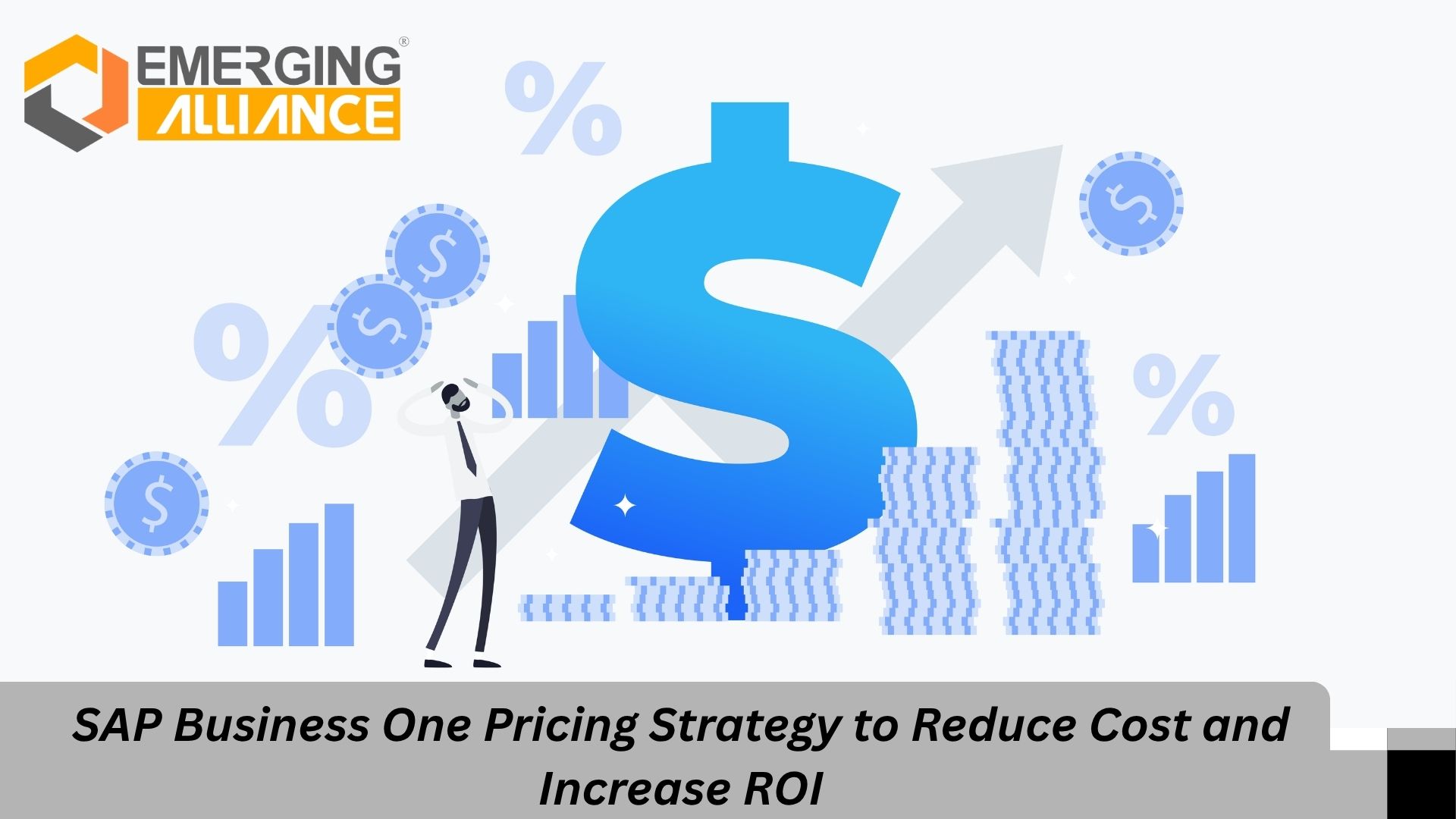
SAP Business One Pricing Strategy to Reduce Cost and Increase ROI
Align licenses, implementation, and usage for better returns with SAP Business One Pricing
When leadership evaluates the SAP Business One Pricing, the focus is usually on negotiation, discounts, and initial investment. However, the real cost leakage doesn’t occur at the point of purchase it happens in how your ERP system is structured, optimized, and utilized after go-live.
Across industries, organizations face the same pattern:
- Over-licensing and inactive users
- Wrong SAP B1 license type assigned to roles
- Unused modules increasing SAP B1 add-on costs
- Inflated SAP B1 license upfront investment
- Poor visibility into actual usage vs cost
This leads to a distorted SAP Business One cost where you’re paying for theoretical capacity, not actual business value.
The Insight: SAP Business One Pricing Is a Dynamic System, Not a Fixed Cost
Most organizations treat SAP Business One price in India or globally as a one-time capital decision.
In reality, your ERP cost structure is continuously evolving based on:
- User behavior and adoption
- Business expansion and restructuring
- Integration complexity and add-ons
- Ongoing SAP Business One costs for maintenance
Without governance, your SAP B1 ERP price in India becomes misaligned with operational reality.
Where Cost Misalignment Begins
- A reporting-only user assigned a full Professional license
- Multiple teams sharing licenses due to poor allocation planning
- Underutilized CRM or service modules despite paying full SAP Business One license cost
- Add-ons implemented “just in case,” inflating long-term licensing or subscription costs
This is not a pricing issue.
It’s a strategy issue.
Breaking Down SAP Business One Price in India
To optimize effectively, leaders must understand what drives India’s SAP Business One price.
1. License Costs
- Professional User: ₹1.5–3.5 Lakhs
- Limited User: ₹60,000–₹1.2 Lakhs
These define your base SAP Business One license costs.
2. Implementation Costs
- Typical price of SAP B1 implementation: ₹8–25 Lakhs
- Includes configuration, integration, testing, and deployment
- Influenced by scope, compliance, and customization
This is where most organizations underestimate effort when they try to calculate implementation costs.
3. Infrastructure & Deployment
- On-premise: ₹3–6 Lakhs one-time
- Cloud: ₹1–3 Lakhs annually
The choice directly impacts SAP B1 cost for a small business vs enterprise-scale deployment.
4. Maintenance (AMC)
- ~20% annually of license value
- Covers updates, patches, and support
A critical contributor to SAP Business One’s maintenance costs in India.
5. Add-ons & Extensions
- Industry-specific functionalities
- Compliance modules, analytics tools
These increase SAP B1 add-on costs and often go underutilized.
6. Consulting & Support
- SAP B1 consultant charges vary based on expertise
- Impacts quality of deployment and long-term ROI
Often hidden within broader installation costs.
A Proven Framework to Optimize SAP Business One Pricing
1. License Audit: Identify Hidden Waste
Conduct a structured audit:
- Active vs inactive users
- Feature utilization per role
- License consumption patterns
This reveals inefficiencies across SAP B1 packages and helps reduce unnecessary spend.
2. Role-Based License Mapping
Align licenses to actual job functions:
- Finance leadership → Professional licenses
- Sales teams → Limited CRM licenses
- Operations → Limited logistics licenses
This ensures accurate mapping based on a sap business one license comparison chart.
3. License Restructuring Strategy
Instead of adding new licenses:
- Reassign unused licenses
- Convert high-cost licenses into optimized ones
- Rationalize user access
This directly reduces SAP B1 cost for a medium-sized business and large enterprises.
4. Optimize Add-ons and Integrations
Evaluate every add-on:
- Does it deliver measurable ROI?
- Is functionality duplicated?
- Is adoption high enough to justify cost?
Rationalization here significantly reduces SAP Business One cost.
5. Align Deployment Model with Growth Strategy
- Cloud → Flexible, predictable licensing or subscription costs
- On-premise → Higher upfront, lower long-term variability
Choosing correctly impacts your SAP B1 price in India and scalability.
The Outcome: Immediate Cost Efficiency and Long-Term ROI
When pricing is aligned with actual usage, organizations experience:
Reduced TCO
- Elimination of unused licenses
- Lower SAP Business One costs for maintenance due to optimized footprint
Improved ROI
- Faster payback cycles
- Better financial predictability
Operational Clarity
- Defined ownership of licenses
- Clear cost allocation across departments
Scalable Growth
- Controlled expansion without sudden cost spikes
- Better planning for future SAP B1 implementation phases
Why This Matters Across Industries
Whether you are in manufacturing, healthcare, distribution, or services. An inefficient SAP Business One price structure leads to:
- Margin erosion
- Poor financial visibility
- Limited scalability
Optimized pricing transforms ERP from a cost center into a strategic profit enabler.
The Role of the Right Partner
Most SAP Business One implementation partners in India focus on deployment. But real value comes from partners who:
- Conduct ongoing license audits
- Enable user-role alignment
- Design long-term cost optimization strategies
Because ERP success is not about go-live. It’s about sustained ROI.
A strategic partner ensures your SAP B1 implementation evolves with your business not against it.
If you want to optimize your SAP Business One cost and improve ROI, partner with Emerging Alliance to start with a comprehensive license audit, redesign your SAP B1 license structure for maximum efficiency, and build a scalable implementation strategy aligned with your long-term business growth.
FAQs About SAP Business One Pricing
1. How do I calculate SAP Business One implementation costs accurately?
You must evaluate user count, license type, integrations, customization level, and compliance needs. A detailed scoping exercise is essential.
2. What is included in SAP Business One license costs?
It includes Professional and Limited user licenses, each providing different levels of access and functionality.
3. How do SAP Business One costs for maintenance impact long-term ROI?
Maintenance costs (~20% annually) ensure system updates and support but must be optimized by reducing unnecessary licenses.
4. What is the difference between SAP B1 cost for a small business and a large enterprise?
Small businesses have lower licensing and implementation complexity, while enterprises incur higher costs due to integrations and scale.
5. How can I reduce SAP B1 add-on costs?
Audit usage regularly and eliminate redundant or underutilized add-ons.
6. What are typical SAP B1 consultant charges?
They vary based on expertise and project complexity but significantly influence implementation quality and ROI.
7. How do I choose the right SAP B1 license type?
Map each user role to actual system usage to avoid overpaying for unnecessary features.
8. What factors influence SAP B1 ERP price in India?
User count, license type, deployment model, add-ons, and implementation complexity.
9. What should I look for in SAP Business One implementation partners in India?
Look for partners who focus on ROI, optimization, and long-term scalability not just deployment.
10. How often should SAP Business One pricing be reviewed?
At least annually or whenever there are significant business changes like expansion or restructuring.
Fill out the form to discover where your ERP investment is underperforming and how to fix it.