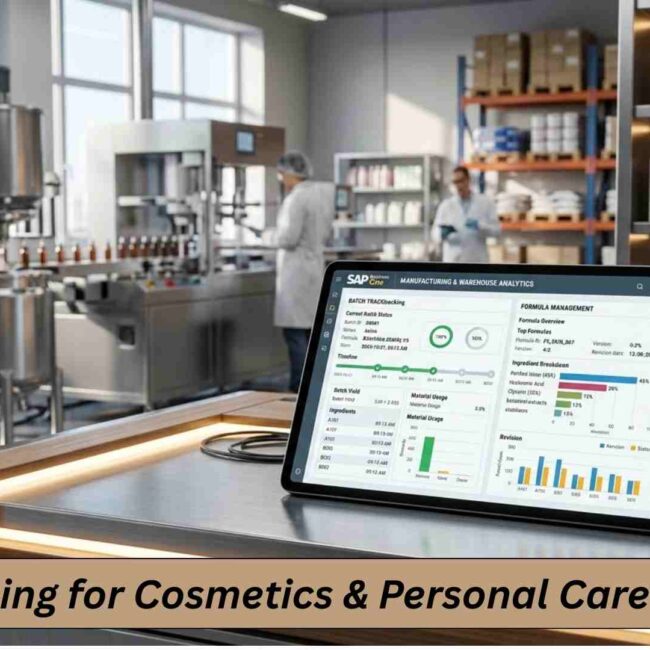


SAP B1 Pricing for Cosmetics & Personal Care Industry Explained

SAP B1 Pricing for Cosmetics & Personal Care Industry: Complete Cost Breakdown
The cosmetics and personal care industry is growing rapidly, driven by consumer demand, innovation, and strict regulatory requirements. Businesses in this sector often face challenges such as inventory inaccuracies, compliance issues, and disconnected systems. Understanding SAP B1 Pricing for Cosmetics & Personal Care Industry is essential for companies planning to implement a reliable ERP system that brings all operations under one platform.
SAP Business One provides real-time visibility, better inventory control, and improved financial management, making it a preferred ERP solution for cosmetic manufacturers and distributors. However, before investing, it is important to understand how pricing works and what factors influence the overall cost.
Overview
Pricing structure basics
SAP Business One pricing is flexible and depends on multiple factors, including licensing type, number of users, deployment model, and the level of customization required. Each cosmetics business has unique operational needs, which is why pricing is typically tailored rather than fixed.
Why pricing matters
Having a clear understanding of SAP B1 pricing helps businesses plan budgets more effectively, avoid unexpected expenses, and ensure that they select a solution that aligns with their growth strategy.
Licensing Options
Perpetual license
The perpetual license model involves a one-time payment that allows businesses to use the software indefinitely. In addition to the initial cost, companies are required to pay annual maintenance fees, which usually cover updates and support services.
Subscription license
The subscription model offers flexibility through monthly or yearly payments, making it easier for small and medium-sized cosmetic businesses to adopt ERP without a large upfront investment.
User types
SAP Business One offers different user categories, including professional users who have full system access and limited users who can access specific functions. The mix of these users significantly impacts the total pricing.
Deployment Models
On-premise deployment
In an on-premise setup, the software is installed on the company’s own servers, giving full control over data and system management. This option typically requires higher initial investment in infrastructure and IT resources.
Cloud deployment
Cloud deployment is increasingly popular in the cosmetics industry because it reduces upfront costs and offers scalability. Businesses can access the system from anywhere while minimizing IT maintenance efforts.
Cost Components
Implementation services
The implementation phase includes system configuration, data migration, and user training. These services are crucial for ensuring that the ERP system is set up correctly and functions smoothly.
Customization
Customization allows businesses to tailor the ERP system according to their specific processes, such as batch tracking, formulation management, and compliance reporting, which are critical in the cosmetics industry.
Integration
Integration with third-party platforms such as e-commerce systems, CRM tools, and logistics services enhances the overall functionality of SAP Business One and contributes to the total cost.
Support and maintenance
Ongoing support and maintenance ensure that the system remains updated, secure, and efficient over time, making it an essential part of the pricing structure.
Estimated Cost Range
Small businesses
For small cosmetic companies, SAP Business One implementation typically starts at a lower range, depending on the number of users and basic requirements.
Mid-sized companies
Mid-sized businesses usually require additional features, integrations, and customization, which increases the overall cost but also enhances operational efficiency.
Large enterprises
Larger organizations with complex workflows, multiple locations, and advanced reporting needs can expect a significantly higher investment due to the scale and customization involved.
SAP B1 Pricing for Cosmetics & Personal Care Industry Key Benefits
Improved inventory management
SAP Business One enables real-time tracking of inventory, helping businesses manage stock levels accurately and reduce wastage.
Regulatory compliance
The system supports compliance with industry regulations by providing tools for tracking product quality, maintaining records, and generating audit-ready reports.
Production efficiency
With features like formula management and batch processing, companies can maintain consistency and improve manufacturing efficiency.
Better decision making
Real-time dashboards and analytics provide valuable insights that help business leaders make informed decisions.
SAP B1 Pricing for Cosmetics & Personal Care Industry ROI Factors
Cost savings
By automating processes and reducing manual errors, businesses can significantly lower operational costs over time.
Revenue growth
Improved efficiency and faster order processing contribute to better customer satisfaction and increased revenue.
Scalability
SAP Business One supports business growth by adapting to new requirements, additional users, and expanded operations.
SAP B1 Pricing for Cosmetics & Personal Care Industry Implementation Tips
Choose the right partner
Selecting an experienced SAP partner ensures accurate pricing, smooth implementation, and ongoing support.
Start with core modules
It is advisable to begin with essential features and expand the system as the business grows.
Plan customization wisely
While customization is important, excessive modifications can increase both cost and complexity.
Train your team
Proper training helps employees adapt quickly to the system and ensures maximum utilization.
Conclusion: Maximizing Value with SAP B1 Pricing for Cosmetics & Personal Care Industry
The cosmetics and personal care industry demands efficient, integrated systems to manage operations, maintain regulatory compliance, and support sustainable growth. Understanding SAP B1 pricing for the cosmetics and personal care industry enables businesses to accurately assess the total cost of ERP implementation and make well-informed investment decisions.
By choosing the right licensing model, deployment approach, and implementation strategy, companies can adopt a cost-effective and scalable ERP solution. This ensures not only smooth business operations but also long-term value, improved efficiency, and a stronger competitive edge in a rapidly evolving market.
To successfully implement and maximize the benefits of SAP Business One, partnering with the right technology provider is crucial. Emerging Alliance stands out as a trusted ERP partner, offering industry-specific expertise, tailored implementation strategies, and end-to-end support for cosmetics and personal care businesses. With a proven track record in delivering scalable SAP B1 solutions, Emerging Alliance helps organizations streamline processes, ensure compliance, and achieve sustainable growth with confidence.
Frequently Asked Questions About SAP Business One Pricing for Cosmetics & Personal Care Industry
1. What are the key cost components in SAP B1 pricing for cosmetics companies?
SAP Business One pricing in the cosmetics industry is driven by multiple cost layers including user-based licensing (professional vs limited), deployment infrastructure (cloud hosting or on-premise servers), implementation services (configuration, data migration, and testing), and industry-specific customizations such as formulation management, batch traceability, and regulatory compliance workflows. Total cost of ownership (TCO) also includes annual maintenance, upgrades, and support services.
2. How does SAP B1 support formula-based manufacturing in cosmetics?
SAP B1 enables advanced formula and recipe management by allowing manufacturers to define bill of materials (BOM) with precise ingredient ratios, manage version control for formulations, and ensure consistency across batches. It also supports compliance tracking for ingredients, enabling safe and standardized production aligned with industry regulations.
3. What factors influence SAP B1 implementation complexity in cosmetics manufacturing?
Implementation complexity depends on multi-level production processes, batch and expiry tracking requirements, integration with third-party systems (such as CRM, e-commerce, or laboratory systems), regulatory compliance needs, and the extent of customization. Multi-location operations and legacy data migration also significantly impact implementation timelines and costs.
4. How does SAP B1 ensure end-to-end traceability in cosmetics production?
SAP B1 provides full traceability by linking raw materials, production batches, quality checks, and finished goods through a centralized system. This allows manufacturers to track products from ingredient sourcing to final delivery, enabling faster recalls, improved quality assurance, and compliance with regulatory standards.
5. What role does SAP B1 play in regulatory compliance for cosmetics companies?
SAP B1 supports compliance by maintaining detailed records of ingredient usage, batch production data, and quality inspections. It automates documentation required for audits and ensures adherence to standards such as GMP and other cosmetic regulations, reducing compliance risks and manual effort.
6. How does SAP B1 optimize inventory and shelf-life management in cosmetics?
The system uses real-time inventory tracking combined with batch and expiry date management to optimize stock levels. It supports FEFO (First Expiry First Out) strategies, minimizes product wastage, and ensures that perishable cosmetic products are distributed efficiently without quality compromise.
7. What are the advanced reporting and analytics capabilities of SAP B1?
SAP B1 provides real-time dashboards and customizable reports covering production efficiency, batch quality, sales performance, and financial metrics. With built-in analytics, businesses can forecast demand, analyze cost structures, and make data-driven strategic decisions.
8. How scalable is SAP B1 for expanding cosmetics brands?
SAP B1 is designed for scalability, allowing businesses to add users, integrate new modules, and expand into multiple locations or international markets. It supports business growth without requiring system replacement, making it ideal for scaling cosmetic brands.
9. How does SAP B1 integrate with e-commerce and retail channels?
SAP B1 integrates with e-commerce platforms, POS systems, and marketplaces to synchronize product data, inventory levels, and customer orders in real time. This ensures seamless omnichannel operations and improves customer experience.
10. What should cosmetics companies evaluate before choosing an SAP B1 partner?
Companies should assess the partner’s experience in cosmetics manufacturing, expertise in handling formulation and compliance requirements, proven implementation track record, and ability to provide ongoing support. A strong partner ensures optimized deployment, reduced risks, and faster ROI.