
SAP B1 for Steel Manufacturing : Improve Production Efficiency
Production Planning in Steel with SAP B1 ERP Solutions Using SAP Business One
Steel manufacturers operate in a high-pressure environment where margins depend on precision, cost control, and timely delivery. SAP B1 for Steel Manufacturing helps companies streamline production planning, manage raw materials efficiently, and gain real-time visibility across operations. By integrating finance, inventory, and manufacturing in one system, SAP Business One enables steel businesses to improve efficiency and profitability.
By leveraging SAP Business One Service, steel companies can streamline operations, control costs, and ensure accurate material planning. Whether managing billets, coils, sheets, or customized steel components, SAP B1 ERP provides the structure and visibility required for efficient manufacturing execution.
Production Planning in Steel with SAP B1 ERP Solutions: Industry Challenges
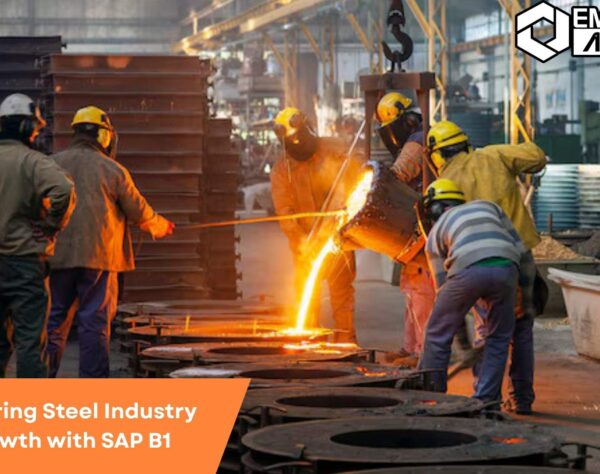
Steel manufacturing involves multiple stages—melting, casting, rolling, finishing, and dispatch. Each step requires coordination and precise scheduling.
Complex bill of materials
Steel products often include multiple grades, dimensions, and specifications. Managing dynamic BOMs manually leads to errors.
Fluctuating raw material costs
Iron ore, scrap, alloys, and energy costs impact profitability. Without real-time tracking, margins suffer.
Capacity constraints
Rolling mills and furnaces have limited capacity. Poor scheduling leads to downtime or bottlenecks.
Inventory mismanagement
Overstocking increases holding costs, while shortages delay customer deliveries.
With SAP B1 Software, these challenges are addressed through integrated production, inventory, and financial modules.
Production Planning in Steel Plants
Material requirements planning (MRP)
SAP B1 ERP automatically calculates raw material needs based on production orders and sales forecasts. It prevents shortages and over-purchasing.
Real-time production scheduling
Planners can allocate machines and labor efficiently, ensuring optimal use of rolling mills and cutting lines.
Batch and heat number tracking
Steel manufacturers can track materials by batch, ensuring quality compliance and traceability.
Cost control and variance analysis
SAP B1 Solution tracks planned vs. actual production costs, helping identify wastage or inefficiencies.
Integrated quality management
Inspection parameters can be recorded and monitored to meet customer and regulatory standards.
Benefits for Manufacturers
Improved production visibility
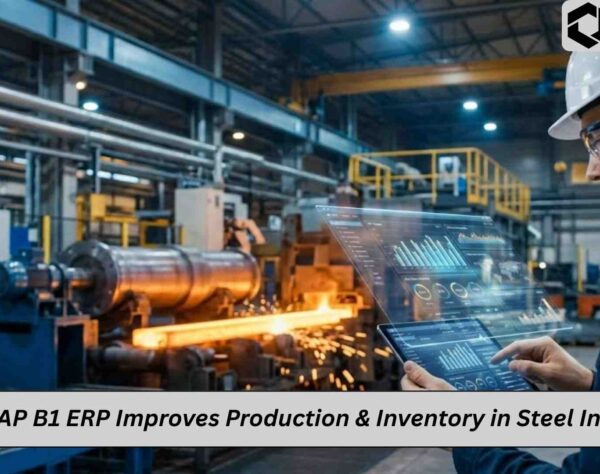
Managers gain real-time dashboards showing work-in-progress, machine utilization, and order status.
Reduced production delays
Automated planning minimizes scheduling conflicts and material shortages.
Accurate cost estimation
Integrated accounting ensures precise costing per ton, coil, or finished product.
Better customer satisfaction
On-time delivery improves client trust and repeat business.
Scalable operations
As steel companies expand, SAP B1 ERP scales without disrupting workflows.
Integration with SAP Business One Service
The strength of SAP Business One lies in its integration capabilities.
Sales and production alignment
Customer orders automatically generate production plans.
Procurement synchronization
Purchase orders are triggered based on MRP recommendations.
Financial integration
Production expenses reflect instantly in financial reports.
Warehouse coordination
Raw materials and finished goods are tracked across locations.
With proper SAP B1 Implementation, steel companies experience seamless data flow across departments.
Production Planning in Steel with SAP B1 ERP Solutions: Implementation Strategy
Implementing SAP B1 ERP in a steel manufacturing unit requires structured planning.
Requirement analysis
A certified SAP B1 Consultant evaluates plant operations and defines customization needs.
System configuration
Production modules are tailored to match rolling mill and furnace processes.
Data migration
Existing inventory, supplier, and customer data are transferred accurately.
User training
Employees are trained to use SAP B1 Software efficiently.
Post-go-live support
Reliable SAP B1 Support ensures continuous system performance.
Choosing the right SAP B1 Partner plays a critical role in successful implementation.
Production Planning in Steel with SAP B1 ERP Solutions: Practical Use Case
Consider a mid-sized steel rolling mill producing TMT bars and structural steel.
Before ERP:
- Manual planning in spreadsheets
- Frequent material shortages
- Unclear cost tracking
- Delayed reporting
After adopting SAP B1 Solution:
- Automated MRP planning
- Real-time production monitoring
- Accurate cost per metric ton
- Integrated sales and dispatch management
This transformation enables better operational control and higher profitability.
Production Planning in Steel with SAP B1 ERP Solutions: Advanced Analytics
Production performance reports
Monitor yield percentage and scrap rates.
Machine utilization tracking
Identify underperforming assets.
Profitability analysis
Analyze margin by product line or customer.
Forecast accuracy measurement
Improve demand planning over time.
With analytics built into SAP Business One Service, decision-making becomes data-driven rather than reactive.
Production Planning in Steel with SAP B1 ERP Solutions: Why Steel Companies Choose SAP B1 ERP
Steel manufacturers prefer SAP B1 ERP because:
- It is designed for small to mid-sized enterprises
- It offers industry-specific customization
- It ensures compliance and traceability
- It integrates finance, inventory, and production in one platform
- It supports long-term scalability
Unlike disconnected systems, SAP B1 Software delivers unified operational control.
Optimize Steel Production Planning with SAP Business One ERP
Efficient production planning is the backbone of profitability in the steel industry. From raw material procurement and billet processing to rolling, finishing, and final dispatch, every stage must be precisely coordinated to control costs and maintain delivery timelines.
Production planning in steel with SAP Business One (SAP B1) empowers manufacturers with real-time operational visibility, automated production scheduling, accurate product costing, and end-to-end process transparency. With structured implementation and ongoing system optimization, steel companies can minimize material waste, reduce downtime, improve inventory turnover, and enhance overall profit margins.
By investing in professional SAP B1 implementation and reliable support services, steel manufacturers gain a scalable digital foundation that drives efficiency, strengthens compliance, and supports long-term sustainable growth in a competitive market.
To successfully optimize steel production planning with SAP Business One, partnering with the right implementation expert makes all the difference. Emerging Alliance delivers industry-focused SAP B1 solutions tailored specifically for steel manufacturers, ensuring seamless integration across procurement, billet processing, rolling mills, quality control, inventory, and dispatch operations. With deep domain expertise, structured implementation methodology, and continuous support services, Emerging Alliance helps steel companies reduce production bottlenecks, improve material yield, enhance cost visibility, and achieve real-time operational control. By choosing Emerging Alliance as your trusted SAP B1 partner, your steel business gains a scalable, future-ready ERP foundation designed to boost efficiency, compliance, and long-term profitability in an increasingly competitive market.
Frequently Asked Questions: Production Planning in Steel with SAP Business One (SAP B1)
1. What is SAP Business One (SAP B1) and how does it support steel manufacturing?
SAP Business One is an integrated ERP solution designed for small and mid-sized enterprises. For steel manufacturers, SAP B1 supports production planning, material requirements planning (MRP), batch tracking, cost control, inventory management, and financial integration—all within a single platform. It enables real-time visibility across melting, casting, rolling, finishing, and dispatch operations.
2. How does SAP B1 improve production planning in steel plants?
SAP B1 automates production scheduling and material planning using MRP functionality. It calculates raw material requirements based on sales orders and forecasts, preventing shortages and overstocking. Production planners can allocate furnace capacity, rolling mills, and labor efficiently to reduce downtime and eliminate bottlenecks.
3. Can SAP B1 manage complex Bill of Materials (BOM) in steel manufacturing?
Yes. Steel products often vary by grade, size, thickness, and finish. SAP B1 allows manufacturers to manage multi-level and dynamic BOMs efficiently. It supports alternate items, scrap calculations, and revision control to ensure accurate production execution.
4. How does SAP B1 help control raw material costs in the steel industry?
SAP B1 tracks real-time procurement costs for iron ore, scrap, alloys, and energy consumption. It compares planned vs. actual production costs and provides variance analysis reports. This helps manufacturers monitor margins per ton and take corrective action when costs fluctuate.
5. Does SAP B1 support batch and heat number tracking?
Yes. SAP B1 provides batch and serial number management, enabling steel companies to track materials by heat number. This ensures complete traceability from raw material intake to finished goods dispatch, supporting quality compliance and customer audits.
6. How does SAP B1 integrate production with finance and inventory?
One of the biggest advantages of SAP B1 is its full integration. Production transactions automatically update inventory levels and financial records. Raw material consumption, WIP valuation, and finished goods costing reflect instantly in financial reports, ensuring accurate profitability analysis.
7. Is SAP B1 suitable for mid-sized steel rolling mills?
Absolutely. SAP B1 is specifically designed for small and mid-sized enterprises. It offers scalability, industry-specific customization, and cost-effective implementation. As production volumes grow, the system adapts without requiring a complete ERP overhaul.
8. How long does SAP B1 implementation take in a steel manufacturing unit?
Implementation timelines typically range from 8 to 16 weeks, depending on plant size, customization requirements, and data migration complexity. A structured implementation approach—including requirement analysis, configuration, testing, and training—ensures smooth go-live.
9. What analytics and reports are available for steel production planning?
SAP B1 provides:
- Production performance reports
- Machine utilization tracking
- Yield and scrap rate analysis
- Profitability by product grade or customer
- Forecast accuracy measurement
These insights help management make data-driven decisions and improve operational efficiency.
10. Why should steel companies invest in SAP B1 for production planning?
Steel manufacturing is capital-intensive and margin-sensitive. SAP B1 helps companies:
- Reduce material waste
- Improve machine utilization
- Optimize inventory turnover
- Ensure on-time delivery
- Maintain compliance and traceability
- Gain real-time operational control
By implementing SAP Business One with the right partner, steel manufacturers establish a scalable ERP foundation that drives long-term efficiency and profitability.