
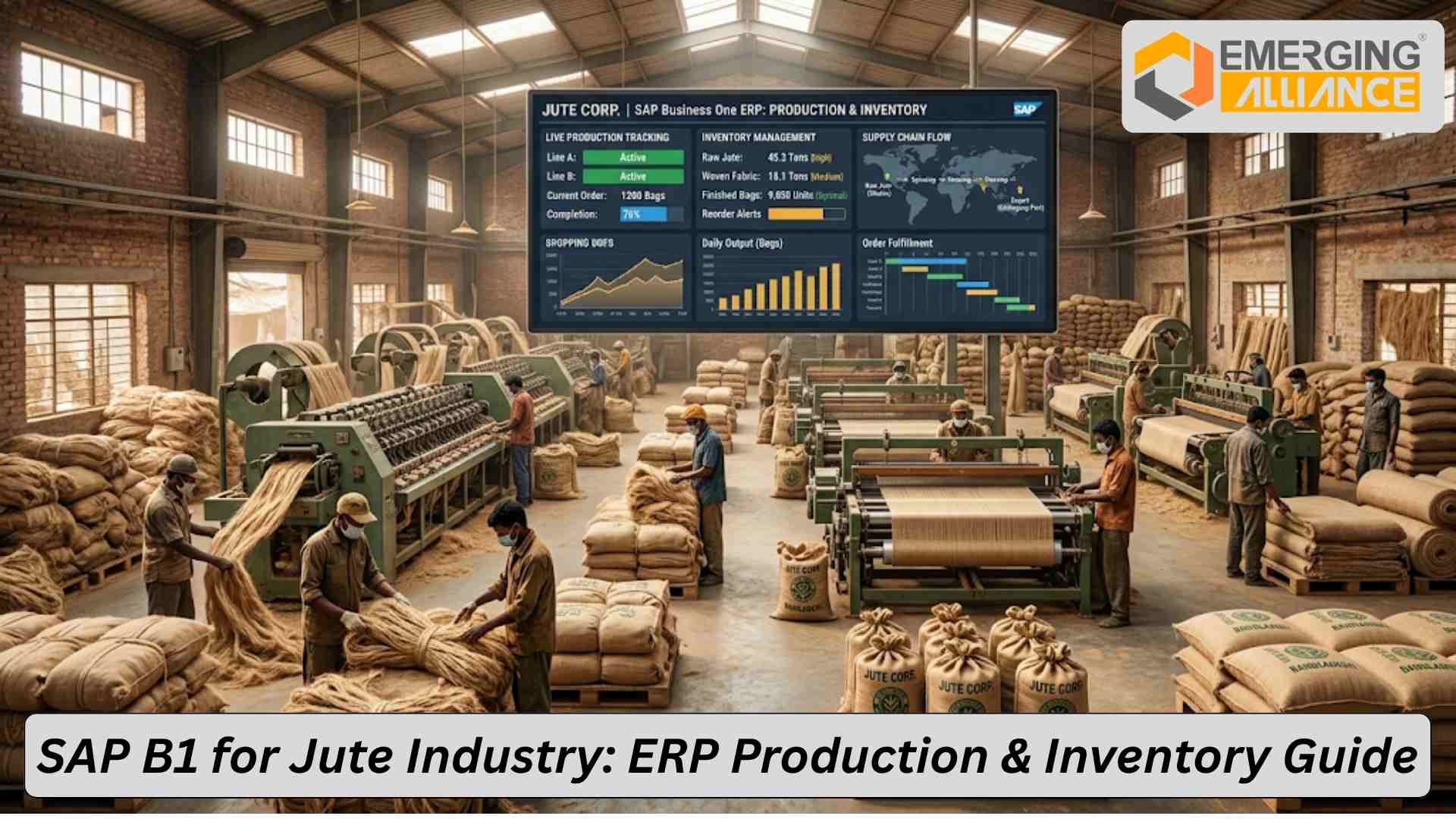
SAP B1 for Jute Industry: ERP Production & Inventory Guide
SAP B1 for Jute Industry: Streamlined Production & Inventory ERP Solutions
The jute industry is a cornerstone of sustainable materials, yet managing production, inventory, and sales efficiently can be a challenge. Many jute manufacturers face bottlenecks due to fragmented systems, manual record-keeping, and lack of real-time data. Implementing SAP B1 for Jute Industry can revolutionize operations by integrating production, inventory, and supply chain management into a single ERP platform.
Production Planning with SAP B1 for Jute Industry
Forecasting Demand
Accurate demand forecasting ensures optimal raw material procurement. SAP B1 uses historical sales data and market trends to generate reliable forecasts, minimizing waste and stockouts.
Scheduling Production
With SAP B1, manufacturers can schedule production batches efficiently. Real-time updates allow for adjustments to meet sudden order changes without disrupting the workflow.
Resource Allocation
The ERP tracks machinery, labor, and raw materials. This helps managers allocate resources efficiently, reducing idle time and maximizing output.
Inventory Management Using SAP B1 for Jute Industry
Real-Time Stock Visibility
SAP B1 provides a live view of raw materials, semi-finished, and finished goods inventory. This eliminates discrepancies and ensures accurate stock levels at all times.
Batch and Lot Tracking
Every batch of jute fiber or product can be tracked for quality control and traceability. This is crucial for meeting regulatory standards and customer expectations.
Automated Reordering
The ERP can trigger automatic purchase orders when stock reaches a minimum threshold. This prevents production delays and optimizes working capital.
Quality Control in Jute Production
Standardized Testing
SAP B1 allows integration of quality control protocols at multiple production stages. Testing results are logged directly in the system for audit purposes.
Defect Management
Any production defects are flagged immediately. Corrective actions can be initiated promptly, reducing wastage and maintaining product standards.
Reporting & Analysis
The system generates comprehensive reports on quality metrics, helping managers identify recurring issues and improve overall production processes.
Supply Chain & Vendor Management
Supplier Integration
SAP B1 centralizes supplier data, making it easy to manage contracts, prices, and delivery schedules.
Procurement Optimization
Purchase requests can be automated based on inventory levels and production schedules, improving efficiency and cost savings.
Logistics Tracking
From raw jute fiber to finished sacks or bags, SAP B1 tracks every movement. This ensures timely deliveries and reduces delays in the supply chain.
Sales & Distribution Management
Order Processing
Sales orders are linked directly with production and inventory. SAP B1 ensures accurate delivery dates and prevents over-commitment.
Customer Insights
Analytics tools provide insights into customer demand patterns and help in planning promotional campaigns or discounts effectively.
Invoice & Payment Tracking
Automated invoicing and payment reminders reduce administrative errors and improve cash flow.
Reporting & Analytics
Custom Reports
SAP B1 generates detailed production, inventory, and sales reports tailored to the jute industry’s needs.
Dashboard Visualization
Managers can view KPIs like production efficiency, stock turnover, and defect rates on intuitive dashboards.
Decision Support
Data-driven insights enable informed decisions, helping businesses stay competitive and profitable.
Implementation Benefits of SAP B1 in Jute Industry
Efficiency & Cost Reduction
Streamlined production and inventory control reduce operational costs and resource wastage.
Regulatory Compliance
Automated record-keeping ensures adherence to industry standards and traceability requirements.
Scalability
SAP B1 grows with your business, accommodating increasing production volumes without performance issues.
Integration with Existing Systems
The ERP integrates seamlessly with finance, HR, and sales systems, providing a holistic operational view.
Practical Tips for Adopting SAP B1
Staff Training
Proper training ensures your team uses the ERP effectively, maximizing ROI.
Data Migration
Clean historical data before migration to ensure smooth transition and accurate reporting.
Phased Implementation
Start with core modules like production and inventory, then gradually integrate other areas for minimal disruption.
Conclusion: Why SAP B1 is Essential for the Jute Industry
Implementing SAP B1 in the jute industry revolutionizes production and inventory management by providing real-time insights, automating processes, and enhancing overall operational efficiency. For jute manufacturers looking to minimize waste, improve product quality, and increase profitability, SAP B1 stands out as a critical ERP solution that drives sustainable growth and competitive advantage.
mplementing SAP B1 in the jute industry revolutionizes production and inventory management by providing real-time insights, automating processes, and enhancing overall operational efficiency. For jute manufacturers looking to minimize waste, improve product quality, and increase profitability, SAP B1 stands out as a critical ERP solution that drives sustainable growth and competitive advantage. Emerging alliance companies are now actively promoting SAP B1, helping jute businesses adopt advanced digital tools and stay ahead in a competitive market.
Frequently Asked Questions About SAP B1 for Jute Industry
1. What is SAP B1 for the Jute Industry?
SAP Business One for the Jute Industry is a comprehensive ERP solution designed to unify production planning, inventory management, sales, supply chain, and finance. It addresses jute-specific challenges such as batch processing, fiber quality monitoring, and multi-location operations.
2. How does SAP B1 enhance production efficiency in jute manufacturing?
SAP B1 provides real-time production scheduling, resource allocation, and machine utilization tracking. It helps reduce downtime, optimize labor and machinery, and maintain consistent output quality across multiple production lines.
3. Can SAP B1 track jute inventory in real time?
Yes, SAP B1 enables live visibility of raw jute, semi-finished yarn, and finished products across multiple warehouses. It supports batch and lot tracking, FIFO/LIFO methods, and automated alerts for stock shortages or excesses.
4. How does SAP B1 support quality control in jute manufacturing?
SAP B1 integrates quality management modules that enforce standardized testing protocols, track defects, record inspection results, and generate compliance reports. This ensures adherence to industry standards and customer specifications.
5. How does SAP B1 improve supplier management for jute businesses?
The system centralizes supplier data, automates procurement workflows, tracks deliveries, monitors lead times, and evaluates supplier performance. This reduces procurement delays and ensures consistent raw material quality.
6. Is SAP B1 suitable for small jute manufacturing companies?
Absolutely. SAP B1 is modular and scalable, allowing small businesses to start with essential modules like inventory, production, and finance, and gradually adopt advanced features such as analytics, CRM, and multi-location management.
7. Can SAP B1 generate detailed production and operational reports?
Yes, SAP B1 provides customizable dashboards and reports for production performance, inventory turnover, order fulfillment, and sales. Advanced analytics help managers identify bottlenecks, forecast demand, and improve operational decision-making.
8. How long does SAP B1 implementation typically take in the jute industry?
Implementation timelines vary based on company size and workflow complexity. A phased rollout for small to mid-sized jute manufacturers typically spans 3–6 months, including configuration, data migration, training, and go-live support.
9. Does SAP B1 integrate with existing accounting and operational systems?
Yes, SAP B1 can integrate seamlessly with finance, HR, CRM, and other third-party applications, providing a holistic view of operations, enabling automated workflows, and reducing data silos.
10. What are the strategic benefits of using SAP B1 in the jute industry?
SAP B1 delivers enhanced operational efficiency, reduced costs, improved quality control, real-time inventory visibility, regulatory compliance, and scalability to support growth across multiple plants or geographies.