
Reduce Downtime Boost Performance with SAP B1 Cloud Migration
Optimize uptime and speed via SAP B1 cloud migration
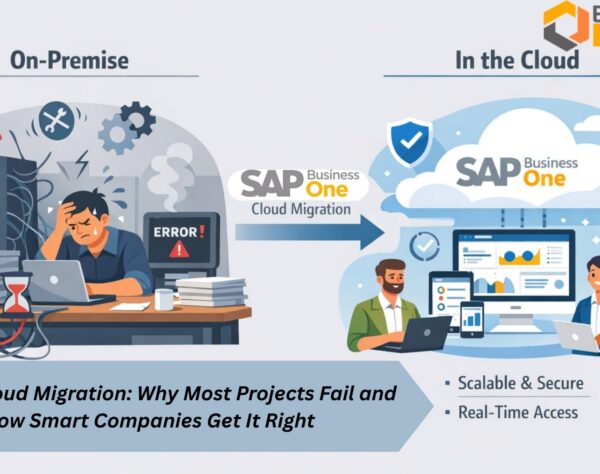
SAP B1 Cloud Migration is no longer just an IT upgrade it is a strategic move to eliminate the hidden risks associated with on-premise ERP environments. For most enterprises still running an on-premise SAP Business One system, downtime is often dismissed as a minor technical inconvenience. In reality, it acts as a powerful business risk multiplier, directly affecting revenue cycles, customer commitments, and overall operational continuity. When systems slow down during peak workloads or fail without warning, the impact goes far beyond IT disruptions it halts decision-making, disrupts production planning, and obscures real-time cash flow visibility. Transitioning to the cloud not only enhances system reliability and scalability but also ensures that critical business functions remain uninterrupted, enabling organizations to operate with agility, resilience, and confidence.
Executives today are no longer asking “Should we move?” but rather:
“How much is our current infrastructure costing us in lost opportunity?”
This is where SAP Business One Cloud Migration becomes a strategic lever not just an IT upgrade.
The Reality of Legacy SAP B1 Environments
Organizations operating on on-premise SAP Business One solutions often experience compounding inefficiencies:
- Aging infrastructure leading to frequent unplanned downtime
- Increasing reliance on manual IT intervention
- Poor scalability during high transaction volumes
- Fragmented backup systems with limited disaster recovery readiness
- Rising maintenance costs with diminishing ROI
In such setups, even minor disruptions can cascade into delayed invoicing, production halts, or inventory misalignment.
The core issue is not the ERP itself it’s the infrastructure model supporting it.
Why SAP B1 Cloud Migration Is a Strategic Shift
SAP B1 cloud migration is not merely about relocating systems it’s about re-architecting how your ERP performs, scales, and supports growth.
A modern cloud-based SAP Business One solution transforms ERP from a reactive system into a real-time operational backbone.
With SAP Business One cloud hosting, businesses move away from capital-intensive infrastructure toward a flexible, consumption-based model that aligns IT with business outcomes.
This shift enables:
- Dynamic resource scaling during peak demand
- Centralized data access across geographies
- Predictable IT cost structures
- Enterprise-grade security and compliance frameworks
In short, SAP Business One to cloud is not a migration it’s a modernization strategy.
How SAP B1 Cloud Migration Eliminates Downtime & Performance Gaps
A well-executed SAP B1 migration to cloud fundamentally changes system behavior.
High Availability Architecture
A SAP Business One cloud platform ensures near-zero downtime through redundant infrastructure and failover mechanisms, eliminating single points of failure common in on-premise setups.
Real-Time Performance Optimization
With SAP B1 cloud solutions, system resources dynamically adjust based on workload—ensuring consistent performance even during peak operations.
Advanced Disaster Recovery
A robust SAP B1 cloud hosting environment includes automated backups and geographically distributed recovery systems, significantly reducing risk exposure.
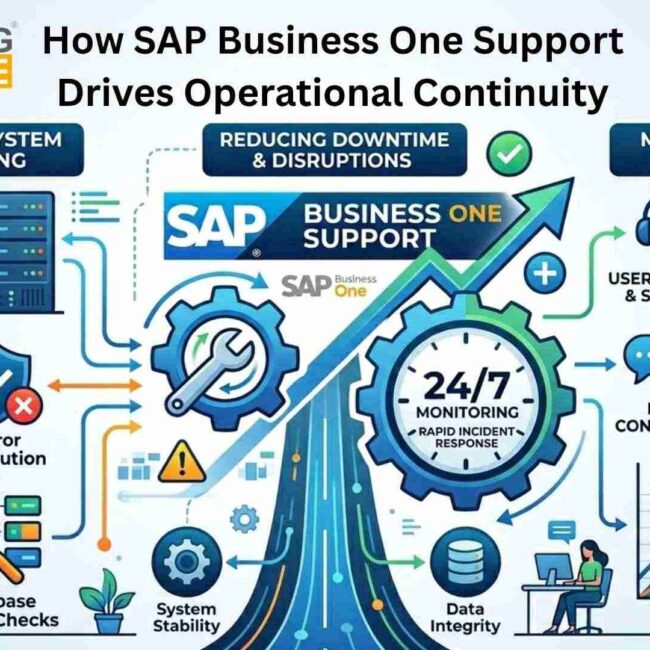
Continuous Monitoring & System Health
Modern SAP Business One services include real-time monitoring tools that proactively detect and resolve performance bottlenecks before they impact operations.
Secure, Compliant Infrastructure
SAP Business One cloud security frameworks offer enterprise-grade encryption, access control, and audit readiness—critical for regulated industries.
Measurable Business Impact of SAP B1 Cloud Migration
Organizations transitioning from SAP Business One on-premise solutions to cloud-based SAP Business One ERP consistently unlock tangible business outcomes:
- Improved system uptime ensuring uninterrupted operations
- Faster transaction processing across finance, inventory, and supply chain
- Reduced IT overhead through SAP B1 cloud cost optimization
- Enhanced decision-making with real-time data accessibility
- Increased operational agility to support expansion
More importantly, SAP B1 cloud migration shifts IT from a cost center to a strategic growth enabler.
From Migration to Transformation: The Execution Layer
The success of SAP Business One cloud migration is not defined by technology alone—but by execution precision.
A structured SAP B1 cloud migration process typically includes:
- SAP Business One Cloud Readiness Assessment
Evaluate existing SAP B1 environment, infrastructure gaps, and migration feasibility - End-to-End SAP B1 System Migration
Secure and seamless SAP B1 data migration with minimal disruption - SAP B1 Cloud Implementation & Optimization
Configure a performance-driven SAP Business One cloud hosting solution - Managed Cloud Hosting & Support
24/7 monitoring, proactive maintenance, and performance tuning - Post-Migration Risk Management & Backup Strategy
Strengthen SAP B1 cloud risk management with automated recovery frameworks
This is where working with the right SAP Partner becomes critical ensuring alignment between technology, business processes, and long-term scalability goals.
The Strategic Advantage of Moving to SAP Business One Cloud
Today, the question is no longer whether SAP Business One cloud solutions are beneficial—but whether your current infrastructure is holding back growth, visibility, and control.
A modern cloud-based SAP B1 solution delivers:
- A future-ready ERP backbone
- Seamless scalability for business expansion
- Enterprise-grade reliability and uptime
- Lower and predictable total cost of ownership
In essence, SAP Business One Cloud provides the foundation for resilient, agile, and performance-driven enterprises.
Take the Next Step Toward Zero Downtime
If your current SAP Business One on-premises solution is limiting performance or increasing operational risk, it’s time to evaluate a structured transition.
Start with a SAP Business One Cloud Migration assessment with Emerging Alliance.
Understand your current gaps, quantify potential ROI, and define a roadmap tailored to your business. With the right expertise and a clear migration strategy, you can transform your ERP from a constraint into a growth enabler ensuring scalability, resilience, and uninterrupted business operations.
FAQs About SAP Business One for cloud migration
1. How does SAP Business One cloud migration impact system downtime during transition?
A well-planned SAP Business One cloud migration follows a phased approach with sandbox testing and controlled cutover, ensuring minimal disruption. Most enterprises experience near-zero business downtime when migration is executed with proper data validation and parallel run strategies.
2. What performance improvements can be expected after SAP B1 migration to cloud?
Post SAP B1 cloud migration, organizations typically see faster transaction processing, improved report generation speeds, and consistent system responsiveness even during peak loads due to dynamic resource allocation in a cloud-based environment.
3. How does SAP Business One cloud hosting handle high transaction volumes?
SAP Business One cloud hosting environments leverage scalable compute and memory resources. This ensures the system automatically adjusts capacity during high transaction periods, eliminating performance bottlenecks common in on-premise SAP B1 setups.
4. What are the key risks in SAP B1 data migration and how can they be mitigated?
Risks include data inconsistency, migration errors, and business disruption. These are mitigated through structured SAP B1 data migration processes data cleansing, pre-migration validation, pilot testing, and reconciliation post-migration.
5. How does SAP Business One cloud migration improve disaster recovery readiness?
Cloud-based SAP Business One solutions provide automated backups, geo-redundancy, and rapid failover mechanisms. This ensures business continuity even in the event of system failures, cyber incidents, or infrastructure outages.
6. Is SAP Business One cloud migration more cost-effective than maintaining on-premise infrastructure?
Yes. SAP B1 cloud migration eliminates capital expenditure on hardware, reduces maintenance overhead, and shifts IT spending to a predictable operational model resulting in lower total cost of ownership (TCO) over time.
7. How secure is a cloud-based SAP Business One environment compared to on-premise systems?
SAP Business One cloud security frameworks typically include advanced encryption, multi-layer access controls, continuous monitoring, and compliance-ready infrastructure often exceeding the security capabilities of traditional on-premise systems.
8. Can SAP B1 cloud migration support multi-location or global business operations?
Yes. A cloud-based SAP Business One platform enables centralized access across geographies, allowing global teams to work on real-time data with consistent performance and without dependency on physical infrastructure.
9. What factors determine the success of a SAP Business One cloud migration project?
Key factors include a detailed readiness assessment, choosing the right SAP Business One cloud hosting provider, structured migration planning, data accuracy, user training, and ongoing performance monitoring post-migration.
10. How does SAP B1 cloud migration enable future scalability and business agility?
SAP B1 cloud solutions allow businesses to scale users, storage, and system capabilities instantly. This flexibility supports rapid expansion, new market entry, and evolving business models without infrastructure constraints.
Request a free cloud readiness assessment today