
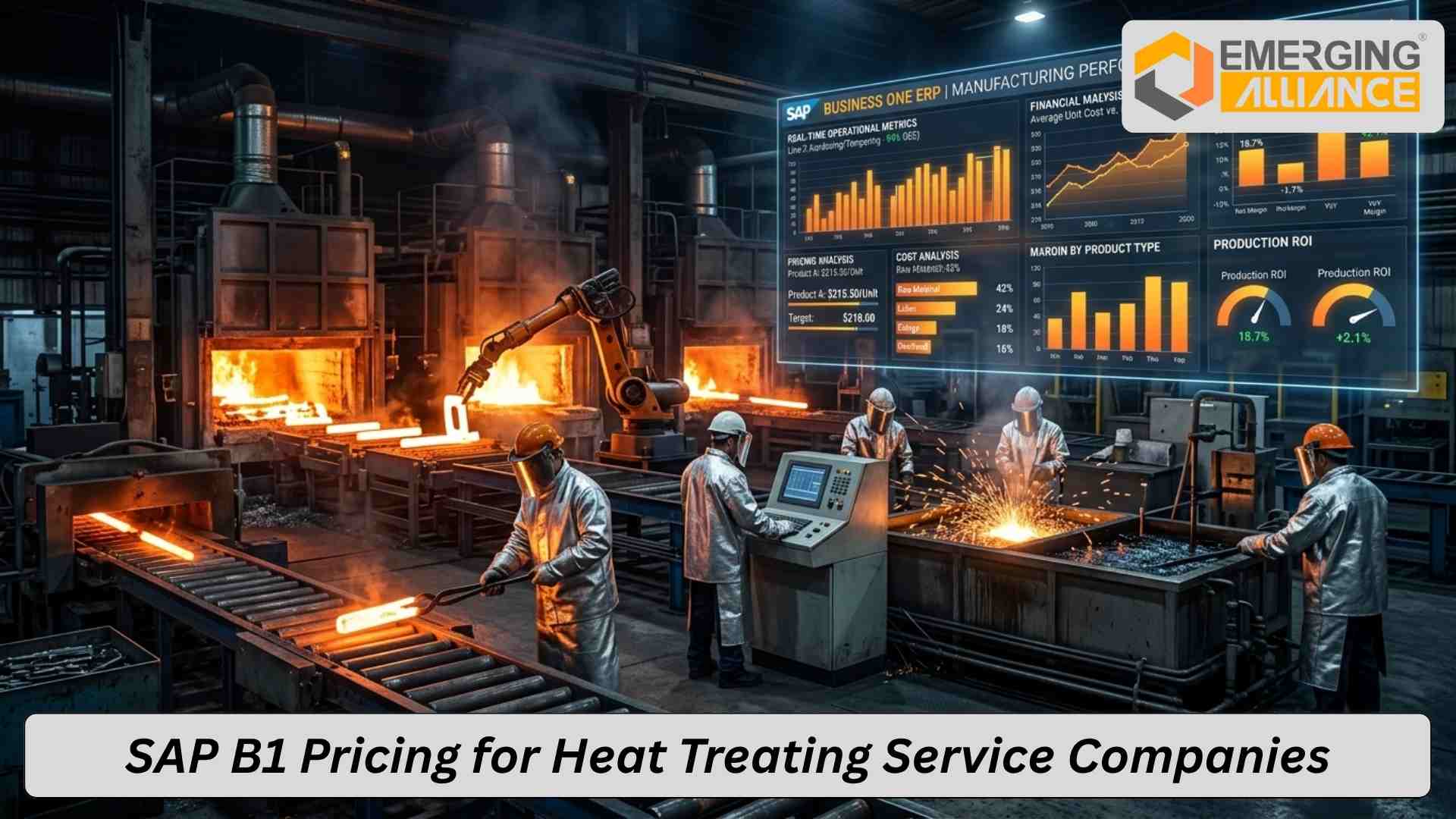
SAP B1 Pricing for Heat Treating Service Companies
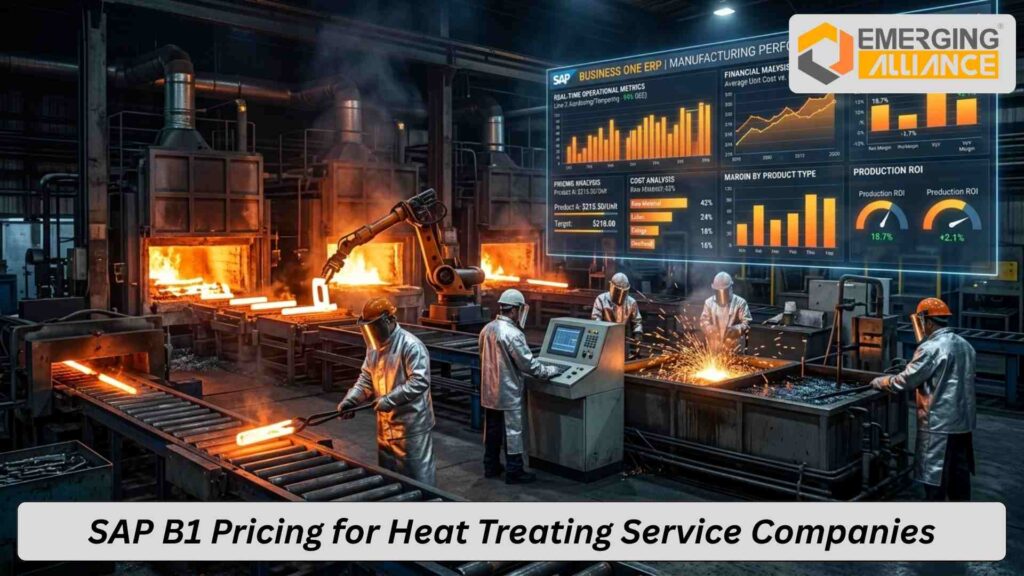
Comprehensive SAP B1 Pricing Guide for Heat Treating Service Companies
Understanding SAP B1 pricing for heat treating service companies is crucial for businesses looking to implement ERP software efficiently. With specialized workflows, scheduling, and quality compliance requirements in heat treatment, knowing how SAP B1 can impact operational costs helps decision-makers plan effectively. This guide breaks down pricing models, features, and practical benefits to help your company make an informed ERP investment.
What SAP B1 Offers Heat Treating Companies
ERP Integration: SAP B1 connects production, inventory, and finance into one platform.
Custom Workflows: The software supports unique heat treatment processes like quenching, annealing, and tempering.
Compliance Tracking: Monitor quality control, regulatory standards, and safety requirements seamlessly.
Real-Time Reporting: Access instant analytics for job orders, resource allocation, and cost tracking.
SAP B1 reduces manual tracking errors, improves turnaround times, and ensures high-quality service delivery.
Understanding SAP B1 Pricing Models
License Types: SAP B1 offers both perpetual and subscription licenses.
User Roles: Pricing depends on user type – professional, limited, or service-specific.
Implementation Fees: Include consulting, configuration, and training costs.
Customization Costs: Modifications for heat treating workflows may influence the overall budget.
Most heat treating service companies can choose a subscription model for flexibility and lower upfront investment.
Factors Affecting Costs for Heat Treating Companies
Number of Users: More users require additional licenses.
Module Selection: Inventory, production, finance, and HR modules impact pricing.
Implementation Complexity: Integration with machines and sensors may increase costs.
Support & Maintenance: Ongoing support contracts contribute to yearly expenses.
Companies should evaluate these factors carefully to estimate a total cost of ownership.
Average SAP B1 Pricing for Heat Treating Service Companies
Small Companies: $3,000–$10,000 per year for basic licensing and setup.
Medium Companies: $10,000–$30,000 per year including additional modules.
Large Enterprises: $30,000+ per year for full-scale deployment and multi-location integration.
Pricing can vary based on region, vendor, and specific business requirements.
ROI and Benefits of SAP B1 in Heat Treatment
Operational Efficiency: Automate scheduling and machine utilization tracking.
Reduced Errors: Minimize mistakes in batch processing and reporting.
Improved Customer Service: Track orders, deliveries, and quality assurance efficiently.
Data-Driven Decisions: Analytics enable better pricing, resource allocation, and capacity planning.
Investing in SAP B1 can quickly pay off by reducing wastage and increasing production throughput.
Choosing the Right SAP B1 Package
Essential Modules: Finance, inventory, and production management.
Advanced Options: Quality control, CRM, and analytics modules.
Vendor Support: Ensure access to training and technical assistance.
Scalability: The system should accommodate future growth.
Heat treating service companies should assess their immediate needs and long-term strategy before selecting modules.
Tips to Optimize SAP B1 Costs
Start Small: Implement only critical modules initially.
Negotiate Licenses: Some vendors offer discounts for multi-year contracts.
Leverage Cloud: Cloud deployment reduces hardware and maintenance costs.
Regular Reviews: Assess usage and remove unnecessary licenses or modules.
These strategies help control costs while still benefiting from ERP functionalities.
Common Challenges with SAP B1 Implementation
Employee Training: Staff may require time to adapt to ERP workflows.
Data Migration: Transferring legacy data can be complex.
Customization Needs: Specialized processes may require additional consulting.
Integration Issues: Connecting with heat treatment machinery may need technical expertise.
Proper planning and vendor support mitigate most challenges effectively.
Comparing SAP B1 with Other ERP Solutions
Cost Comparison: SAP B1 often offers more competitive pricing for small and medium-sized heat treating companies.
Feature Set: Tailored for manufacturing, unlike generic ERP software.
Ease of Use: Intuitive interface reduces training time.
Support Availability: Strong vendor ecosystem ensures ongoing assistance.
SAP B1 balances affordability with functionality, making it ideal for heat treatment services.
Conclusion on SAP B1 Pricing for Heat Treating Service Companies
SAP B1 pricing for heat treating service companies depends on factors such as the number of users, selected modules, and deployment options. By carefully evaluating these costs alongside the benefits and potential return on investment, businesses can select the ERP package that best aligns with their operational needs. Implementing the right SAP B1 solution can streamline workflows, enhance production efficiency, reduce errors, and provide real-time insights into inventory, sales, and financial performance, ultimately enabling companies to make data-driven decisions and achieve sustainable growth in a competitive market.
Choosing the right SAP B1 solution is not just about software—it’s about partnering with a trusted ally in business growth. Emerging Alliance helps heat treating service companies navigate ERP selection and implementation with expertise and care, ensuring that every module and deployment option is tailored to your operational needs. By leveraging SAP B1 through Emerging Alliance, businesses can optimize production, minimize errors, gain real-time insights, and make smarter, data-driven decisions—unlocking efficiency, profitability, and a competitive edge in the market.
Frequently Asked Questions About SAP B1 Pricing for Heat Treating Service Companies
1. What is the starting cost of SAP B1 for heat treating companies?
The base cost for a small heat treating enterprise typically ranges from $3,000–$10,000 per year for cloud subscriptions, covering essential licenses, setup, and basic configuration. Full implementation with customization, additional modules, and integration may increase the investment.
2. Can SAP B1 handle specialized heat treatment workflows?
Yes, SAP B1 can be customized for industry-specific processes such as quenching, annealing, tempering, case hardening, and cryogenic treatments, ensuring accurate scheduling, process tracking, and quality compliance.
3. How does SAP B1 manage user access in heat treating plants?
Licenses are per user. Professional licenses provide full access to ERP functionalities, while limited licenses can be assigned to operators or floor managers for specific roles, optimizing costs while maintaining data security.
4. Is cloud deployment available and recommended for heat treating companies?
Cloud deployment reduces upfront hardware costs, simplifies updates and maintenance, and supports remote monitoring of operations. For small to mid-sized heat treating businesses, cloud ERP ensures faster ROI and scalable access as operations grow.
5. Can SAP B1 integrate with heat treatment machinery?
Yes, SAP B1 can integrate with furnaces, quench tanks, and automated inspection systems via IoT sensors or middleware. This enables real-time tracking of process parameters, equipment utilization, and production output directly in the ERP.
6. How frequently does SAP B1 pricing change?
Pricing may adjust annually due to software updates, inflation, new features, or vendor policy changes. Consulting with authorized SAP partners ensures accurate budgeting and avoids unexpected cost fluctuations.
7. Does SAP B1 provide advanced reporting and analytics?
Yes, SAP B1 offers real-time dashboards, custom KPIs, and analytics for production efficiency, inventory consumption, energy usage, and financial performance. Predictive analytics can highlight bottlenecks, optimize throughput, and reduce scrap.
8. Which ERP modules are essential for heat treating companies?
Core modules include finance, inventory management, production scheduling, and quality control. Additional modules for maintenance, supply chain, and HR can be adopted as the company grows, providing a modular growth path.
9. Are there hidden costs associated with SAP B1 implementation?
Yes, additional costs may arise from data migration, process customization, employee training, system integration with machinery, and ongoing technical support. Careful scoping and phased deployment can minimize unexpected expenses.
10. How can small heat treating companies reduce SAP B1 implementation costs?
Implement only critical modules initially, leverage cloud subscription models, negotiate license counts based on actual usage, and adopt a phased rollout approach to spread costs over time while achieving early operational benefits.