Auto Spare Parts ERP Pricing: SAP B1 India Guide
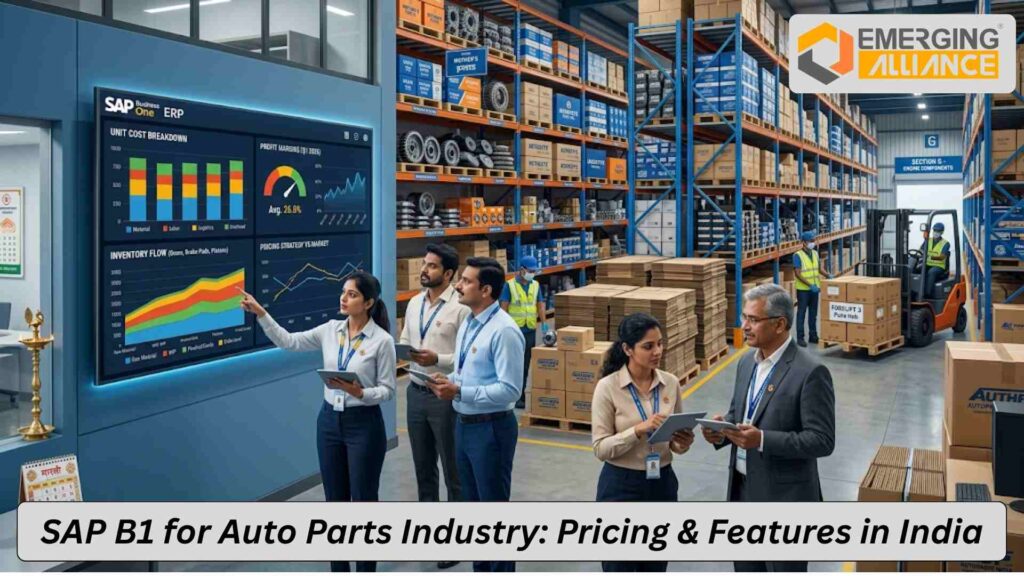
SAP B1 Pricing Insights for Auto Spare Parts Industry in India
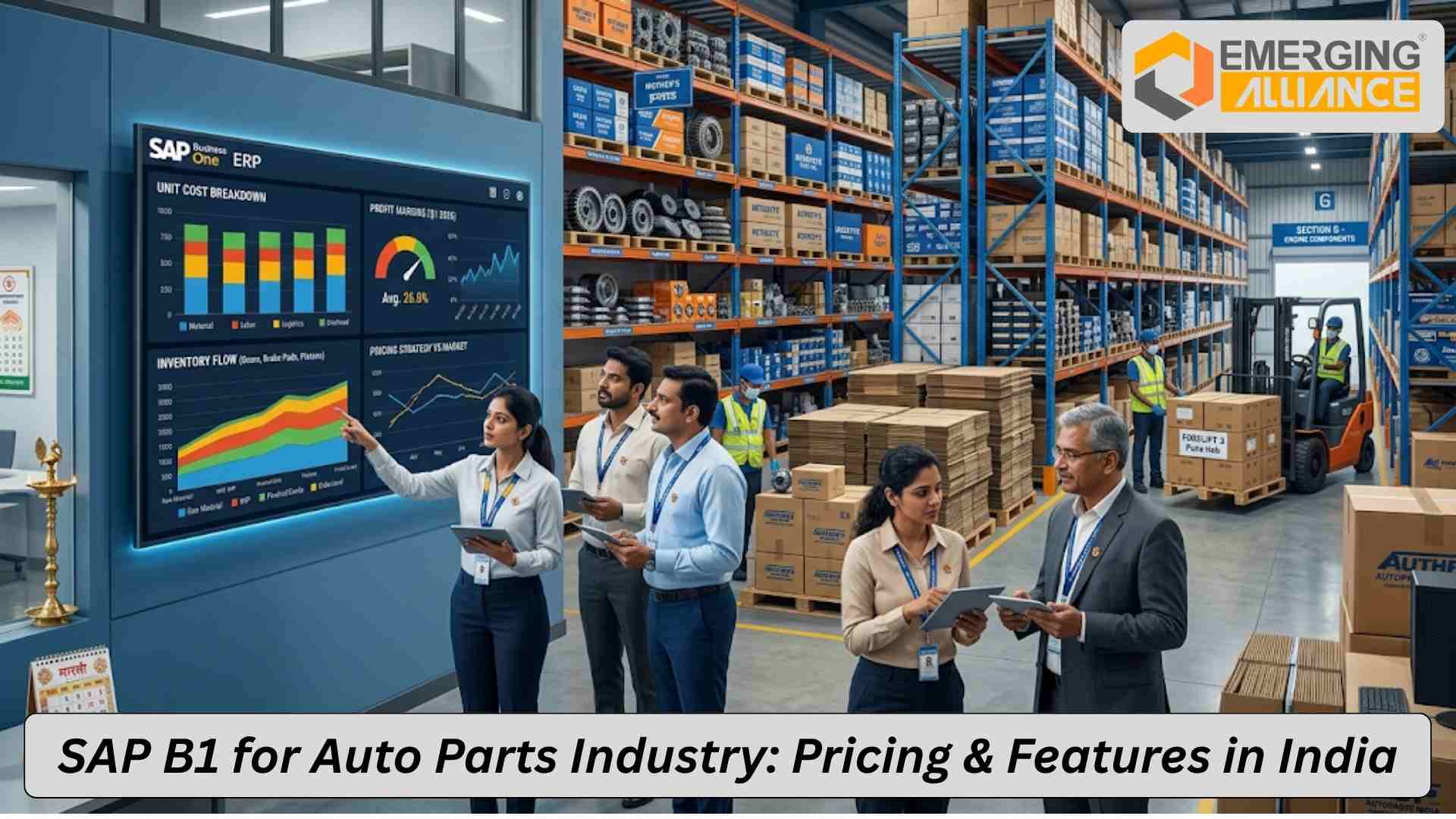
The auto spare parts industry in India is expanding rapidly, driven by rising vehicle demand and evolving consumer expectations. Managing inventory, production, and sales efficiently is critical for business growth. SAP B1 Pricing for Auto Spare Parts Industry in India offers a comprehensive ERP solution that integrates all operations into one platform, enabling manufacturers and distributors to optimize resources, reduce costs, and improve decision-making.
Overview of SAP B1 Pricing for Auto Spare Parts Industry
Pricing structure in SAP B1 varies depending on the number of users, modules, and deployment options. Companies can choose between on-premise and cloud solutions, which influences the overall investment. Licensing fees are typically one-time for on-premise or subscription-based for cloud ERP.
Key Features Impacting SAP B1 Pricing
Inventory management is one of the core features affecting ERP costs. SAP B1 offers real-time stock tracking, automated reordering, and batch/serial number management. Production planning helps schedule manufacturing processes efficiently. Financial management ensures accurate accounting and compliance, which may impact the pricing tier chosen by businesses.
Factors Influencing Cost in India
User count directly affects licensing fees. Customization requirements such as tailored dashboards or modules can increase initial costs. Implementation services and training for staff are also crucial for smooth adoption. Regional factors, including vendor support availability in India, may affect overall expenses.
Deployment Options and Pricing Variations
On-premise deployment requires a higher upfront investment for servers and infrastructure. Cloud deployment reduces initial costs and provides scalability, though it may include ongoing subscription fees. Hybrid models are available for businesses seeking flexible solutions, balancing initial cost and operational efficiency.
Cost-Benefit Analysis for Auto Spare Parts Companies
Operational efficiency improves when using SAP B1, reducing manual errors and streamlining processes. Inventory accuracy prevents overstocking or stockouts, saving money. Reporting capabilities provide actionable insights, helping companies make informed decisions and justify the ERP investment.
Implementation Considerations in India
Local vendor support is essential for timely troubleshooting. Training programs ensure staff can fully utilize SAP B1 features. Data migration from legacy systems must be carefully planned to avoid disruption. These factors influence the timeline and cost of implementation.
ERP Modules Most Relevant to Auto Spare Parts
Sales and distribution modules track orders, deliveries, and invoices efficiently. Warehouse management manages multiple storage locations and stock movement. Procurement ensures timely supplier orders and cost control. These modules directly impact pricing due to their complexity.
Scalability and Future-Proofing Your Investment
Scalability allows businesses to add users or modules as they grow, which affects long-term costs. Future updates ensure the system stays compliant with regulations and industry trends. Companies can avoid frequent replacements, making SAP B1 a strategic investment.
Common Cost-Saving Strategies
Selective module adoption allows businesses to implement only the required features initially. Cloud deployment reduces infrastructure costs. Vendor comparison and negotiation can lower license fees. Proper planning ensures a balance between cost and functionality.
Conclusion: SAP B1 Pricing for the Auto Spare Parts Industry in India
SAP B1 pricing for the auto spare parts industry in India is flexible, scalable, and tailored to the needs of both manufacturers and distributors. By carefully evaluating features, deployment options, and local business factors, companies can maximize ROI and streamline operations effectively. Emerging Alliance, a trusted ERP solutions partner, helps businesses implement SAP B1 seamlessly, ensuring optimal performance and growth.
SAP B1 ERP Pricing FAQs for Auto Spare Parts Companies
1. What is SAP B1, and why is it critical for auto spare parts businesses?
SAP Business One is a comprehensive ERP solution that integrates inventory management, sales, procurement, production planning, and finance. For auto spare parts companies, it ensures accurate stock tracking, optimized order fulfillment, cost control, and compliance with industry standards, providing real-time operational visibility.
2. How is SAP B1 pricing structured for auto spare parts companies in India?
Pricing depends on the number of users, license type (Professional vs Limited), selected modules, level of customization, and deployment choice (cloud vs on-premise). Cloud subscriptions reduce upfront costs and allow scalable monthly payments, whereas on-premise involves one-time licenses and infrastructure investment.
3. Can SAP B1 manage multiple warehouses and locations?
Yes, SAP B1 supports multi-warehouse and multi-location operations, enabling centralized inventory tracking, real-time stock updates, automated reorder alerts, and inter-branch stock transfers. This reduces stockouts, prevents overstocking, and streamlines logistics.
4. Is SAP B1 scalable for growing auto spare parts businesses?
Absolutely. SAP B1’s modular architecture allows businesses to add users, deploy additional modules (e.g., advanced production planning, quality management), and expand into new locations without system replacements, ensuring long-term ROI.
5. What training is required to maximize SAP B1 adoption?
Staff should receive training in inventory management, order processing, reporting, and financial workflows. Vendor-led programs in India help reduce the learning curve, improve adoption, and ensure employees leverage ERP capabilities fully.
6. Which SAP B1 modules are most critical for auto spare parts companies?
Essential modules include inventory management (with batch and serial number tracking), procurement, sales order management, production planning for custom kits or assemblies, and finance for cost accounting, margin analysis, and reporting.
7. Can SAP B1 integrate with legacy systems and third-party applications?
Yes, SAP B1 supports integration with existing accounting, CRM, e-commerce, and warehouse management systems, allowing companies to retain historical data, automate workflows, and generate unified operational reports.
8. Which deployment option is optimal for Indian auto spare parts businesses?
Cloud deployment is preferred for small to medium enterprises due to lower upfront investment, faster setup, and flexibility. On-premise suits businesses with existing IT infrastructure or specific data security requirements, offering more control at a higher initial cost.
9. How does SAP B1 optimize inventory and reduce costs?
SAP B1 tracks stock in real-time, monitors batch and serial numbers, automates reorder levels, and flags slow-moving items. This minimizes overstocking, reduces stockouts, and ensures just-in-time procurement, saving both storage and capital costs.
10. Is SAP B1 suitable for small auto spare parts businesses?
Yes, SAP B1 scales to small, medium, and large businesses. Small companies can start with core modules (inventory, sales, finance) and expand gradually, leveraging phased implementation to optimize costs and maximize ERP value.