
SAP B1 for Renewable Energy Industry: ERP Benefits
SAP B1 for Renewable Energy Industry: Project & Asset Management
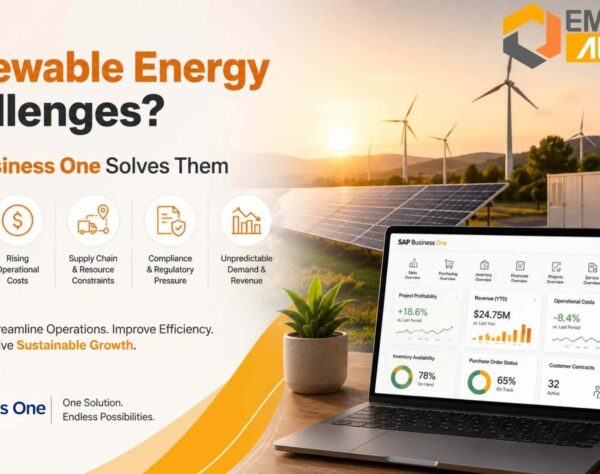
The renewable energy sector is growing rapidly, driven by sustainability goals, government policies, and rising energy demand. However, managing complex projects, distributed assets, and operational costs can be challenging. This is where SAP B1 for Renewable Energy Industry becomes a powerful ERP solution that simplifies project execution and asset management while improving efficiency.
Project Management Efficiency
Project planning and scheduling
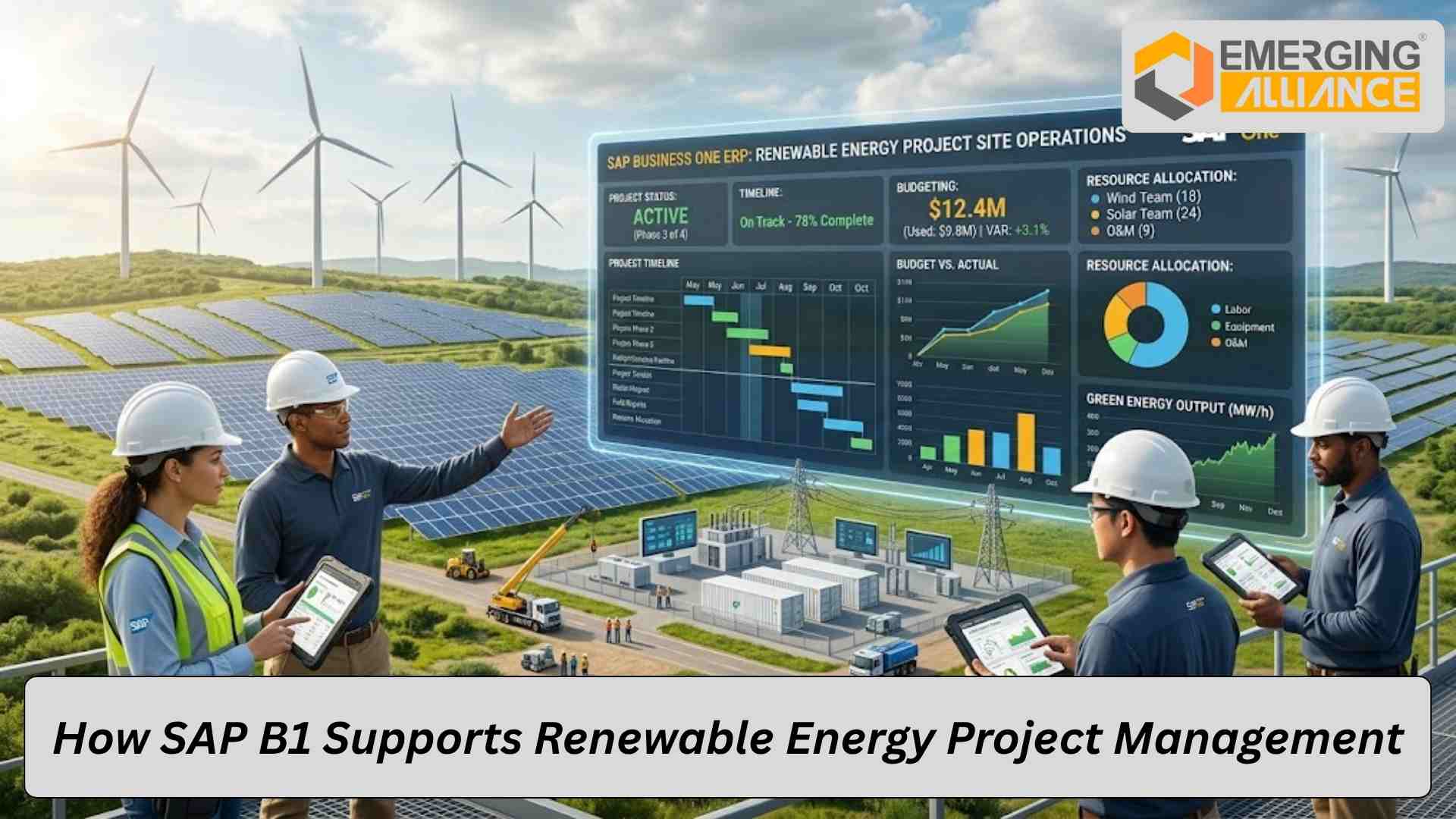
Renewable energy projects often involve multiple phases such as design, procurement, installation, and commissioning. SAP B1 enables businesses to plan timelines, allocate resources, and track progress in real time. This ensures projects stay on schedule without delays.
Budget tracking and cost control
Cost overruns are common in energy projects. With SAP B1, companies can monitor budgets, track expenses, and compare planned vs actual costs. This helps reduce financial risks and improves profitability.
Resource allocation optimization
Managing workforce, equipment, and materials efficiently is crucial. SAP B1 provides visibility into resource availability, ensuring optimal utilization across multiple projects.
Asset Lifecycle Management
Asset tracking and monitoring
Renewable energy companies manage assets like solar panels, wind turbines, and inverters across multiple locations. SAP B1 allows real-time tracking of these assets, ensuring better visibility and control.
Maintenance scheduling
Preventive maintenance is critical to avoid downtime. SAP B1 automates maintenance schedules, sends alerts, and keeps records of service history, improving asset performance.
Lifecycle cost management
Understanding the total cost of ownership is essential. SAP B1 helps track acquisition, maintenance, and depreciation costs, enabling better financial planning.
Inventory and Supply Chain Control
Material requirement planning
Energy projects require precise material planning. SAP B1 ensures the right materials are available at the right time, reducing delays and wastage.
Vendor and procurement management
Managing suppliers efficiently is key to project success. SAP B1 streamlines procurement processes, tracks vendor performance, and ensures timely deliveries.
Warehouse and stock visibility
With multiple project sites, tracking inventory can be complex. SAP B1 provides centralized inventory visibility, helping avoid stock shortages or excess inventory.
Financial Management
Real-time financial insights
SAP B1 offers real-time dashboards for revenue, expenses, and cash flow, enabling better decision-making.
Regulatory compliance
Renewable energy companies must comply with industry regulations and reporting standards. SAP B1 simplifies compliance with automated reporting and audit trails.
Profitability analysis
Businesses can analyze project-wise profitability and identify areas for improvement, ensuring sustainable growth.
Reporting and Analytics
Custom reports and dashboards
SAP B1 allows users to create customized reports based on business needs. This helps in tracking KPIs and performance metrics effectively.
Data-driven decision making
Accurate data insights enable companies to make informed decisions, improve efficiency, and reduce operational risks.
Forecasting and planning
With predictive analytics, businesses can forecast demand, plan resources, and optimize future projects.
SAP B1 for Renewable Energy Industry – Scalability and Integration
Scalable ERP solution
As renewable energy businesses grow, SAP B1 scales easily to accommodate new projects, users, and locations.
Integration with other systems
SAP B1 integrates with IoT devices, monitoring systems, and third-party applications, providing a unified platform for operations.
Cloud and on-premise deployment
Companies can choose between cloud or on-premise deployment based on their requirements and budget.
SAP B1 for Renewable Energy Industry – Key Benefits
Improved operational efficiency
Automating processes reduces manual work and increases productivity.
Enhanced project visibility
Real-time tracking ensures better control over projects and resources.
Reduced operational costs
Efficient resource and inventory management help minimize costs.
Better decision making
Data-driven insights enable smarter business decisions.
SAP B1 for Renewable Energy Industry – Practical Implementation Tips
Define clear business requirements
Before implementation, identify business goals and challenges to ensure the ERP solution meets your needs.
Choose the right modules
Select modules based on project management, finance, and asset management requirements.
Train your team effectively
Ensure employees understand how to use SAP B1 to maximize its benefits.
Work with experienced partners
Collaborating with experts ensures smooth implementation and long-term success.
Conclusion:
SAP Business One for the renewable energy industry delivers a powerful, integrated ERP solution that streamlines project management, asset tracking, and financial operations. By unifying all critical business processes into a single platform, it enhances visibility, accelerates decision-making, and drives operational efficiency.
Partnering with Emerging Alliance, a trusted SAP Business One implementation expert, takes these benefits even further. With deep industry knowledge and proven expertise, Emerging Alliance ensures seamless ERP deployment tailored to the unique needs of renewable energy businesses. From consultation to implementation and ongoing support, they help organizations maximize ROI, reduce operational costs, and scale with confidence.
By choosing SAP B1 with Emerging Alliance, renewable energy companies can unlock smarter operations, improved productivity, and sustainable long-term growth in an increasingly competitive landscape.
Frequently Asked Questions About SAP Business One for Renewable Energy Industry
How does SAP B1 support end-to-end operations in the renewable energy industry?
SAP Business One enables end-to-end management of renewable energy operations by integrating project development, asset management, procurement, finance, and maintenance into a single platform. It supports solar, wind, and hybrid energy models, ensuring real-time visibility across the entire value chain.
How does SAP B1 enhance project lifecycle management for renewable energy projects?
SAP B1 provides advanced project management capabilities including planning, budgeting, resource allocation, and real-time progress tracking. It enables better control over EPC (Engineering, Procurement, and Construction) projects, helping organizations deliver projects on time and within budget.
How does SAP B1 manage renewable energy assets and lifecycle performance?
SAP B1 tracks critical assets such as solar panels, wind turbines, and inverters throughout their lifecycle. It supports preventive and predictive maintenance, monitors asset performance, and manages lifecycle costs to maximize operational efficiency and ROI.
How scalable is SAP B1 for small and mid-sized renewable energy companies?
SAP B1 is highly scalable, allowing small energy firms to start with core modules such as finance and inventory, and expand into advanced capabilities like project management, asset tracking, and analytics as operations grow.
How does SAP B1 support financial management and regulatory compliance?
SAP B1 provides real-time financial reporting, budgeting, and cost tracking across projects and assets. It supports compliance with regulatory standards, subsidy tracking, and audit-ready reporting, ensuring financial transparency and governance.
How does SAP B1 optimize inventory and supply chain in renewable projects?
The system manages materials such as panels, cables, and components with real-time tracking, demand forecasting, and automated procurement planning. This reduces delays, avoids stockouts, and ensures timely project execution.
How does SAP B1 integrate with IoT and energy monitoring systems?
SAP B1 integrates with IoT-enabled devices and energy monitoring systems to capture real-time data on energy generation, equipment performance, and environmental conditions. This enables data-driven insights and predictive analytics for better decision-making.
What deployment options are available for renewable energy companies?
SAP B1 supports both cloud and on-premise deployment. Cloud deployment offers flexibility, remote accessibility, and lower upfront costs, while on-premise deployment provides greater control over data and infrastructure.
What is the typical implementation timeline for SAP B1 in renewable energy businesses?
Implementation timelines typically range from 2 to 6 months for small to mid-sized companies and can extend further for large-scale projects involving multiple sites, complex integrations, and regulatory requirements.
What strategic advantages does SAP B1 provide for renewable energy companies?
SAP B1 enables digital transformation by centralizing operations, improving project visibility, optimizing asset performance, and enhancing financial control. It supports scalable growth, reduces operational costs, and empowers organizations with real-time insights for strategic decision-making.