
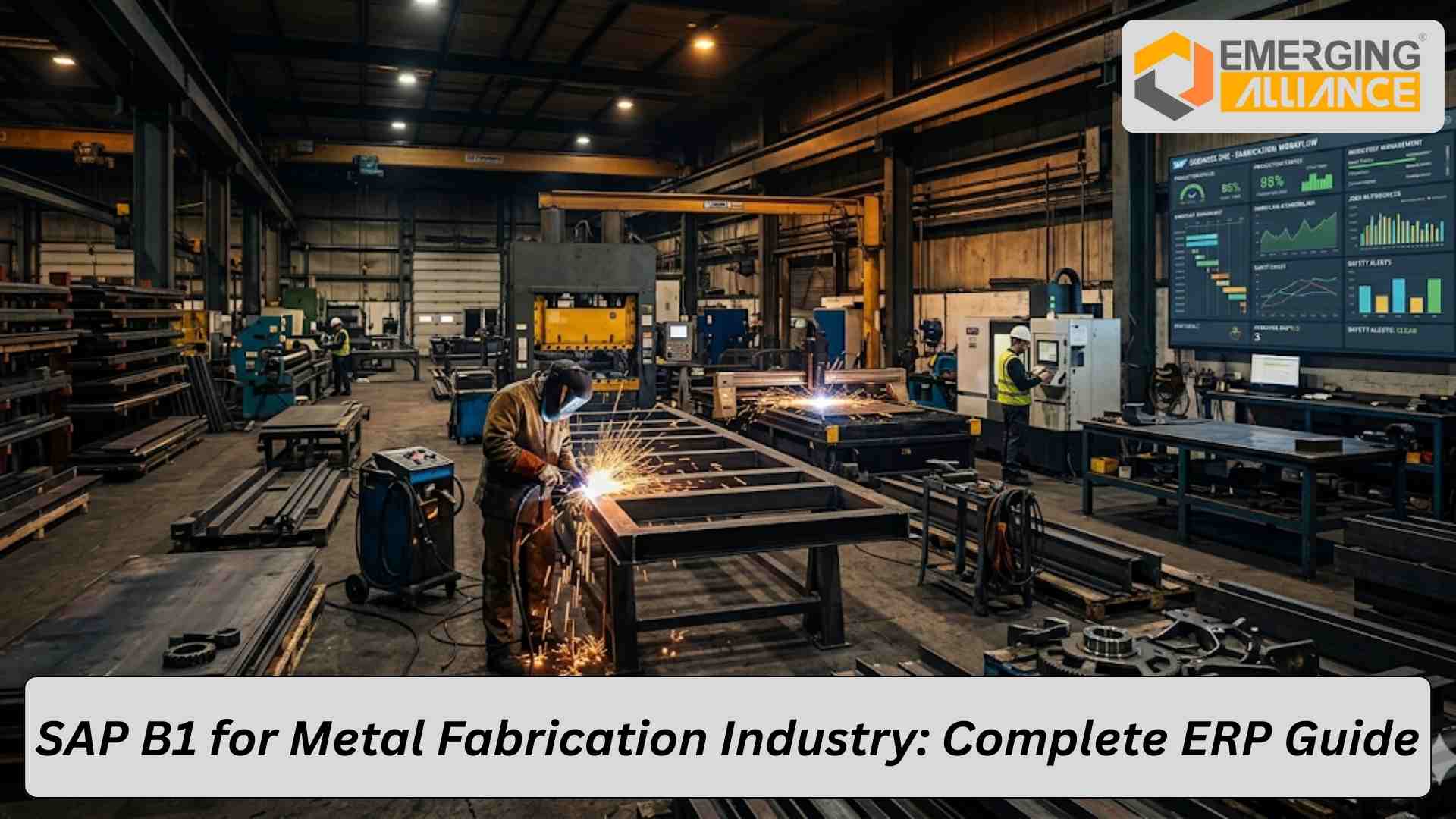
SAP B1 for Metal Fabrication Industry: Complete ERP Guide
SAP B1 for Metal Fabrication Industry: Complete Guide to ERP Success
The metal fabrication industry operates in a highly demanding environment where precision, cost control, and timely delivery are essential. Many businesses still rely on disconnected systems that lead to inefficiencies, production delays, and inventory inaccuracies. This is where SAP B1 for Metal Fabrication Industry becomes a game-changing solution. By integrating core business functions into a single platform, it enables manufacturers to streamline operations, improve productivity, and gain real-time insights into their processes.
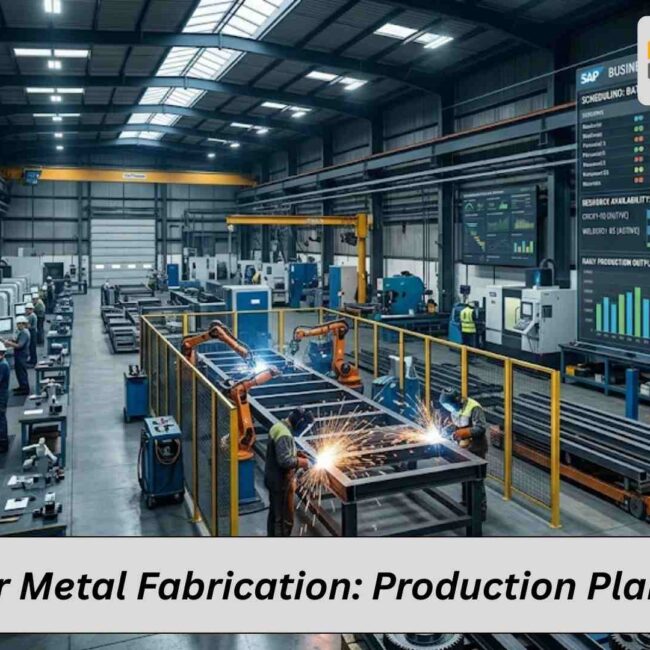
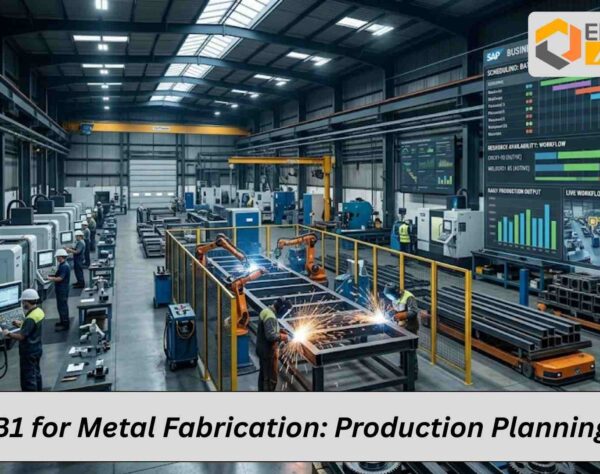
Production Planning in SAP B1 for Metal Fabrication Industry
shop floor visibility
Real-time monitoring of shop floor activities allows managers to track production progress, identify bottlenecks, and optimize workflows.
bill of materials management
SAP Business One enables accurate creation and management of multi-level BOMs, ensuring precise material usage and cost calculation.
production scheduling
Automated scheduling helps allocate resources efficiently and reduces downtime, improving overall production efficiency.
With SAP B1, manufacturers can transition from reactive decision-making to proactive planning, ensuring smoother operations.
SAP B1 for Metal Fabrication Industry helps streamline production planning by improving visibility and control over manufacturing processes.
Inventory Management Using SAP B1 for Metal Fabrication Industry
real-time inventory tracking
Gain complete visibility into raw materials, work-in-progress, and finished goods across multiple warehouses.
batch and serial number tracking
Track materials and products for quality control and traceability, which is crucial for compliance and customer satisfaction.
inventory cost control
Accurate valuation methods help manage costs effectively and reduce waste.
Using ERP for metal fabrication, companies can significantly reduce stock discrepancies and prevent overstocking or stockouts.
With SAP B1 for Metal Fabrication Industry, businesses can manage inventory more accurately and reduce material wastage.
Sales and CRM with SAP Business One for Manufacturing
customer data management
Centralized customer information allows for better communication and relationship building.
sales order tracking
Track orders from quotation to delivery, ensuring transparency and timely fulfillment.
demand forecasting
Analyze historical data to predict future demand and plan production accordingly.
By implementing SAP Business One for manufacturing, businesses can improve customer satisfaction and increase repeat sales.
Financial Management and Cost Control
integrated accounting
Automate financial processes including general ledger, accounts payable, and receivable.
real-time financial reporting
Access accurate financial data instantly to make informed business decisions.
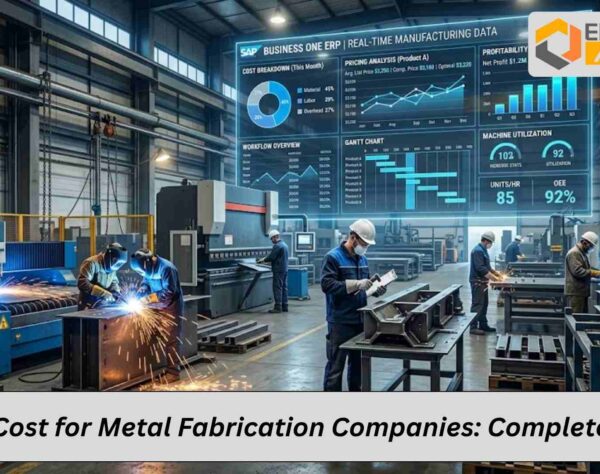
costing and profitability analysis
Understand production costs and identify profitable products or processes.
Manufacturing ERP solutions like SAP B1 ensure that financial and operational data are always aligned.
Quality Control and Compliance
quality inspection processes
Define and enforce quality checks at different production stages.
compliance management
Maintain industry standards and regulatory requirements with proper documentation and reporting.
defect tracking and resolution
Quickly identify and resolve quality issues to minimize production losses.
This ensures consistent product quality and builds customer trust.
Supply Chain and Procurement Management
vendor management
Maintain detailed supplier records and evaluate performance.
procurement automation
Automate purchase orders and approvals to reduce manual errors.
supply chain visibility
Monitor the entire supply chain to avoid disruptions and delays.
With SAP B1 for Metal Fabrication Industry, procurement becomes more efficient and cost-effective.
Why ERP for Metal Fabrication Improves Efficiency
real-time dashboards
Access key performance indicators (KPIs) through customizable dashboards.
data-driven decision making
Use analytics to identify trends, optimize processes, and improve profitability.
report customization
Generate reports tailored to business needs for better insights.
These features empower management to make smarter, faster decisions.
Benefits of Metal Fabrication Industry
improved operational efficiency
Streamlined processes reduce manual work and increase productivity.
enhanced accuracy
Eliminate errors caused by disconnected systems and manual data entry.
scalability
Grow your business without worrying about system limitations.
better decision-making
Access real-time data for strategic planning.
Overall, SAP B1 for Metal Fabrication Industry provides a strong foundation for sustainable growth. One of the biggest advantages of SAP B1 for Metal Fabrication Industry is its ability to connect all departments in a single system.
Implementation Best Practices
business process analysis
Evaluate existing processes to identify gaps and improvement areas.
choose the right partner
Work with experienced SAP implementation partners for smooth deployment.
employee training
Ensure staff are properly trained to maximize system usage.
continuous improvement
Regularly update and optimize the system based on business needs.
A well-planned implementation ensures long-term success and ROI.
Challenges and How SAP B1 Solves Them
fragmented systems
SAP B1 integrates all functions into one unified platform.
lack of real-time data
Provides instant access to accurate information.
inefficient production processes
Automates workflows and improves resource utilization.
poor inventory control
Offers real-time tracking and accurate forecasting.
These solutions make SAP Business One for manufacturing an essential tool for modern fabrication companies.
Conclusion: Driving Efficiency with SAP B1 for Metal Fabrication Industry
Conclusion: Driving Efficiency with SAP B1 for Metal Fabrication Industry
SAP Business One for the Metal Fabrication Industry is a powerful and scalable ERP solution built to handle the complex operational demands of modern fabrication businesses. From optimizing production planning and ensuring accurate inventory management to enabling real-time financial control and delivering actionable insights, it provides a fully integrated platform for seamless end-to-end operations. SAP B1 for Metal Fabrication Industry is a powerful ERP solution that addresses the unique challenges of fabrication businesses.
At Emerging Alliance, we specialize in delivering tailored SAP Business One solutions that align with your unique business needs. Our expertise in ERP implementation, customization, and support ensures a smooth digital transformation journey for metal fabrication companies. By partnering with Emerging Alliance, businesses can enhance efficiency, reduce operational costs, improve resource utilization, and gain complete visibility across all processes.
With the right technology and the right partner, your business is empowered to make smarter decisions, increase productivity, and achieve long-term, sustainable growth in an increasingly competitive market.
Frequently Asked Questions About SAP B1 for Metal Fabrication Industry
1. How does SAP B1 address engineer-to-order (ETO) and make-to-order (MTO) workflows in metal fabrication?
SAP Business One supports engineer-to-order (ETO) and make-to-order (MTO) manufacturing by enabling dynamic BOM creation, routing definitions, and real-time production adjustments based on customer specifications. It allows seamless integration between sales orders, design changes, and production planning, ensuring accurate execution of highly customized fabrication jobs.
2. How does SAP B1 enable granular cost modeling in metal fabrication projects?
SAP B1 provides multi-dimensional costing by capturing material costs, labor hours, machine time, subcontracting expenses, and overhead allocation at each production stage. It supports standard, actual, and variance costing, enabling fabricators to perform margin analysis at job, project, and customer levels for precise financial control.
3. How does SAP B1 optimize shop floor scheduling and finite capacity planning?
SAP B1 integrates production planning with finite capacity scheduling, allowing manufacturers to allocate resources based on machine availability, labor shifts, and work center capacity. This minimizes bottlenecks, reduces idle time, and improves throughput efficiency across fabrication lines.
4. How does SAP B1 integrate with CAD/CAM and CNC systems in fabrication environments?
SAP B1 can be integrated with CAD/CAM software and CNC machines through middleware or APIs, enabling automated data exchange for design specifications, cutting instructions, and production parameters. This reduces manual data entry, ensures accuracy, and accelerates the transition from design to production.
5. How does SAP B1 support material requirements planning (MRP) for fluctuating metal prices?
SAP B1’s MRP engine analyzes demand forecasts, sales orders, and current inventory to generate procurement and production recommendations. It helps mitigate the impact of volatile metal prices by optimizing purchase timing, minimizing excess inventory, and improving supplier planning.
6. How does SAP B1 ensure end-to-end traceability and quality control in fabrication?
The system enables full traceability by linking raw material batches, heat numbers, production processes, and finished goods. It supports quality inspections at multiple stages, non-conformance tracking, and compliance documentation, ensuring adherence to industry standards and customer specifications.
7. How does SAP B1 manage subcontracting and outsourced fabrication processes?
SAP B1 allows manufacturers to manage subcontracting operations by tracking material issuance to vendors, monitoring job progress, and capturing associated costs. It ensures visibility into outsourced processes while maintaining control over timelines, quality, and expenses.
8. How does SAP B1 enhance supply chain visibility and vendor collaboration?
SAP B1 provides real-time insights into procurement, supplier performance, and delivery schedules. It enables better vendor collaboration through automated purchase orders, demand forecasting, and inventory synchronization, reducing lead times and improving supply chain efficiency.
9. How does SAP B1 support multi-site and multi-plant fabrication operations?
SAP B1 enables centralized control over multiple plants, warehouses, and production units. It standardizes processes across locations while providing real-time data visibility, inter-plant stock transfers, and consolidated financial reporting for enterprise-level management.
10. What strategic advantages does SAP B1 provide for digital transformation in metal fabrication?
SAP B1 acts as a digital core by integrating production, finance, supply chain, and analytics into a single platform. It supports Industry 4.0 initiatives through IoT integration, real-time data analytics, and automation, enabling fabrication companies to transition toward smart manufacturing and data-driven decision-making.