
How SAP Business One Supports Automotive Manufacturing, Production Planning, and Inventory Control
Quick Answer
SAP Business One for the automotive industry can help manufacturers connect purchasing, inventory, production planning, warehouse operations, sales, and financial reporting within an integrated business management system. For automotive parts manufacturers and component suppliers, the right implementation can improve material visibility, support production decisions, strengthen cost tracking, and reduce information gaps between departments. Results depend on business requirements, configuration, integrations, and operational processes.
Automotive manufacturers and component suppliers must coordinate materials, production schedules, supplier deliveries, inventory movements, customer requirements, and financial commitments. When these activities rely on disconnected systems or manual updates, even a small information gap can affect production continuity, delivery performance, and profitability.
For example, a production team may schedule an order without having an accurate view of component availability. Purchasing may respond to a shortage without knowing whether sufficient stock exists at another warehouse. Finance may receive production cost information only after operational decisions have already been made.
These problems make automotive manufacturing ERP an important consideration for businesses seeking better operational coordination.
SAP Business One can support this requirement by connecting core business processes and giving authorised teams access to shared operational and financial information. However, the value does not come from software alone. Manufacturers must determine which processes need improvement, how production requirements should be represented, and whether integrations or additional functionality are necessary.
This guide explains how SAP Business One can support automotive manufacturing, which operational challenges it may address, and what businesses should evaluate before implementation.
Automotive Manufacturing Challenges That Require Better ERP Control
Automotive manufacturing involves more than assembling components. Businesses must coordinate raw materials, purchased parts, production activities, finished goods, supplier commitments, quality requirements, customer orders, and cost information.
When these processes operate independently, common challenges include:
These issues are connected. An inaccurate inventory record can create an unnecessary purchase, while an unexpected purchase can affect cash flow and production costs. A delayed production order can then influence customer commitments and revenue recognition.
An integrated ERP system can help address these information gaps by connecting business transactions and providing a more consistent view of operations. Before selecting a solution, manufacturers should identify which problems create the greatest operational or financial impact.
Production Planning and Material Requirements for Automotive Components

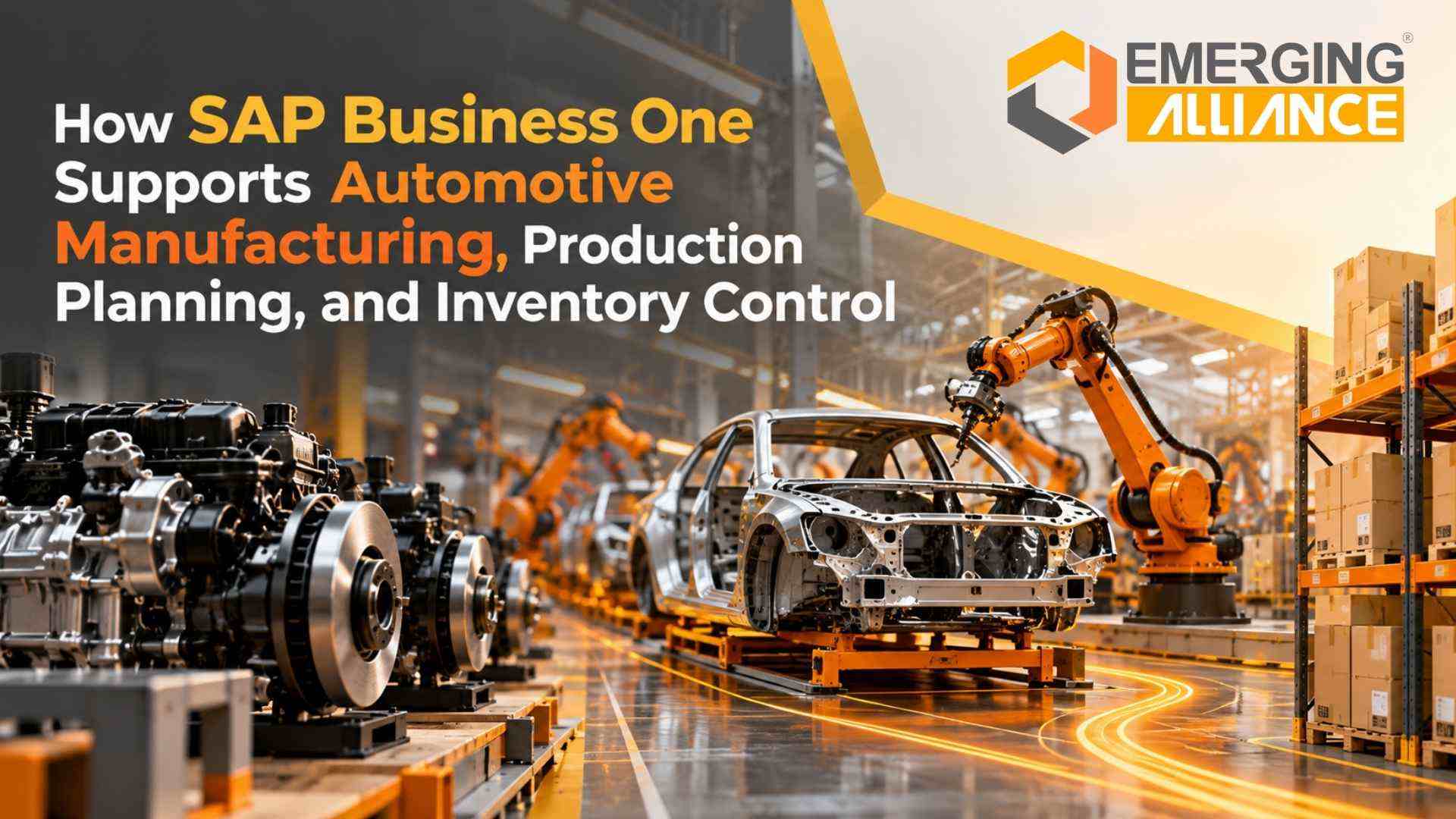
Production planning and material requirements planning (MRP) for automotive components: Coordinating bills of materials, scheduled work orders, and shop-floor assembly in SAP Business One.
Automotive component manufacturers often manage multiple parts, assemblies, production stages, and customer orders. Effective planning requires visibility into material requirements, available inventory, purchasing lead times, and the status of production activities.
SAP Business One supports production-related processes through capabilities such as bills of materials, production orders, and material resource planning, subject to the selected configuration and business requirements.
A bill of materials defines the components or materials associated with a product or assembly. Production orders represent planned manufacturing work and can help teams track material issues, receipts, and production-related transactions.
Material requirements planning can help businesses assess whether demand can be supported by available stock and expected supply. Its usefulness depends on accurate item data, planning parameters, lead times, and transaction records.
For example, an automotive parts manufacturer receives an order for a batch of machined components. Before confirming the production schedule, the team needs to check the required raw materials, components, and purchasing lead times.
A properly configured process can help planners identify potential shortages and coordinate replenishment before the production order reaches the shop floor.
Manufacturers should evaluate whether their planning process needs to account for:
- Component-level material requirements and bills of materials.
- Production orders and material consumption.
- Available stock and expected receipts.
- Supplier lead times and purchasing commitments.
- Production priorities and customer delivery dates.
- Changes to quantities, specifications, or product structures.
Complex scheduling, shop-floor data collection, advanced production sequencing, or specialised manufacturing requirements may need additional applications, integrations, or customisation. These requirements should be confirmed during solution design rather than assumed to be available in every standard implementation.
Inventory and Warehouse Control Across Automotive Parts Operations
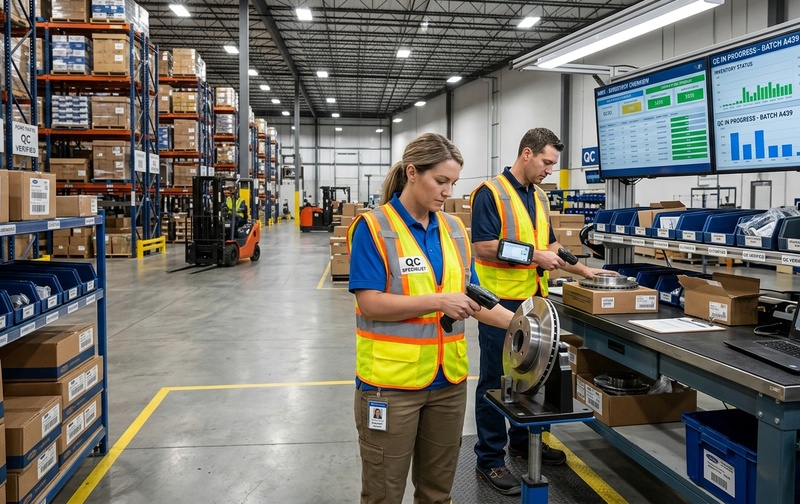
Automotive inventory and warehouse control: Managing multi-location bin storage, barcode scanning, stock adjustments, and parts traceability in SAP Business One.
Inventory accuracy directly affects production continuity, purchasing decisions, order fulfilment, and working capital. Automotive businesses may hold raw materials, purchased components, work in progress, finished products, spare parts, and packaging materials across multiple storage locations.
When teams rely on delayed spreadsheets or inconsistent stock records, they may purchase items already available or schedule production against quantities that cannot be used.
SAP Business One can provide inventory management capabilities that support item records, stock quantities, warehouse-level visibility, inventory transactions, and stock valuation, depending on configuration and the processes adopted.
An integrated inventory process can help teams understand what is recorded in stock, where items are held, and how transactions affect availability. Accurate records also provide a stronger foundation for replenishment and production planning.
Automotive manufacturers should review whether their inventory processes cover:
- Raw materials, components, assemblies, and finished goods.
- Stock transfers between warehouses and locations.
- Goods receipts, goods issues, and inventory adjustments.
- Batch or serial number tracking where required.
- Reorder planning and purchasing coordination.
- Inventory valuation and reconciliation.
- Stock reservations and fulfilment requirements.
Consider a manufacturer that discovers a component shortage shortly before a scheduled production run. With reliable inventory records and connected purchasing information, the team can investigate available stock, expected deliveries, and replenishment options more efficiently.
The outcome still depends on timely transaction entry, stock verification, defined warehouse procedures, and employee adoption. An ERP system cannot maintain accurate inventory when physical movements are not recorded correctly.
Businesses with barcode scanning, automated warehouse equipment, or specialised traceability requirements should confirm whether integration or an additional application is needed.
Purchasing and Supplier Coordination for Production Continuity
Automotive manufacturing depends on suppliers delivering the right materials and components in the required quantities and within agreed lead times. Delayed deliveries can affect production schedules, while excessive purchasing can increase storage costs and tie up working capital.
When purchasing teams cannot access reliable inventory and demand information, they may find it difficult to distinguish urgent requirements from routine replenishment.
SAP Business One can connect purchasing transactions with item records, inventory, goods receipts, and financial information. Depending on the business process, teams can use purchasing documents and supplier records to improve visibility into commitments and incoming materials.
A coordinated purchasing process should help the business answer several practical questions:
- Which components are required for upcoming production orders?
- What quantities are currently available?
- Which purchase orders remain outstanding?
- When are suppliers expected to deliver?
- Which shortages could affect customer commitments?
- How do purchasing decisions affect inventory value and cash flow?
For example, if a supplier revises a delivery date, purchasing and production teams need to understand which orders may be affected. Shared information can support faster coordination, although supplier communication and production rescheduling still require defined responsibilities and timely updates.
Manufacturers should also evaluate supplier performance reporting, approval workflows, purchase commitments, and external procurement integrations. Where these capabilities require specialised functionality, the implementation scope should identify the appropriate configuration or additional solution.
Manufacturing Cost Visibility and Financial Control
Manufacturing profitability depends on understanding material consumption, purchasing costs, production activity, inventory valuation, and the financial impact of operational decisions.
If production and finance records are disconnected, managers may have difficulty explaining cost variations or identifying where actual expenditure differs from expectations.
SAP Business One connects operational transactions with financial management processes. This can help businesses review purchasing expenditure, inventory values, sales transactions, and financial results within a shared business environment.
Manufacturers can use this information to improve their review of:
- Material costs and inventory valuation.
- Purchasing expenditure and supplier invoices.
- Production-related material consumption.
- Sales revenue and customer profitability.
- Budget performance and financial variances.
- Cash flow and working capital requirements.
For example, a component manufacturer may notice that the cost of fulfilling a particular order has increased. The team can investigate changes in material prices, purchasing transactions, stock valuation, and other available cost information.
However, detailed production costing depends on the company’s cost-accounting methods, data quality, configuration, and any additional manufacturing functionality required. Businesses should not assume that every specialised costing model or variance analysis is available without configuration.
A successful implementation should define the financial reports management needs, establish consistent transaction practices, and ensure that operational records support meaningful cost analysis.
Quality Management, Traceability, and Compliance Requirements
Automotive supply chains may require businesses to maintain product specifications, supplier documentation, inspection records, batch information, serial numbers, and evidence of material movement. The exact requirements vary by product, customer, industry standard, and contractual obligation.
An ERP system can contribute to better information management by connecting relevant item, purchasing, inventory, production, and sales transactions. Where batch or serial tracking is configured appropriately, businesses may be able to trace selected items through recorded transactions.
However, operational traceability and formal quality management are not identical. Advanced inspection plans, non-conformance workflows, corrective and preventive actions, specialised quality documentation, or customer-specific compliance processes may require add-ons, integrations, or dedicated quality management software.
Before implementation, automotive manufacturers should identify:
- Which products or materials require batch or serial tracking.
- What information must be recorded at receipt and during production.
- How non-conforming materials are identified and controlled.
- Which quality records must be retained.
- What evidence customers require during audits.
- Which systems exchange quality or traceability information.
These requirements should be mapped to specific software capabilities and verified against the proposed solution. Manufacturers should also define responsibilities for data entry, review, exception handling, and record retention.
The objective is to establish reliable operational records and appropriate controls—not to assume that an ERP deployment automatically guarantees certification or regulatory compliance.
Integrated Reporting Across Automotive Business Functions
Management decisions become harder when purchasing, production, inventory, sales, and finance rely on different versions of business data. Teams may spend time reconciling reports instead of investigating performance and responding to exceptions.
SAP Business One can bring core transactional information together and provide reporting capabilities that support day-to-day operational review and management analysis.
Depending on configuration and available reporting tools, businesses can develop views of inventory positions, purchasing activity, sales orders, financial results, and other operational indicators.
Automotive manufacturers should determine which reports are essential for daily control and executive decision-making. Useful reporting priorities may include:
- Inventory availability and slow-moving stock.
- Outstanding purchase orders and expected receipts.
- Production order status and material requirements.
- Sales orders and fulfilment commitments.
- Purchasing and inventory cost trends.
- Financial performance and cash flow.
- Exceptions requiring management attention.
Reports are only as reliable as the information behind them. Incorrect item master data, delayed transaction entry, inconsistent units of measure, and incomplete production records can reduce reporting quality.
Businesses should establish data ownership, standard definitions, reporting responsibilities, and review routines before relying on dashboards for critical decisions.
Where advanced analytics or operational dashboards are required, the implementation team should confirm whether standard reporting is sufficient or whether additional tools and integration are necessary.
SAP Business One Integration and Customization Requirements
Automotive manufacturers may already use specialist systems for computer-aided design, manufacturing execution, warehouse operations, barcode scanning, quality management, e-commerce, customer portals, or electronic data interchange.
The ERP implementation must determine which applications should remain in place, which information must be exchanged, and where duplicate data entry creates operational risk.
SAP Business One can be integrated or extended to support specific business requirements, but the available approach depends on the systems involved, supported interfaces, data structures, licensing, and technical design.
An integration assessment should identify:
- The source and destination of each data flow.
- The records exchanged between systems.
- The frequency and direction of updates.
- Data ownership and validation rules.
- Error handling and reconciliation procedures.
- Security, access, and audit requirements.
- Support responsibilities when an integration fails.
For example, an automotive supplier may need customer orders transferred from an external platform into the ERP system. The design must define how customer records, item codes, quantities, delivery dates, and order changes are validated and processed.
Customisation should address a clear business requirement rather than reproduce every existing manual step. Excessive customisation can increase maintenance complexity and make future upgrades more difficult.
A practical implementation separates standard capabilities from configuration, custom development, third-party add-ons, and external integrations. This distinction helps decision-makers understand the true scope, cost, and ongoing support requirements.
Implementation Risks and ERP Suitability for Automotive Manufacturers
Selecting an ERP system requires more than comparing feature lists. Automotive manufacturers should determine whether the solution fits their production model, operational complexity, reporting needs, integration landscape, and growth plans.
SAP Business One may be suitable for businesses seeking integrated management of core operational and financial processes. However, suitability depends on the scale and complexity of manufacturing, the level of production control required, and the additional systems the business must support.
Before committing to an implementation, evaluate the following areas.
| Evaluation Area | Operational Assessment Scope |
|---|---|
| Process fit: | Map purchasing, inventory, production, sales, and finance workflows. Identify requirements that standard functionality can support and those that need additional development. |
| Data migration: | Review item masters, bills of materials, supplier records, customer records, warehouse balances, open orders, and financial data. Define validation and reconciliation procedures before migration. |
| Integration scope: | Document external systems, data flows, dependencies, and error-handling responsibilities. Confirm technical feasibility and ongoing maintenance requirements. |
| Reporting requirements: | Identify the operational measures and financial reports managers need. Confirm that the required data will be captured consistently. |
| User adoption: | Define roles, approvals, training, and transaction responsibilities. Employees need clear procedures for recording stock movements, production transactions, and purchasing activity. |
| Implementation cost: | Evaluate software licensing or subscription costs, implementation services, data migration, customisation, integrations, training, infrastructure, and ongoing support. Request a scope-based estimate rather than relying on a generic price. |
| Support and scalability: | Understand how the solution will be maintained, how issues will be resolved, and how future business changes will be handled. |
A structured evaluation reduces the risk of choosing software based on assumptions. It also gives decision-makers a clearer basis for comparing implementation scope, expected benefits, operational disruption, and total cost of ownership.
Evaluating SAP Business One for Your Automotive Operations
Automotive businesses should evaluate ERP based on measurable operational requirements rather than the number of features listed in a product brochure.
Start by identifying the problems that have the greatest effect on production continuity, inventory accuracy, purchasing decisions, cost visibility, and customer fulfilment. Establish how these issues are measured today and what information management needs to make better decisions.
Then map those requirements to the proposed SAP Business One solution. Confirm which capabilities are standard, which depend on configuration, and which require integration, customisation, or third-party software.
A useful evaluation should include realistic business scenarios. For example, ask the implementation team to demonstrate how a production requirement affects material planning, how a supplier delivery is recorded, how stock availability is reviewed, and how related transactions appear in financial reports.
The demonstration should also address exceptions. What happens when a component is unavailable, a supplier delivery is delayed, inventory records differ from physical stock, or an order changes after production planning has started?
These scenarios reveal whether the proposed solution supports the business’s actual workflows and whether additional controls are necessary.
Emerging Alliance can help businesses assess their SAP Business One requirements across implementation, configuration, integration, and ongoing support. The appropriate scope should be based on the company’s manufacturing processes, existing applications, reporting priorities, and operational constraints.
The goal is to establish a practical ERP approach that improves coordination and information visibility while avoiding unnecessary complexity.
FAQs About SAP Business One for Automotive Manufacturing
Evaluate SAP Business One for Your Automotive Manufacturing Operations
Production delays, inventory discrepancies, disconnected purchasing records, and limited cost visibility can make automotive operations harder to manage.
Request an SAP Business One demo with Emerging Alliance to review your production planning, inventory control, purchasing, reporting, and integration requirements. Discuss your operational priorities with an SAP specialist and evaluate the configuration needed for your business.